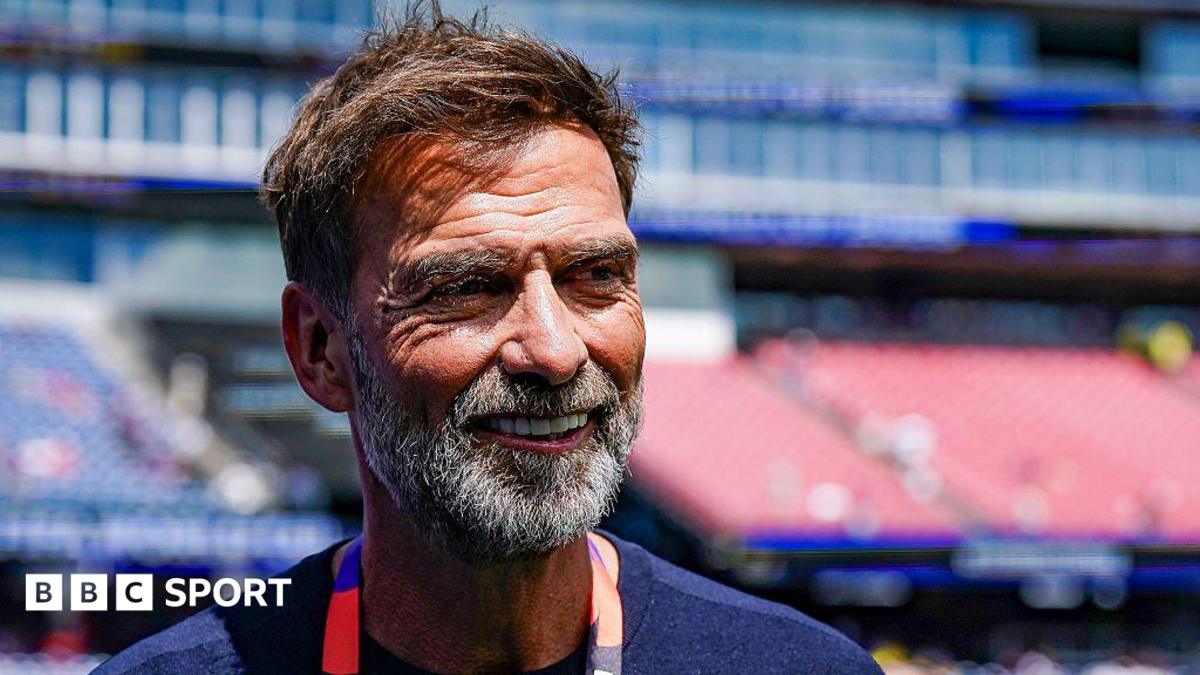
Three weeks after Germany’s shocking 2026 World Cup penalty shootout exit at the hands of Paraguay triggered the resignation of head coach Julian Nagelsmann and plunged German football into a full-blown identity crisis, legendary German manager Jurgen Klopp has stepped forward to take on the high-stakes role of national team head coach. The 59-year-old, who earned global acclaim and a reputation as a transformational leader during his trophy-laden tenure at Liverpool and Borussia Dortmund, has signed a four-year contract that will see him guide Germany through Euro 2028 and the 2030 FIFA World Cup.
Klopp’s first match in charge of Die Mannschaft is scheduled for September 24 against long-time rivals the Netherlands, kicking off the team’s Nations League campaign. To build out his coaching staff, the new manager has tapped his former Liverpool assistants Pep Lijnders and Peter Krawietz, a move that has raised hopes among German fans that the trio can replicate the magic that turned Liverpool from a underperforming giant into a Champions League and Premier League title winner.
In comments after the deal was finalized, Klopp emphasized the unique power of the national team to unify the German public. “The national team can unite us Germans like almost nothing else. That’s precisely what makes this task so special for me,” he said. German Football Association (DFB) president Bernd Neuendorf made clear that Klopp was the association’s undisputed top target from the moment Nagelsmann stepped down, with the DFB pursuing the manager relentlessly to secure his signature. Neuendorf argued Klopp “embodies passion, credibility, and the ability to inspire people” that German football desperately needs right now.
Proponents of the appointment point to Klopp’s decades-long track record of building unified, high-energy teams that outperform expectations, as well as his natural ability to connect with supporters — two qualities that critics have repeatedly said the German national team has lacked in recent years. Germany has failed to advance past the round of 16 in the last three consecutive World Cups, leaving the program at its lowest ebb in decades, with widespread criticism of a persistent lack of winning mentality and fractured connection between the team and its fanbase.
Klopp, who has long centered his coaching philosophy on building what he calls “mentality monsters” and became a cult favorite at every club he has led, looks on paper like the perfect fix for these problems. A recent poll conducted by leading German football outlet *Kicker* found that 80% of respondents believe Klopp is the right person for the job. Former Germany and Bayern Munich midfielder Stefan Effenberg has said he expects Klopp to inject a “new spirit of optimism” into the program, while Borussia Dortmund CEO Carsten Cramer argued the manager’s positive influence could extend beyond the pitch, saying “he embodies a lot of the things that our football and our country are missing right now.”
Despite this broad public support, Klopp’s appointment has ignited fierce controversy across German football. The core point of contention stems from Klopp’s 2024 move to take on the role of head of global soccer for Red Bull, a decision many German fans view as a betrayal of the country’s long-standing football values. Red Bull’s multi-club ownership model has long been criticized in Germany for violating the 50+1 rule, a core regulation that guarantees majority supporter voting control and protects the fan-centric identity of German clubs. Recent reports that Klopp intends to retain his position as a Red Bull brand ambassador while serving as Germany’s head coach have sparked widespread outrage.
Former DFB president Theo Zwanziger told the *Frankfurter Allgemeine Zeitung* that retaining ties to Red Bull would be “an absolute no-go”, arguing the company “want to win power inside the sport”. Prominent fan group Unsere Kurve has accused the DFB of “kowtowing to capital” by allowing the arrangement to move forward. Group spokesperson Thomas Kessen noted that Klopp has squandered significant goodwill among German fans, particularly supporters of Borussia Dortmund, through his ties to Red Bull. Even some prominent figures within German football have questioned the DFB’s decision to fast-track Klopp’s hiring without considering other candidates. 2014 World Cup winner Bastian Schweinsteiger, speaking as a pundit for broadcaster ARD, pointed out that the DFB’s rush to send a delegation to New York to finalize the deal felt unplanned and hectic, arguing Klopp may only serve as a “band-aid” for systemic problems that run far deeper than the head coaching position.
Klopp himself has acknowledged that German football needs far more than just a new manager to return to glory. “I have said many times that it’s not just about the head coach,” he told broadcaster MagentaTV earlier this month. “German football as a whole is facing a turning point, we have to change some fundamental things.”
In a fitting twist of fate, Klopp’s first major test as Germany manager will come at Euro 2028, co-hosted by the UK and Ireland. While his beloved former club Liverpool’s Anfield stadium will not serve as a host venue, Klopp could return to Merseyside for matches at Everton’s new Hill Dickinson Stadium. By the time that tournament kicks off, fans across Germany and the global football community will have a much clearer answer to the question hanging over this appointment: can the man who saved Liverpool work the same miracle for German football?