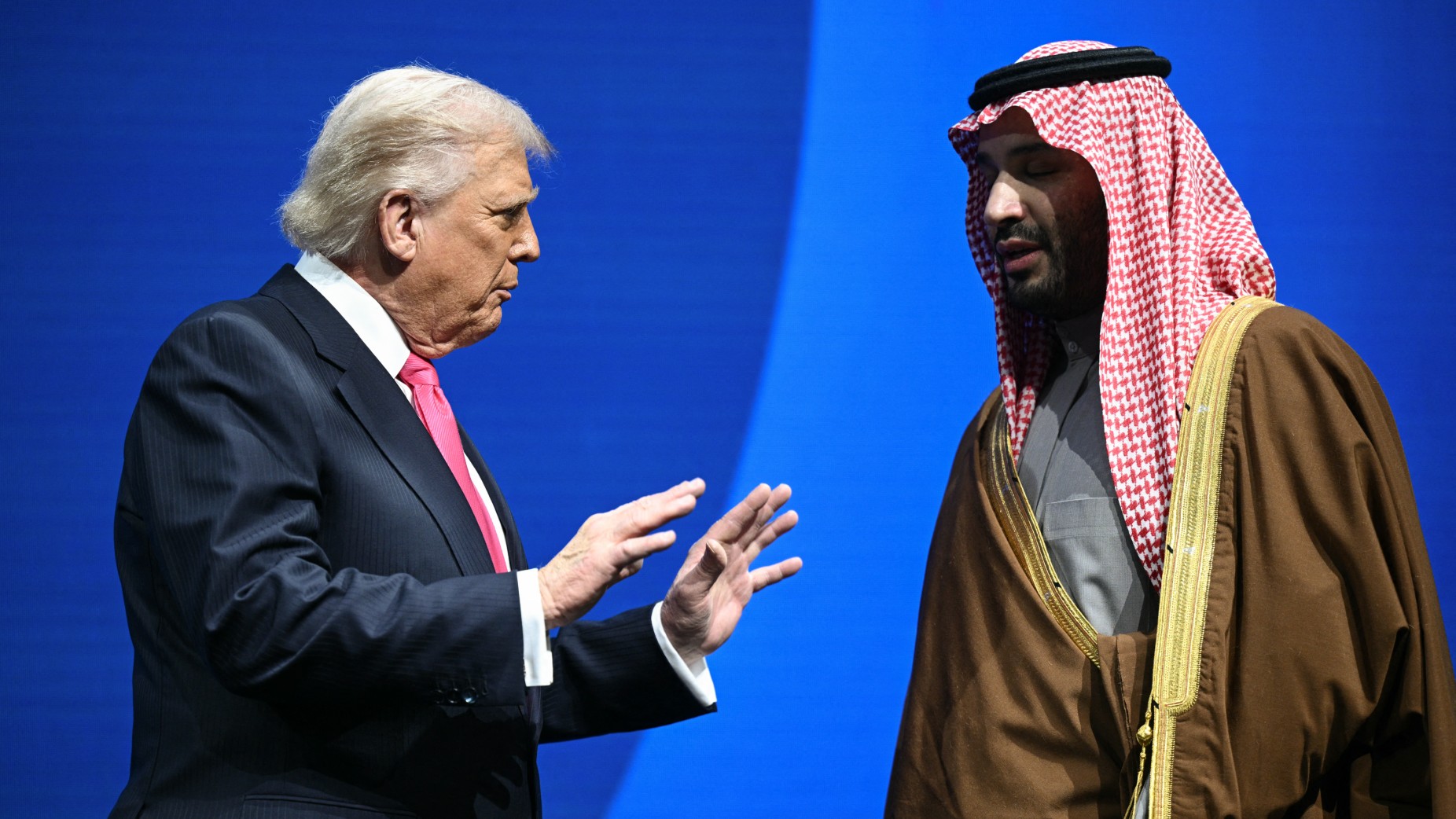
Two leading U.S. news outlets revealed Wednesday that former President Donald Trump has given formal approval to a three-decade civil nuclear cooperation agreement with Saudi Arabia, a deal that will grant Riyadh access to cutting-edge U.S. reactor technology despite widespread warnings that it could ignite a dangerous nuclear arms race across the Middle East with Iran.
According to reports from both The New York Times and The Wall Street Journal, Trump’s pending official signature on the dual civil nuclear and security pact will clear the way for the proposal to move to the U.S. Congress for mandatory formal review. The accord is scheduled to be finalized this week by U.S. Energy Secretary Chris Wright and Saudi Energy Minister Prince Abdulaziz bin Salman, two officials who first held high-level talks on the framework back in April 2025, the Journal added.
If the agreement receives final congressional approval, it will open the door for U.S. nuclear firms to earn tens of billions of dollars in revenue from constructing Saudi Arabia’s first full civilian nuclear infrastructure. At the same time, it has reignited a decades-long, bitter debate among U.S. legislators over the severe risks of nuclear proliferation spreading across the Middle East.
The Trump administration has defended the agreement, arguing that close U.S. oversight will guarantee that Riyadh’s civilian nuclear program is never diverted to develop nuclear weapons. But critics point out that the deal fails to address core long-standing nonproliferation concerns that have divided policymakers for years. Lawmakers seeking to block the pact also face steep procedural obstacles: to override a guaranteed presidential veto, opponents would need to secure a two-thirds majority vote in both chambers of Congress, a high bar that is widely seen as difficult to reach.
The most significant proliferation risk stems from the deal’s framework that paves the way for Saudi Arabia to develop domestic uranium enrichment and plutonium reprocessing capabilities – the two core processes required to produce weapons-grade material for nuclear bombs. Beyond supplying initial reactors and related technology, the agreement mandates that U.S. firms conduct a two-year feasibility study to assess whether domestic uranium enrichment in Saudi Arabia is practical. If the study concludes the project is viable, U.S. companies will build and operate the enrichment facility under a so-called “black box” model designed to keep all sensitive nuclear technology restricted from Saudi access. If the U.S. rejects moving forward with enrichment, Riyadh would be blocked from developing domestic enrichment capabilities for a 10-year period.
Notably, the accord bypasses the enhanced safeguards protocol overseen by the International Atomic Energy Agency (IAEA), the United Nations’ nuclear watchdog that sets the global baseline for nonproliferation monitoring. Instead, all inspection and oversight responsibilities will be managed through a private bilateral agreement exclusively between Washington and Riyadh. Unlike the United Arab Emirates, which previously committed to the international “gold standard” nonproliferation pledge that bans nations from enriching uranium or reprocessing spent fuel on their own territory, Saudi Arabia has repeatedly refused to adopt that requirement. A congressional source who spoke with CNN also confirmed that early closed-door briefings on the deal outlined a special provision that grants Riyadh limited permission to carry out domestic fuel enrichment and reprocessing activities.
Talks over a U.S.-Saudi nuclear accord first launched during Trump’s first presidential term, and the deal has renewed intense scrutiny over the role played by Jared Kushner, Trump’s son-in-law who served as a senior White House adviser during that first term. A 2019 investigative report from House Democrats already revealed that Kushner pushed aggressively to approve nuclear technology transfers to Saudi Arabia over the explicit objections of multiple senior national security officials. This scrutiny has been amplified by questions over Kushner’s personal financial ties: Westinghouse Electric, the major U.S. nuclear services firm vying to sell reactors to Saudi Arabia, is owned by Brookfield Asset Management. That same firm orchestrated a $1.1 billion bailout for a struggling property asset owned by Kushner’s family real estate company back in 2018.
As early as 2018, a bipartisan group of lawmakers introduced legislation to block any nuclear cooperation agreement with Saudi Arabia, but the Trump administration continued to advance negotiations behind the scenes. That same year, Saudi Crown Prince Mohammed bin Salman made international headlines when he stated publicly that if Iran successfully developed a nuclear bomb, “we will follow suit as soon as possible”. During initial negotiations, Saudi negotiators also made clear to the Trump administration that Riyadh would reject any deal that granted UN nuclear inspectors unfettered access to search for covert nuclear weapons activity across the kingdom.
In a major shift from the previous Biden administration’s policy, Trump has dropped the requirement that tied U.S.-Saudi nuclear cooperation to Riyadh completing a full normalization of diplomatic relations with Israel, effectively decoupling the nuclear deal from the Abraham Accords framework. The final agreement, however, lays bare a stark contradiction in U.S. foreign policy: Washington continues to pressure Iran to roll back its expanding nuclear program, while at the same time enabling Saudi Arabia to build out its own civilian nuclear infrastructure with pathways to weapons-capable technology.