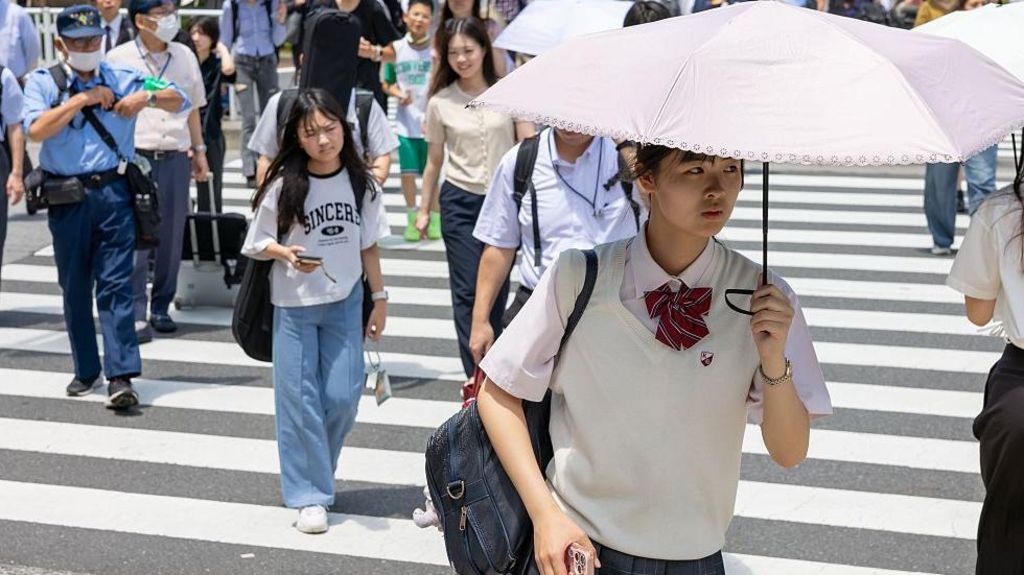
Japan has marked a historic and concerning milestone in its climate history, recording its first official “kokushobi” — translated as a “cruelly hot day” — after mercury levels climbed above the 40 degrees Celsius (104 degrees Fahrenheit) threshold across multiple regions this week.
The new terminology, launched back in April by the Japan Meteorological Agency (JMA), was created specifically to better communicate the extreme danger of severe heat to the general public, filling a gap in the country’s existing graded heat warning system. Japan already had standardized terms for days exceeding 25C, 30C, and 35C; days above 35C have long been labeled “moshobi,” or “extremely hot days.” The new label “kokushobi” draws from the Japanese word “koku,” meaning harsh or cruel, to underscore the life-threatening risk of heat that reaches or surpasses 40C.
On Tuesday, three central Japanese cities — Tajimi, Gujo, and Toyoda — all hit the 40C benchmark to trigger the country’s first official kokushobi. According to Kyodo News, nearly 300 of Japan’s 914 national temperature observation stations recorded moshobi conditions across the country on the same day. The JMA has warned that the oppressive heat dome will persist through next week, leaving little relief for affected communities.
This record comes amid a global pattern of intensifying extreme heat events driven by climate change, which has made summer temperatures across Japan progressively hotter and more dangerous year over year. In 2025, Japan hit its all-time highest recorded temperature of 41.8C in the city of Isesaki, and workplace heatstroke data already reflects a growing public health crisis. A Kyodo report from last year found that the number of heatstroke cases among working people hit a record 1,803, with 19 fatalities reported.
In response to the current heatwave, Japanese authorities have issued heatstroke warnings for more than 40 of the country’s prefectures. Public health guidance urges residents to stay indoors as much as possible, avoid extended outdoor activity, run air conditioning consistently, and maintain hydration and electrolyte levels to prevent heat illness.
Tokyo officials reported a staggering new annual high for heatstroke hospitalizations on Tuesday: the Tokyo Fire Department confirmed 287 people ranging in age from 3 to 103 were admitted to city hospitals for suspected heatstroke, according to public broadcaster NHK. By Wednesday, the department was forced to issue an ambulance overload alert due to sustained high demand for emergency heat-related responses, repeating urgent calls for residents to take proactive steps to avoid heatstroke.
As the country prepares for what is projected to be another record hot summer, regional governments have introduced adaptive measures to cut energy use and reduce heat risk. The Tokyo metropolitan government, for example, has encouraged office workers to adopt casual cool attire such as T-shirts and shorts instead of formal suits and ties, to reduce the need for excessive air conditioning while keeping workers comfortable.