In recent years, Beijing has repeatedly deployed economic statecraft as a political weapon, leveraging trade ties to pressure other nations when it perceives their actions as conflicting with its core political interests. The tactic typically manifests as unofficial sanctions, targeted tariffs, restrictive regulatory changes, and state-backed consumer boycotts — measures that bear no connection to underlying market fundamentals, and can be reversed overnight without any shift in the economic justifications Beijing initially cites to defend them. For nations on the receiving end of these actions, this strategy is widely defined as economic coercion: trade disruptions deliberately designed to force changes in a target country’s sovereign policies, public behaviors, and high-stakes political decisions.
Among advanced economies running trade surpluses with China, Australia stands out as a critical case study. Rich in natural resources ranging from iron ore and coking coal to barley and seafood, Australia built deep trade ties with China over decades, with many of its primary commodities becoming core staples of bilateral exchange. But by the 2010s, growing concerns over foreign political interference, Chinese state-linked investment that posed national security risks, and Australian universities’ overreliance on Chinese funding began to fray bilateral trust.
Suspicion of Chinese influence operations first spiked in 2015, when Australia’s domestic intelligence agency reportedly warned political and business elites of coordinated campaigns by Chinese state actors to shape elite perceptions on issues ranging from Chinese human rights policies to the U.S.-Australia security alliance and territorial disputes in the South China Sea. These concerns entered the public spotlight in 2016 with the Sam Dastyari scandal: a senior Australian Labor Party politician was caught accepting donations from Chinese-linked donor Huang Xiangmo in exchange for publicly contradicting his party’s official support for Freedom of Navigation Operations in the South China Sea, while also helping Huang evade Australian national security screening. The incident exposed a longstanding tactic of the Chinese Communist Party’s United Front Work Department, which deliberately blurs the line between legitimate diplomatic influence and illegal foreign interference, exploiting legal gray areas in democratic systems to advance Beijing’s state interests.
The scandal pushed Australia to adopt a far tougher stance, culminating in landmark legislation that drew a clear legal distinction between acceptable activities like public lobbying and diplomacy, and illicit foreign interference: covert, deceptive, or coercive actions directed by a foreign government or its proxies. Canberra followed this with strict national anti-interference laws, enhanced investment screening for Chinese firms, a ban on Chinese telecommunications giants Huawei and ZTE from participating in Australia’s critical 5G infrastructure, and increasingly vocal diplomatic criticism of Beijing’s policies in Xinjiang, Hong Kong, Taiwan, and the South China Sea.
Tensions boiled over in April 2020, when the Australian government led by Liberal Prime Minister Scott Morrison announced a call for an independent international investigation into the origins of COVID-19, backed by Foreign Minister Marise Payne. While the World Health Organization ultimately agreed to convene a 100+ nation committee to examine the global public health response to the pandemic — stopping short of a full origin probe that Beijing opposed — Beijing still moved to retaliate. It imposed steep punitive tariffs on a wide range of Australian exports including barley, wine, and coal, and launched a state-backed campaign discouraging Chinese students and tourists from traveling to Australia. In November 2020, China’s ambassador to Canberra publicly laid out 14 specific political grievances against Australia, ranging from blocked Chinese investments to the 5G ban and the COVID investigation call. The moment marked a rare explicit acknowledgement by Beijing that its trade restrictions were tied to political demands, fitting the textbook definition of economic coercion perfectly.
Rather than backing down to pressure, the Morrison government moved swiftly to diversify its export markets to offset losses. Though concentrated harm hit specific sectors, total GDP damage between 2020 and 2023 amounted to less than 1% of Australia’s total output. Official data from Australia’s Department of Agriculture, Fisheries and Forestry shows barley exports to Latin America surged 416% between 2022 and 2023, reaching A$251.6 million, even as barley shipments to China fell to zero. Total Australian barley exports still hit a record A$3.3 billion in 2023. For agricultural and seafood products overall, Australia successfully shifted trade toward ASEAN nations, which overtook China as Australia’s largest import market for these goods in the 2021-2022 fiscal year, capturing 21% of market share compared to China’s 20%. For coal, Japan surpassed China as Australia’s top buyer by 2023, accounting for 35% of total coal exports versus China’s 9%.
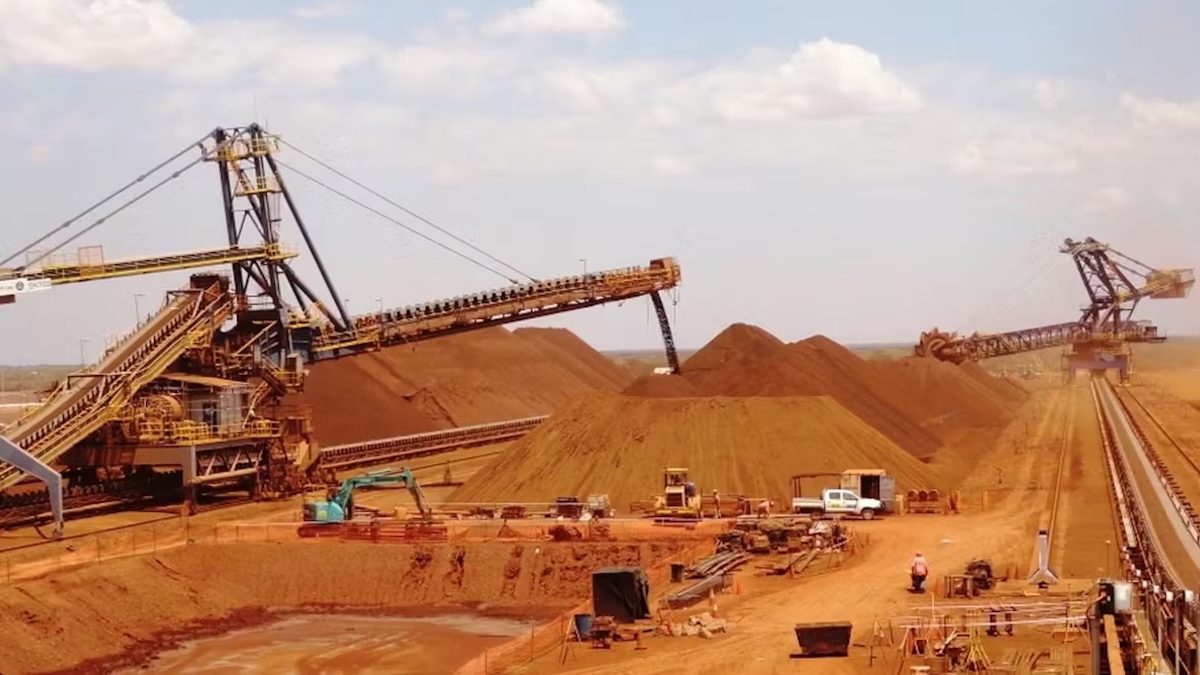
While some sectors, particularly lobster fisheries and winemaking, struggled to fully diversify — with wine exports falling 30% and lobster exports dropping 64% over the three-year period — Beijing’s need for Australian raw materials undercut its coercive strategy. China refused to impose restrictions on Australian iron ore, which remained a critical source of export revenue for Australia throughout the dispute, helping the country weather the broader economic storm.
Australia’s economic resilience directly translated to sustained political resilience. Even after the Labor Party won federal elections in 2022 and Prime Minister Anthony Albanese took office, pursuing warmer diplomatic engagement with Beijing, Canberra refused to roll back any of its core policies. It maintained the 5G ban on Huawei and ZTE, kept its foreign interference laws in place, retained its hardline positions on Hong Kong, Taiwan, and the South China Sea, deepened security ties with the United States by joining the landmark AUKUS trilateral security pact focused on Indo-Pacific deterrence, and formally scrapped a state-level Belt and Road Initiative agreement with Beijing — all policies Beijing had explicitly demanded it reverse.
By late 2022, when Albanese met Chinese President Xi Jinping at the G20 summit, Beijing agreed to gradually roll back its import restrictions, even though Australia had not conceded on any of its core political demands. Even amid the recent diplomatic thaw, Canberra has continued to advance policies aligned with its own national interests that clash with Beijing’s goals, including tying development funding for Pacific Island nations to requirements that they avoid security partnerships with China, and criticizing Chinese military exercises conducted in international waters between Australia and New Zealand.
Australia’s experience offers key lessons for other nations facing growing pressure from Chinese economic coercion. Unlike many other developed economies that rely heavily on Chinese imports and have deep trade deficits with Beijing, Australia is an upstream exporter of critical raw materials that China needs, making its model difficult to replicate in full. But the core takeaway — the value of a proactive de-risking strategy that diversifies trade partnerships and reduces overreliance on the Chinese market — is applicable globally.
In this case, Beijing sought to punish Australia for its independent policy choices and extract political concessions through economic pressure. When Australia refused to back down, Beijing was ultimately forced to backtrack on its coercive measures out of economic self-interest, with no fundamental change to Australian policy. For nations navigating an era of increasingly sophisticated Chinese economic coercion, understanding one’s own position in global supply chains, and pursuing intentional diversification to reduce vulnerability, is critical to withstanding pressure and protecting sovereign decision-making.