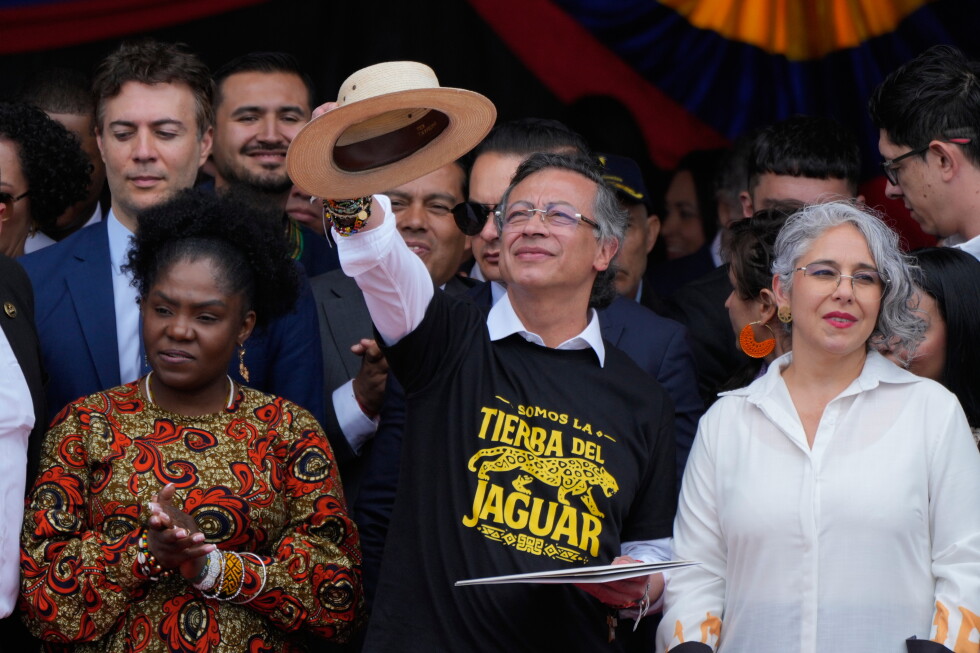
BOGOTÁ, Colombia – On Colombia’s 2026 Independence Day, outgoing left-wing President Gustavo Petro delivered his final public address as head of state, using the moment to stoke political tensions across the nation by leveling explosive claims of foreign interference in the country’s recent presidential election and calling on his supporters to mobilize en masse to block policy changes from the incoming conservative government. The speech, delivered July 20 amid nationwide military parades that included a public appearance by president-elect Abelardo de la Espriella, deepens a political crisis that has simmered since the narrow June 21 election result.
De la Espriella, a dual U.S.-Colombian citizen and conservative criminal defense lawyer who entered politics only in 2025, secured a narrow victory over Petro’s ally Iván Cepeda by a margin of just 250,000 votes. The president-elect, who will be sworn into office on August 7, has laid out an aggressive policy agenda that directly reverses many of Petro administration’s core priorities: he has proposed cutting public sector spending by as much as 40%, rewriting existing labor laws to allow companies to hire workers on hourly contracts, cutting business taxes, canceling ongoing peace talks with rebel groups, and constructing large-scale mega prisons modeled after El Salvador’s controversial CECOT facility. During the election campaign, de la Espriella was publicly endorsed by former U.S. President Donald Trump, a move that has fueled opposition claims of external meddling in Colombia’s domestic politics.
In his lengthy Independence Day speech, Petro doubled down on unsubstantiated claims that the election was riddled with fraud. He alleged that both the United States and Israel helped manipulate the final vote tally, claiming Israel supplied voting software that allowed for rigged results. Colombian electoral authorities have repeatedly dismissed these fraud allegations and have formally certified de la Espriella’s victory. The outgoing president also called on his millions of supporters to organize mass strikes and peaceful street protests if the incoming administration moves to rewrite Colombia’s current labor laws, which were passed under Petro to boost overtime pay and limit the use of precarious short-term employment contracts for workers.
“We must exercise our opposition in the streets, and resist peacefully … but in an overwhelming manner,” Petro told the crowd. He also added that Trump’s open endorsement of de la Espriella alone constitutes sufficient grounds to annul the presidential election results.
Political friction has grown steadily in Colombia in the weeks since the election. While Cepeda initially accepted the vote outcome, he has since reversed course and stated he will not recognize de la Espriella as a legitimate president unless the president-elect renounces his U.S. citizenship. De la Espriella, who previously ran a Florida-based law firm that represented high-profile clients including former Colombian paramilitary leaders and businessmen charged with money laundering, has claimed he faces imminent threats from rebel groups. He said Monday that factions including the National Liberation Army and remaining FARC holdouts are offering bounties of up to $1 million to contracted killers to assassinate him. In response, the president-elect has announced he will move his August 7 inauguration ceremony to a military base as a security precaution, a decision that also signals his strong alignment with Colombia’s armed forces.
Despite his conservative mandate, political analysts note de la Espriella faces significant obstacles to implementing his policy agenda. Sergio Guzmán, a Bogotá-based political risk analyst, pointed out that the president-elect’s coalition does not hold a controlling majority in Congress, meaning he will be forced to negotiate cross-party concessions to advance budget cuts, prison construction, and other core proposals.
For his part, Petro signaled in Monday’s speech that he does not plan to retreat from public life after leaving office. The outgoing president hinted he will take on leadership of his left-wing political coalition, the Historical Pact, to maintain influence as the face of the opposition to de la Espriella’s administration. Guzmán noted that Petro’s core goal in the coming months is to cement his legacy and prove he remains a dominant force in Colombian politics, ensuring that the social and economic reforms of his administration do not get sidelined by the new government.