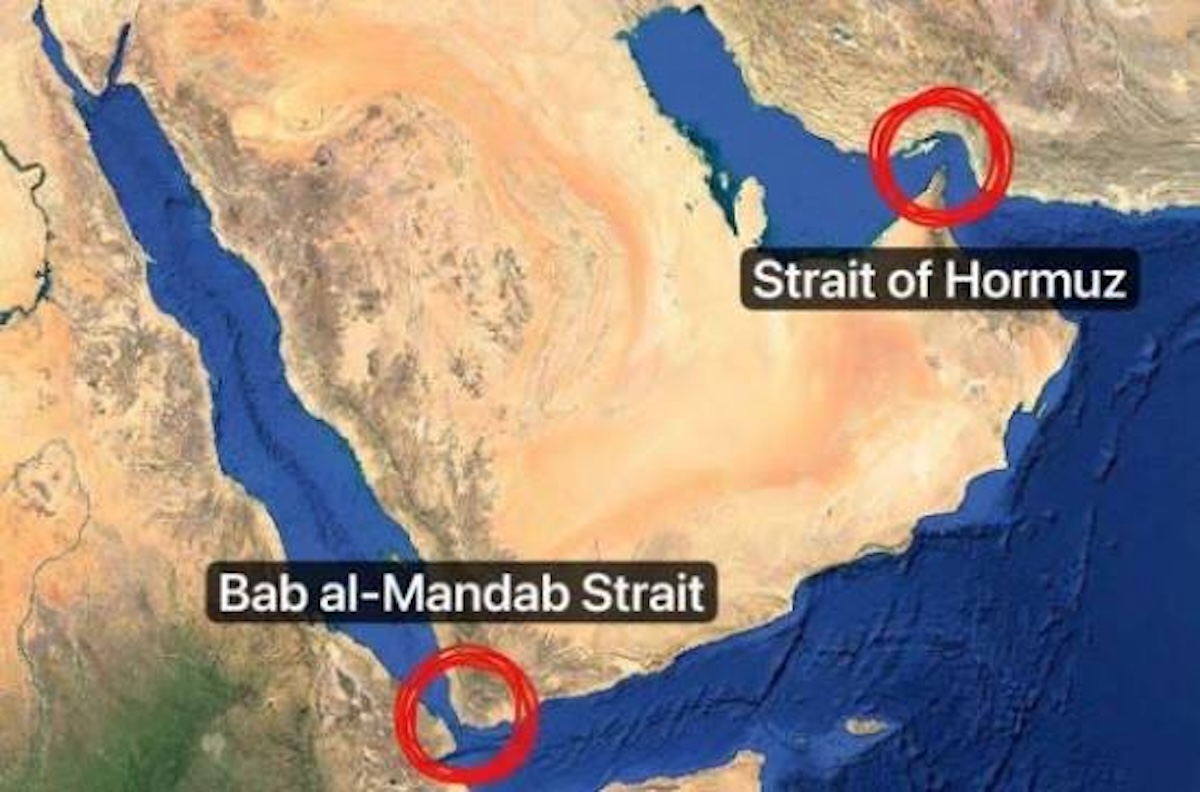
On Monday, Yemen’s Houthi movement declared a full maritime embargo against Saudi Arabia, a move that threatens to send new shockwaves through already strained global energy markets, against the backdrop of escalating U.S.-Iran tensions.
The announcement came via a video address from Houthi spokesperson Yahya Saree, who framed the embargo as direct retaliation for a recent airstrike on Sanaa Airport that the group attributes to Saudi-led forces.
This new threat to energy security comes amid a shifting global oil transportation landscape. Earlier this year, following heightened U.S. pressure on Iran, Iran restricted transit through the Strait of Hormuz — the world’s most important chokepoint for crude oil shipments. In the wake of that disruption, global oil markets have become far more reliant on shipping routes through the Strait of Bab al-Mandeb, the strategic waterway that sits off Yemen’s coast and connects the Red Sea to the Gulf of Aden.
According to Bloomberg energy and commodities commentator Javier Blas, Saudi Arabia currently moves approximately 4.5 million barrels of crude oil per day through Red Sea shipping channels, the vast majority of which pass through the Bab al-Mandeb Strait. That means a Houthi-enforced embargo could take millions of barrels of daily oil shipments off the global market.
Compounding this risk is the current state of U.S. crude reserves, which are already at historic lows. New data from the U.S. Energy Information Administration shows that U.S. crude inventories dropped by 1.7 million barrels in the week ending July 10, pushing stockpiles to their lowest level since 1983.
Political scientists and energy experts have sounded the alarm over the potential economic fallout of this new disruption. University of Chicago political scientist Robert Pape warned that closing this additional critical shipping lane could prove catastrophic for the already fragile global economy. “The Titanic is now hitting the iceberg, and there are not enough lifeboats for the world economy, Pape added.
University of Illinois international relations professor Nicholas Grossman pointed out that the Houthi embargo is just the latest in a cascading series of disruptions hitting global energy supply chains. “Iran blocking Strait of Hormuz. US blocking Iranian shipping. Iran bombing energy facilities in Gulf Arab states. US bombing energy facilities in Iran. Ukraine bombing energy facilities in Russia. Houthis disrupting Red Sea shipping. Oil and gas reserves running dry. It’s a lot, and adding up, Grossman noted.
Juliette Kayyem, a senior lecturer at Harvard University’s Kennedy School and a former official in the Obama administration, argued that the very real threat of a widespread shutdown of global energy supplies should force U.S. policymakers to re-evaluate the utility of military force in the Middle East. “A bunch of military and conventional wisdom analysts assured the American public that our air dominance was unparalleled, Kayyem wrote. “The ‘never right but always certain’ crowd didn’t realize the war was going to be fought on water.”