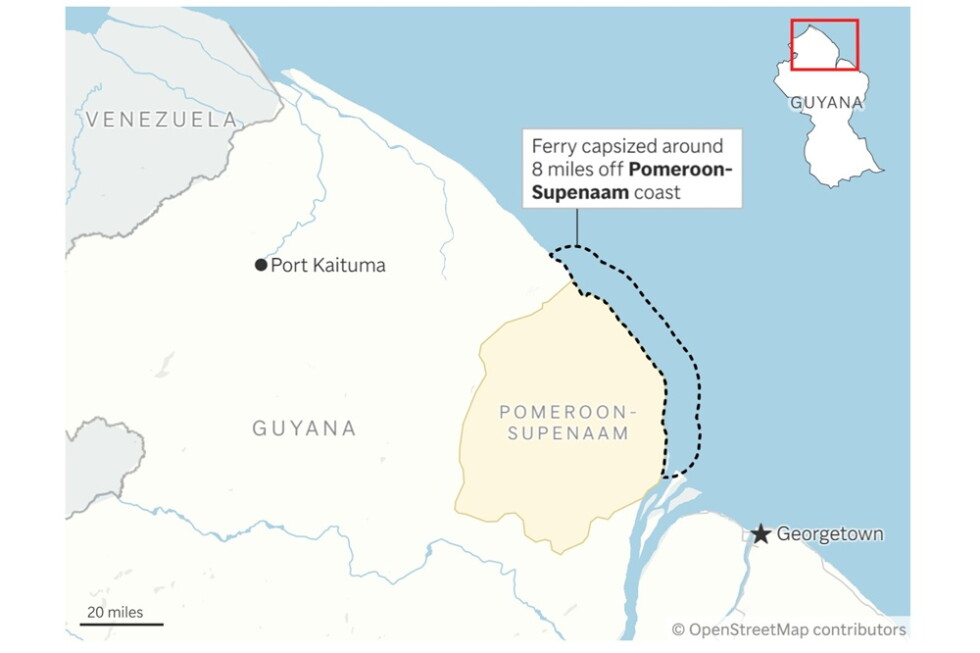
GEORGETOWN, Guyana – A devastating maritime incident has unfolded off the North Atlantic coast of Guyana, where a government-operated passenger ferry capsized with 133 passengers and crew members on board. As of Sunday, rescue teams have pulled 67 survivors from the water, while urgent search efforts continue across a vast search area to locate dozens of unaccounted-for people, authorities confirmed.
The vessel in question, the MV Barima, was traveling along the country’s Atlantic coastline from Georgetown, Guyana’s capital, to Port Kaituma when the accident occurred, according to Prime Minister Mark Phillips, who is overseeing the national government’s emergency response to the disaster. Phillips confirmed that the group of rescued people includes 41 adult men, 11 adult women, and 15 children. He declined to comment on whether officials expect fatalities among the missing passengers.
To cover the wide area where the vessel capsized, search operations have mobilized an extensive fleet of resources: military helicopters, fixed-wing surveillance aircraft, and local fishing vessels are currently combing through a 1,000-square-mile stretch of ocean and coastal water in the hunt for survivors.
Public Works Minister Juan Edghill shared details of the timeline of the incident in a Facebook post, noting that the MV Barima departed Georgetown just after 3 p.m. local time on Saturday, and began encountering dangerous conditions shortly before midnight. The national emergency response center received the vessel’s distress call at 11:01 p.m. local time (0301 GMT), which immediately triggered the launch of a joint search and rescue operation involving both government-owned and private watercraft.
The ferry capsized in waters near the mouth of the Pomeroon River, according to official accounts. The MV Barima operates weekly scheduled services to remote, largely Indigenous communities located near Guyana’s border with Venezuela, a key transportation link for residents in the under-served region.
Edghill pushed back against circulating claims that overloading of passengers or cargo contributed to the capsizing. He confirmed the vessel was properly equipped with 250 life jackets, two rigid life rafts, and six inflatable life rafts, meeting required safety standards. Citing firsthand accounts from rescued passengers, the minister said abnormal tide conditions were the primary cause of the disaster.