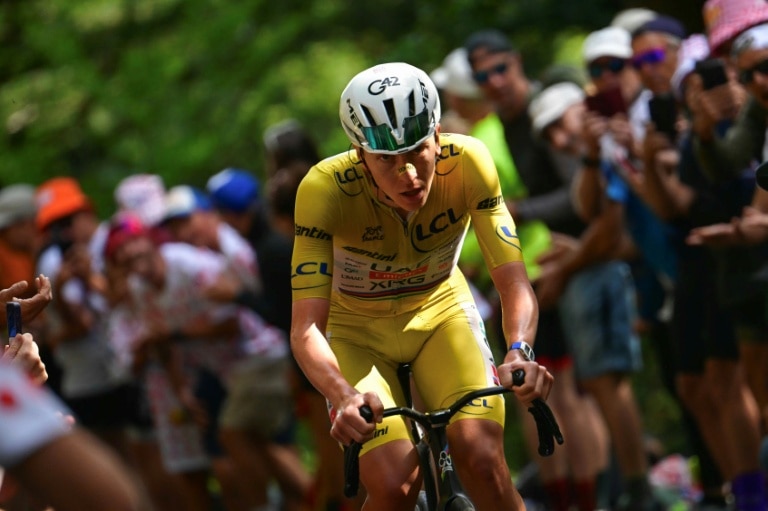
The 2024 Tour de France was thrown into a small but sharp controversy just hours before one of its most grueling mountain stages, when the race’s two leading overall contenders were pulled from their hotel beds for out-of-competition anti-doping testing in the dead of night.
Race leader Tadej Pogacar, the four-time Tour champion from Slovenia, and his closest challenger, two-time winner Jonas Vingegaard of Denmark, both confirmed the surprise visits from International Testing Agency (ITA) officials ahead of Sunday’s 15th stage. The 183.9-kilometer route, which winds from the Jura region to the high-altitude finish at Plateau de Solaison in the Alps, features four rated climbs and finishes with an 11-kilometer ascent averaging 9% gradient—one of the toughest tests riders will face in this year’s race.
Le Parisien first reported that both riders were specifically targeted for the unannounced overnight tests at their team hotels. Pogacar, who has held the overall leader’s yellow jersey for more than 10 days (requiring post-stage testing after each of those days of racing), told reporters that inspectors arrived at his room at 5 a.m., leaving him with just four hours of sleep before the stage start.
“It was a big shock to only get four hours of sleep,” Pogacar said. “I couldn’t fall back asleep after they left, so I spent the morning chilling out, listening to old Eminem tracks and making coffee—ended up over-caffeinated. I was ready to race when the start came, but there’s nothing nice about being woken up mid-dream.” He added that random out-of-competition morning tests are common during the Tour, but this was the first time officials had conducted testing in the middle of the night this year.
Vingegaard’s test came even earlier, with inspectors knocking at his door at 2 a.m., cutting his sleep short ahead of the high-stakes mountain stage. “The ITA didn’t let me get much sleep last night. I was sleeping really well until that knock,” Vingegaard told reporters. “Don’t get me wrong—it’s good that they test, we all support anti-doping work. But when it disrupts your sleep and can impact your performance out on the road, that doesn’t make sense. It has to be equal for all riders, but getting woken up at two in the morning is never pleasant.” The entire testing process took 40 minutes, Vingegaard said, and while he felt physically able to race, it was far from an ideal preparation.
Richard Plugge, managing director of Vingegaard’s Visma-Lease a Bike team, told Dutch cycling outlet Wielerflits that multiple teams had riders targeted for night-time testing, though he did not share further details. Plugge acknowledged that rigorous anti-doping oversight is critical to maintaining the sport’s integrity, but admitted the timing of the tests was “unpleasant” for fatigued riders.
Not all team members took the disruption as calmly as the two overall contenders. Matteo Jorgenson, Vingegaard’s American teammate, slammed the timing as a major snub to rider welfare. “I was told to keep my mouth shut about this, but this is a complete lack of respect for the riders,” Jorgenson told reporters. “Recovery is everything for us, especially between two of the hardest mountain stages of the entire Tour. To get woken up at 2 a.m. right before one of them? That makes me absolutely furious.”
Heading into the 15th stage, Pogacar holds a commanding 4.5-minute overall lead over Vingegaard, with five other riders sitting within 1 minute 20 seconds of the Dane in the general classification. Both top contenders took the start on Sunday despite the disrupted night of sleep, as the race continues its push toward the Paris finish.