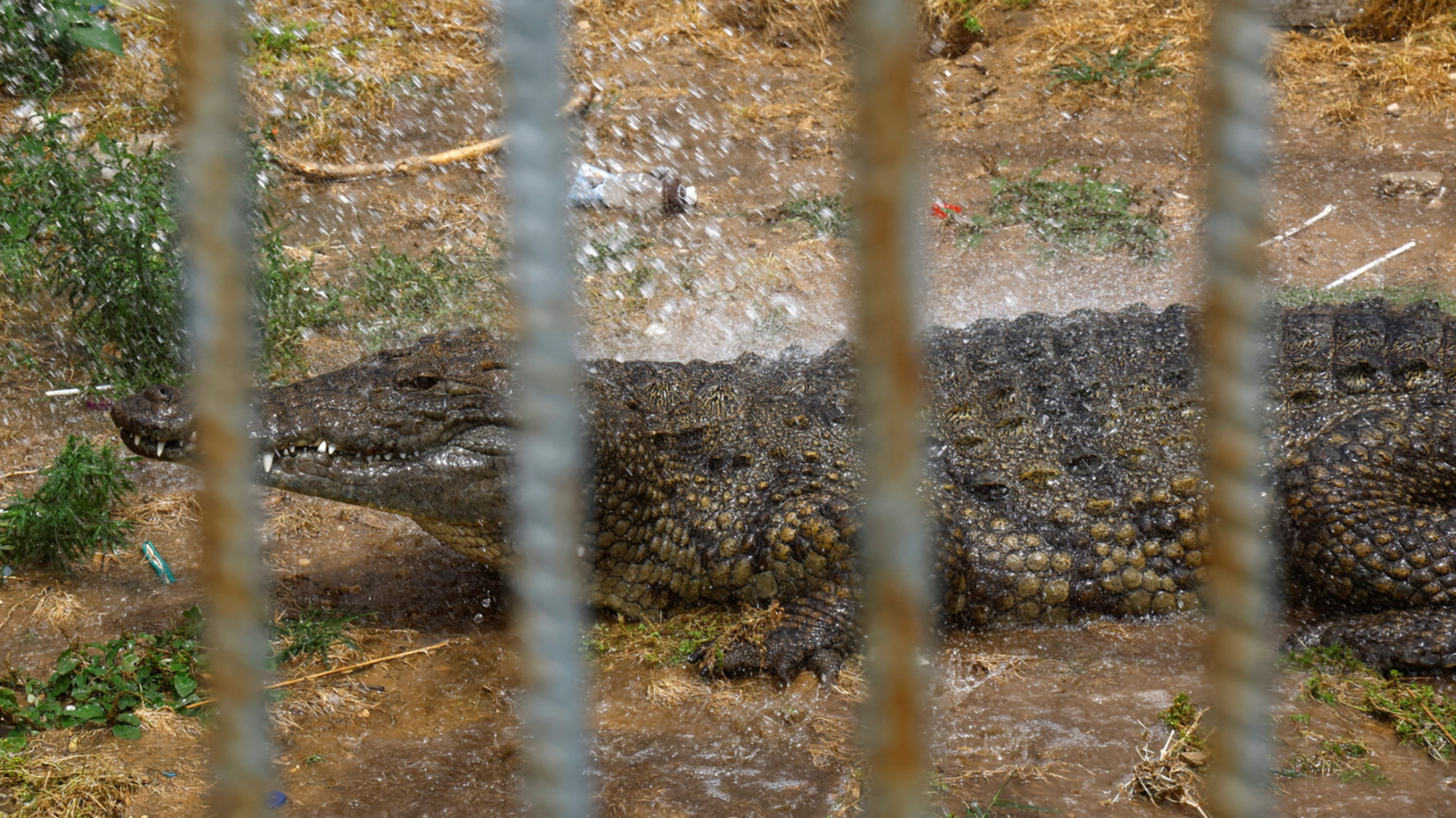
In a decision that has sparked fierce backlash from environmental, legal, and human rights advocates, Israel’s Environment Ministry has revoked the protected status of Nile crocodiles, clearing a legal path for a far-right minister’s extremist proposal to build a Palestinian detention facility ringed by the large predatory reptiles. Israeli public media first reported on the policy shift Thursday.
Environment Minister Idit Silman signed the official decree Wednesday that reclassifies Nile crocodiles into a newly created legal designation: “specially managed wild animal.” This new category explicitly authorizes Israeli state bodies to hold the species for security uses, according to Israeli news outlet Ynet. The decree formalizes the change, granting Israeli security forces permission to keep crocodiles under loosely defined “specific conditions.”
Multiple sources confirm the approval moved forward despite explicit opposition from the Environment Ministry’s own top legal advisor, the country’s leading wildlife conservation authority, and a coalition of Israeli environmental organizations. The policy shift comes after months of relentless lobbying from National Security Minister Itamar Ben Gvir, the far-right leader who first unveiled the outlandish plan for a crocodile-encircled prison in December 2023.
Ben Gvir, who directly oversees the Israel Prison Service (IPS), has openly stated he drew inspiration from Florida’s widely condemned “Alligator Alcatraz” immigration detention center, a facility that drew global outrage for its use of alligators as a natural deterrent to escape attempts.
Prior to Silman’s decree, the Israel Nature and Parks Authority (INPA), Israel’s official wildlife management body, had long held that Nile crocodiles — a protected species in the country since 2013 — could only be held in captivity for educational and scientific research purposes. Neta Drori, the Environment Ministry’s in-house legal advisor, also formally opposed the reclassification, arguing the proposal lacked any solid legal or professional justification.
The IPS attempted to defend the plan by claiming its staff could manage crocodiles based on their existing experience working with security attack dogs, an argument Drori rejected outright in her formal assessment. “The IPS does not appear to have expertise in raising dangerous wild animals such as crocodiles,” Drori wrote, adding that the proposal failed to meet basic legal requirements for the reclassification.
Despite the unified opposition from legal and wildlife experts, Silman moved to approve the policy change this week. Ben Gvir quickly celebrated the decision on his official Facebook page Thursday, sharing an AI-generated image of himself holding a crocodile on a leash alongside a threatening message: “Damn terrorist, thinking of trying to escape? Think again.”
The controversial plan comes amid a documented collapse of conditions for Palestinian detainees held in Israeli prisons since the start of Israel’s military campaign in Gaza in October 2023. Under Ben Gvir’s leadership, reports of torture, systematic starvation, and degrading treatment of detainees have skyrocketed. Leading international human rights organizations have accused Israeli authorities of widespread, systematic abuses against detainees, going so far as to label several Israeli detention facilities “torture camps.”
Conservation groups and the INPA have doubled down on their opposition in the wake of Silman’s announcement, arguing the reclassification is unlawful and creates unnecessary risks for both the crocodiles and the general public. The INPA emphasized there is “no sufficient professional basis” to allow the Israel Prison Service to hold crocodiles at security facilities. The agency, which holds legal responsibility for protecting Israel’s native and protected wildlife, warned that housing crocodiles in prison facilities would create “significant risks” and expressed grave doubt that the IPS could meet the complex care requirements the species needs to survive in captivity.
In a joint statement released after the decision, a coalition of Israeli environmental organizations said they “strongly object to the use of animals as a means of guarding and deterrence.” The groups noted that “crocodiles are sentient beings, with complex needs for space, water, temperature and natural behavior,” arguing that Israeli prison authorities should rely on proven, conventional security measures rather than experimental and unethical use of wild animals.
The organizations also questioned the practical effectiveness of the proposal, pointing out that Nile crocodiles slow their metabolic rate during winter months, become extremely sluggish, and stop eating entirely — a biological trait that would render them useless as a deterrent to escape. “Security should be achieved through real means, not through animals,” the statement concluded.
Nile crocodiles have held protected status across Israel since 2013. Prior to that designation, commercial crocodile farms operated primarily as tourist attractions, but many operations shifted to breeding the animals for their luxury skins after tourist numbers declined. The issue of crocodile management in Israel already made headlines last year, when the Israeli military killed more than 250 Nile crocodiles at a farm located in an Israeli settlement in the occupied West Bank. That massacre drew widespread condemnation from global and local animal welfare groups, which accused the military of unlawfully killing a protected species.
This report was originally sourced from independent coverage of the Middle East by Middle East Eye, a publication that specializes in independent, on-the-ground reporting of the region.