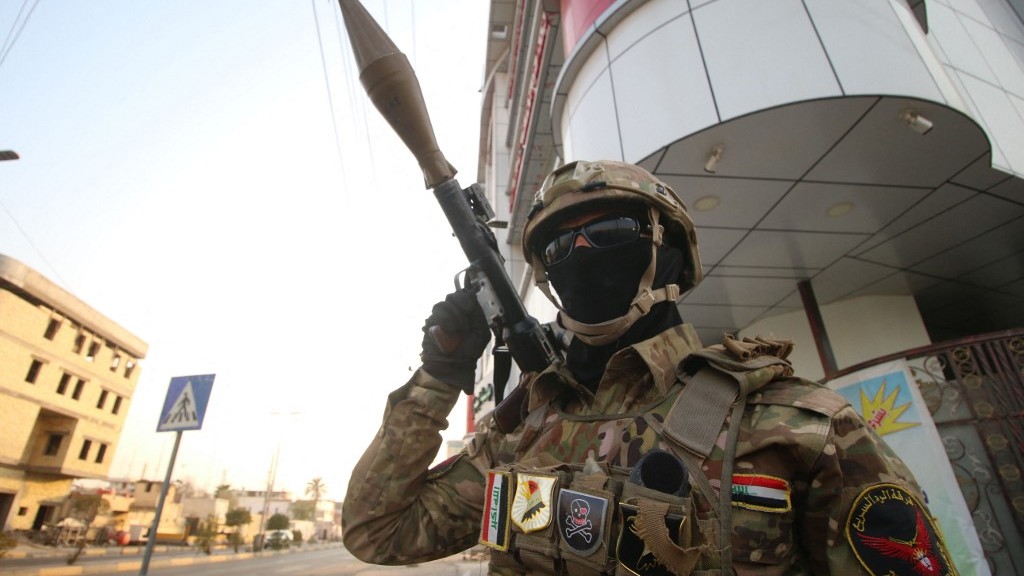
In a high-stakes move that reshapes regional diplomatic dynamics, Iraq’s Prime Minister Ali al-Zaidi has ordered the creation of a specialized high-level investigative committee to probe networks smuggling advanced weapons from Iraq through Syria to Lebanon’s Iran-aligned Hezbollah, in direct coordination with Syria’s new post-Assad administration.
The announcement follows a confirmed seizure by Syrian security forces earlier this Thursday, which foiled an attempted smuggling operation along the Syria-Iraq border. According to Syria’s state-owned news agency Sana, citing an anonymous interior ministry source, the intercepted cache was explicitly bound for Hezbollah and contained a lethal arsenal including long-range missiles, anti-armor guided munitions, and unmanned aerial vehicles.
Iraq’s Joint Operations Command, a military body that reports directly to the prime minister’s office, has pledged full accountability for any officials found complicit in the smuggling activity. The command emphasized that the investigation is focused on protecting the integrity of Iraq’s shared border, upholding national stability, and blocking actions that threaten the country’s national security.
The probe comes against a shifting geopolitical backdrop in the Middle East. Syria’s current ruling administration took power in December 2024 after ousting former President Bashar al-Assad, a long-standing close ally of both Iran and Iraq. During Syria’s decade-long civil war, multiple Iraqi armed factions deployed into Syrian territory to back Assad against opposition forces, with some of these factions holding key influence over the Iraqi government that took office in May 2024.
Like all preceding Iraqi governments, Iraq’s current administration has navigated a precarious balancing act between its eastern neighbor Iran and the United States alongside its Western and regional allies. Even as Baghdad has moved to build constructive diplomatic ties with Syria’s new government and support efforts to stabilize the war-torn country, it has faced sustained pressure from Washington to crack down on Iran-aligned armed groups operating within its borders, particularly those targeting U.S. and Israeli assets across the Middle East.
The escalating standoff between the U.S. and Iran has pushed Iraqi leaders to reiterate their commitment to cooperation with Washington, with al-Zaidi overseeing negotiations to expand bilateral partnership during an official visit to the U.S. capital this week.
Hayder al-Shakeri, a research fellow in the Middle East and North Africa program at London-based think tank Chatham House, explained that the investigation serves a clear diplomatic purpose. Al-Shakeri told Middle East Eye that the move allows Baghdad to demonstrate it operates independently of pro-Iran armed factions, sending a clear signal to the U.S. that the Iraqi government is ready to assert tighter control over unregulated cross-border networks.
However, al-Shakeri also cautioned that the true nature of the policy shift remains to be seen. “But whether this reflects a genuine, sustained policy shift, rather than a tactical gesture, will depend on whether the government follows through with arrests, prosecutions, tighter border enforcement, and action against the political or security figures protecting these networks,” he said.