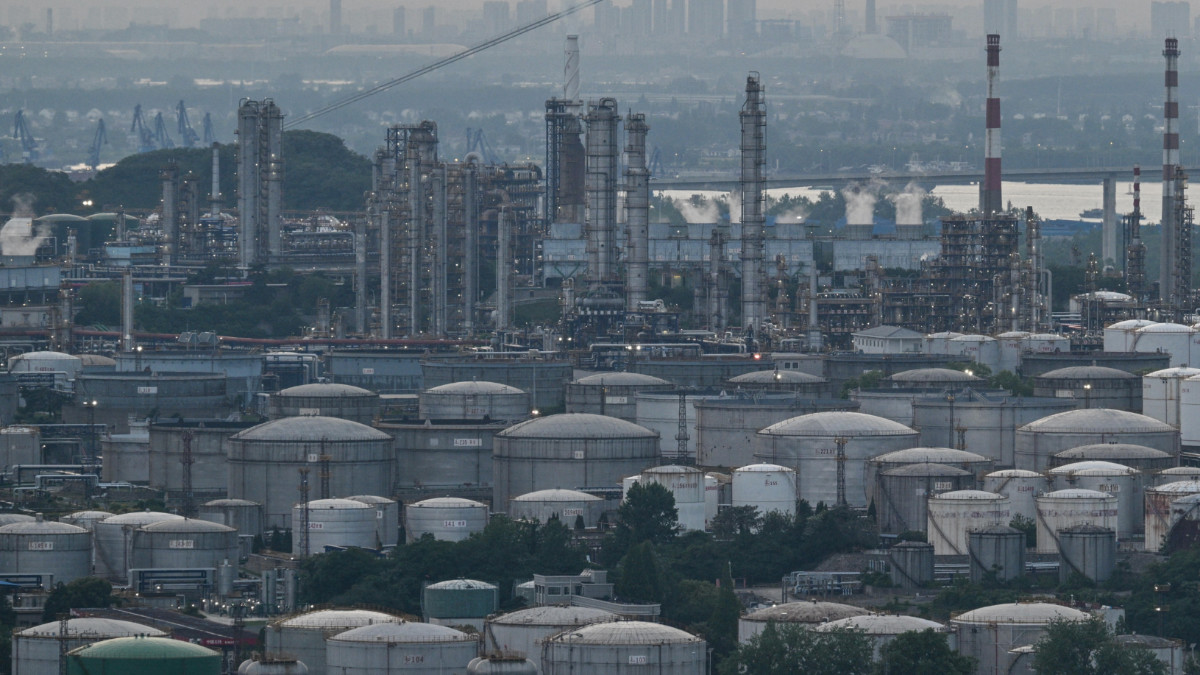
As tensions between the United States and Iran flare up once again in the strategically critical Strait of Hormuz, a sharp drop in China’s crude oil imports has emerged as an unexpected factor keeping global energy prices from spiking out of control. New customs data released by China on Tuesday shows that the country’s total crude oil imports in June fell to 29.27 million tonnes, marking a 41% year-on-year decline. This import level is the lowest recorded by China since October 2016, hitting a multi-year low that has reverberated through global energy markets.
As the world’s largest crude oil importer, China holds enormous sway over global energy pricing dynamics. Last year alone, the country imported an average of 11.6 million barrels of crude per day, a volume larger than the combined import volumes of France, the United Kingdom and Germany. Russia, Saudi Arabia, Iraq, Iran and Brazil stand as China’s top five crude suppliers, and Beijing is also the primary export market for both Iranian and Saudi Arabian crude. Energy industry analysts confirm that Beijing built up large strategic crude stockpiles in advance of the recent escalation of conflict between the US and Iran, creating a buffer that allows it to cut back on near-term imports.
Energy experts widely point to China’s steep import cutback as a primary reason that global energy prices have remained contained despite the return of open conflict in the Strait of Hormuz, one of the world’s busiest and most critical maritime chokepoints for global oil trade. Multiple factors have driven the sharp drop in Chinese crude imports, analysts note. A persistent post-pandemic economic slowdown across China has softened domestic energy demand, while the country has also increasingly substituted coal for crude to meet power generation needs. Recent customs data bears this out: China’s coal imports surged 30% in June to hit a five-month high, confirming the fuel shift underway.
The current conflict in the Strait of Hormuz comes after a short period of de-escalation earlier this year. The US and Iran signed a Memorandum of Understanding (MoU) that extended a spring ceasefire and opened the door to talks over Iran’s nuclear program and governance of the Strait. Under the terms of the deal, Iran received temporary sanctions relief in exchange for halting attacks on commercial vessels and allowing unimpeded transit through the waterway without mandatory tolls. In recent weeks, however, violence has reignited:
Iran has launched attacks on commercial vessels from Saudi Arabia, Qatar and the United Arab Emirates that were transiting the Strait through Omani territorial waters. Tehran claims the vessels failed to coordinate passage with Iranian authorities as required by the MoU, though the agreement does not mandate that vessels pass through Iran’s territorial waters. In response, the US has resumed escorting commercial vessels through the Strait, restarted direct strikes against Iranian targets, and reimposed a full naval blockade on Iranian ports and shipping as of Tuesday.
Even with the resumption of conflict, global oil prices have only climbed modestly, rising from a recent low of $69 per barrel to $79 per barrel. According to market analysts, this limited increase has prevented the conflict from spilling over into broader disruption of the global economy. The muted price reaction also strips Iran of one of its key levers to force global policy shifts, while buying additional time for the US to continue its military campaign.
The steady energy prices have also helped moderate US inflation. Just one month after the MoU was signed, US inflation fell, driven in large part by a drop in domestic gasoline prices. Even after a 30% overall increase from pre-conflict levels in February, when US national average gas prices stood at roughly $3 per gallon, prices fell by 10% in June according to the latest US inflation report, and currently sit at an average of $3.87 per gallon.
The original reporting on this development was published by Middle East Eye, a media outlet that delivers independent, in-depth coverage of the Middle East, North Africa and global affairs connected to the region.