In a critical development for Middle East peace efforts, a Hamas diplomatic delegation convened high-stakes discussions with Egyptian security officials in Cairo on Thursday focused on finalizing arrangements for the second phase of the existing Gaza ceasefire agreement, an anonymous senior Egyptian security source with direct knowledge of the negotiations confirmed to Xinhua News Agency.
The talks centered on logistical and political preparations to advance the expanded Gaza peace plan, with the source outlining key commitments Hamas has put forward to move the process forward. The group has formally reaffirmed its readiness to transfer full administrative control of the Gaza Strip to the newly formed National Committee for the Administration of Gaza, a foundational step required to launch the second phase. That phase of the agreement calls for a complete withdrawal of all Israeli military forces from Gaza territory.
Hamas has additionally agreed to place all of its weapons under the custody of the national transitional committee, and has expressed its willingness to remove all barriers to the operations of an international peacekeeping force and the committee’s civilian governance work, the source added.
Mediators currently reviewing peace proposals have received a plan from the U.S.-led “Board of Peace” that calls for the creation of a pilot buffer zone in Rafah, the southern Gaza coastal city. The zone would house tens of thousands of displaced Gaza residents after they complete mandatory security screenings administered by the national committee, according to the source. All relevant parties to the negotiations are currently maintaining close coordination to work through remaining obstacles and implement the full peace plan, the source noted.
Thursday’s talks come just days after Hamas announced on Monday that it had dissolved its existing Government Emergency Committee in Gaza, completing the first formal step of transferring administrative authority to the new cross-factional transitional body. Established in January 2026, the 15-member committee is composed entirely of independent Palestinian technocratic figures, tasked with overseeing civilian administration, public services, and post-conflict reconstruction throughout a transitional governance period.
The current ceasefire between Hamas and Israel has held since October 10, 2025. Its first successful phase delivered on core initial commitments: the exchange of hostages and detained prisoners between the two sides, the opening of Gaza’s border crossings to large-scale humanitarian aid shipments, and the withdrawal of Israeli forces from multiple populated areas of the territory.
The United States formally unveiled its framework for the second phase of the peace process in mid-January. The U.S. plan lays out core end goals: full Israeli military withdrawal from all of Gaza, the disarmament of Hamas-aligned factions, the launch of large-scale reconstruction projects, and the consolidation of the transitional authority’s governance over the enclave.
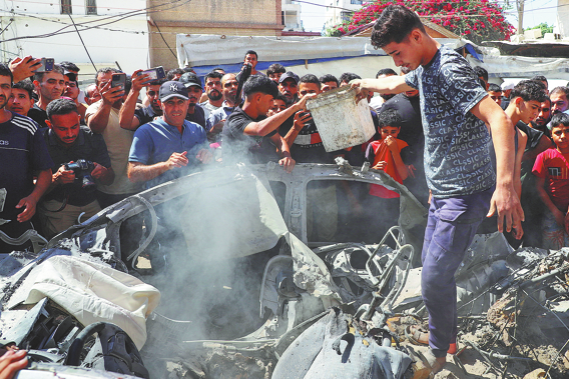
Even as diplomatic progress moves forward, violence continued to disrupt calm across Gaza on Thursday. Gaza’s civil defense agency, which operates rescue and recovery services under Hamas administration, and local health officials confirmed that new Israeli attacks across the Palestinian territory left six people dead. Two people were killed and multiple others wounded when an Israeli drone targeted the Nuseirat refugee camp in central Gaza, the civil defense agency reported, with four additional fatalities recorded in separate strikes in other parts of the enclave.
Gaza hospital officials have confirmed they received the bodies of all six victims. A local Gaza security source confirmed that one Israeli drone strike targeted a vehicle belonging to Hazem Qassem, a prominent Hamas spokesman. Qassem was not inside the vehicle at the time of the attack, but his bodyguard was killed in the strike, and the bodyguard is counted among the six fatalities confirmed by civil defense. The Israeli military had not issued any official comment or response to requests for statement about the strikes as of Thursday evening.
In a separate parallel development for Palestinian governance Thursday, Palestinian President Mahmoud Abbas issued a formal decree scheduling legislative elections for November 28. If the vote proceeds as planned, it will mark the first nationwide Palestinian legislative election in nearly 20 years; the last such vote was held in 2006.