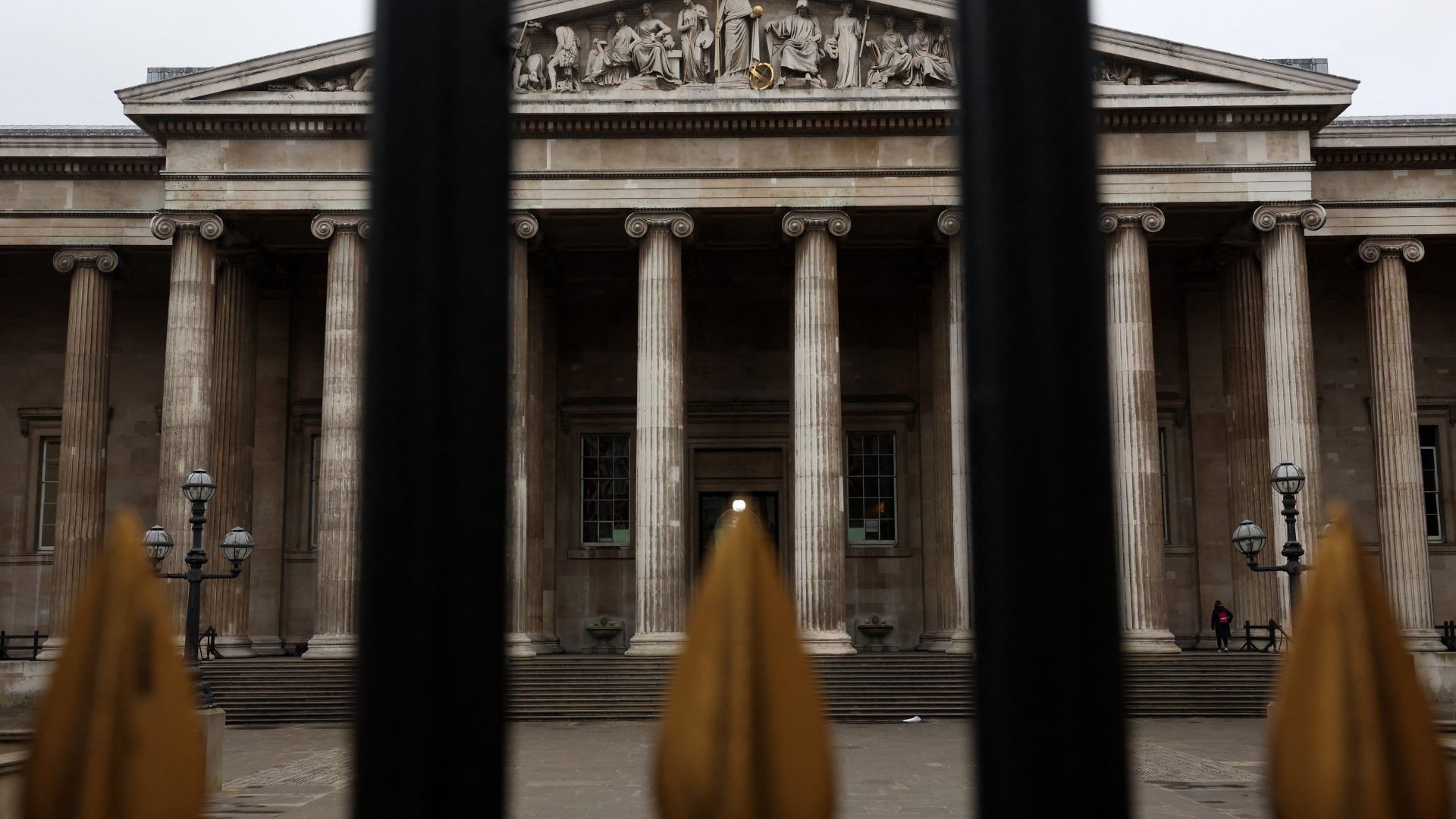
A growing political scandal has erupted in the United Kingdom after an investigative journalism exposé uncovered that London’s British Museum removed references to “Palestine”, “Palestinian” and “Israelite occupation” from its public exhibits in direct response to coordinated lobbying from pro-Israel advocacy groups and public figures. In response to the revelations, cross-party members of UK Parliament have united to call for an immediate independent probe into the incident, citing evidence of political interference that undermines the credibility of the country’s leading national cultural institution.
The investigation, carried out by independent outlet Middle East Eye (MEE), found the controversial edits to museum displays were made between October and December 2024, prompted by a wave of complaints from pro-Israel activists and organizations. Multiple MPs from across the political spectrum — including the Green Party, Labour Party, and Your Party — have signed onto the demand for a full independent inquiry.
Green Party MP Sian Berry, representing Brighton Pavilion, called MEE’s findings “deeply troubling”, warning that if the museum did indeed cave to external political pressure, it would severely damage the institution’s standing and erode public trust in its scholarly work. “An independent investigation should urgently be launched to determine if political interference has occurred,” Berry said.
Richard Burgon, Labour MP for Leeds East, echoed the call for transparency, emphasizing that national cultural bodies have a responsibility to preserve rather than erase marginalized histories. “The British Museum must urgently answer serious questions about its unacceptable removal of references to Palestine,” Burgon said. “Our national institutions must not take part in the erasure of Palestinian history. There must now be an independent investigation into who authorised these changes, why they were made, and whether the Museum misled the public.”
Your Party MP Jeremy Corbyn, representing Islington North, went further, labeling the erasures as a clear case of anti-Palestinian racism. “This assault on academic freedom represents an attempt to wipe Palestinians from history… which can only embolden Israel’s ongoing illegal occupation,” Corbyn said. “We should call this politically motivated attack out for what it is: anti-Palestinian racism. We need an urgent investigation into political interference at the British Museum, and whether that led to the disgraceful Palestinian erasure.”
The British Museum has so far refused to confirm whether it will launch an independent inquiry, and did not respond to multiple requests for comment from MEE on the specific claims of political interference. Back in February, the institution defended the changes, claiming the edits were the result of audience testing that found the term Palestine “is in some circumstances no longer meaningful.” But freedom of information responses obtained by MEE contradict that claim: despite the museum holding an extensive archive of audience testing reports, it has no official records of any such testing related to the Palestinian terminology edits.
MEE’s analysis of heavily redacted internal British Museum emails further exposes the true context of the decision: senior museum staff openly raised concerns about private complaints from individual pro-Israel activists and the Board of Deputies of British Jews, a prominent pro-Israel Jewish community organization, as well as critical social media posts from pro-Israel public figures.
In one notable case, a complaint argued that referencing “Israelite occupation” in a display text about the ancient Phoenicians, a civilization that existed more than 2,000 years ago, would fuel contemporary hatred and “justify attacks against Jews” in the present day. While the full text of the Board of Deputies’ official complaint has not been disclosed, an internal museum note indicates the organization argued that the term “occupied” had become overly “politically charged in the context of contemporary politics.” The Board of Deputies has not responded to MEE’s request for comment on the matter.
Internal records also show the museum moved with extraordinary speed to address the pro-Israel complaints: most were resolved within days, and one high-profile complaint from the Board of Deputies was approved for action just hours after it was circulated internally. One staff memo even advised colleagues to be “uber-conscious” of the upcoming first anniversary of the 7 October attacks when processing the complaints. By contrast, MEE found no evidence of museum leadership showing similar consideration for the situation of Palestinians, who are facing what the United Nations has described as a ongoing genocide and systematic cultural erasure in Gaza.
When contacted for comment following the publication of MEE’s initial investigation earlier this month, the British Museum declined to address any of the substantive questions raised, instead reissuing a vague February press statement. A museum spokesperson claimed that “it has been reported that the British Museum has removed the term Palestine from displays. It is simply not true. We continue to use Palestine across a series of galleries, both contemporary and historic.”
Husam Zomlot, the Palestinian ambassador to the United Kingdom, warned that the erasure of Palestinian history from one of the world’s most prestigious cultural institutions carries severe existential implications for the Palestinian people, coming amid ongoing violence in Gaza. “This is absolutely existential for us in light of the ongoing genocide,” Zomlot said.
Israel’s 2023–2024 military assault on Gaza has already caused widespread destruction of Palestinian cultural and historical heritage sites. UNESCO, the UN’s cultural and heritage agency, has verified damage to at least 164 distinct heritage sites in Gaza since October 2023. In September 2024, Israeli forces bombed Gaza City’s primary ancient artifact storage depot, destroying 30 years of accumulated Palestinian archaeological work in a single attack.
Accusations that Israel pursues a deliberate policy of erasing Palestinian cultural heritage long predate the 2023 outbreak of the current Gaza war. Back in 2022, Palestinian human rights organization Al-Haq published a report accusing Israel of enacting a formal policy of “cultural apartheid” that targets Palestinian historic sites for destruction “in an attempt to erase them from memory.”
Berry emphasized that the timing of the British Museum’s actions makes the incident even more unacceptable. “When the Israeli government is committing genocidal acts in Gaza and the Palestinian people are being systematically destroyed, it could not be more wrong for the UK’s most prestigious museum to erase the history of Palestine and the ongoing occupation,” Berry said.