Just one month after the United States and Iran signed an interim memorandum of understanding to de-escalate the regional conflict that erupted last February, open hostilities have resumed between the two longstanding adversaries, throwing global energy markets and Gulf stability into fresh uncertainty.
Iranian officials confirmed Wednesday that new American airstrikes targeted the southern port city of Bushehr, the location of Iran’s only operational civilian nuclear facility, alongside multiple military and coastal sites near the strategically vital Strait of Hormuz. This escalation comes after Washington reimposed a full naval blockade of Iranian ports, marking a clear end to the brief ceasefire that had raised hopes for a negotiated peace.
Within hours of the US strikes, Iran’s Revolutionary Guards responded by launching attacks against the US Fifth Fleet based in Bahrain. US military officials confirmed they intercepted all projectiles aimed at civilian infrastructure in the kingdom, while Jordan’s armed forces announced they had shot down three Iranian missiles launched toward its territory.
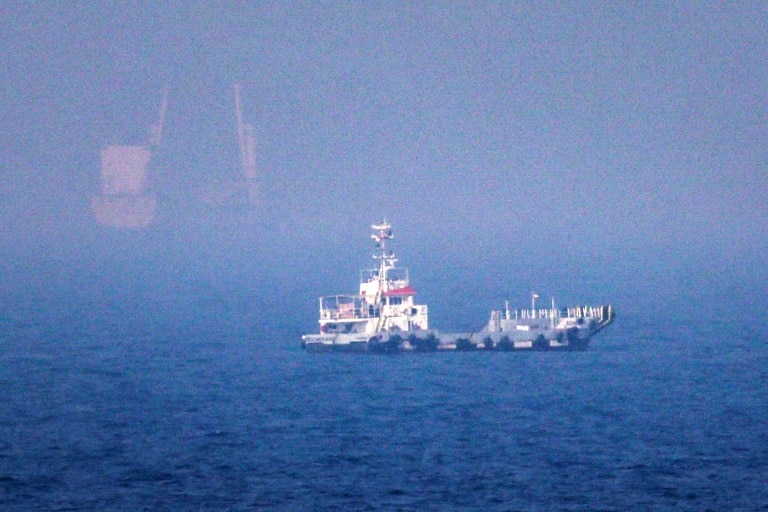
The core dispute driving the renewed violence remains control of the Strait of Hormuz, the narrow waterway that carries roughly a fifth of the world’s daily oil and natural gas supplies, making it one of the most critical energy chokepoints on the planet. Iran first closed the strait to commercial traffic after the US and Israel launched a large-scale offensive against the country on February 28, only briefly reopening it following the Islamabad peace memorandum signed last month. Tehran has now renewed its vow to keep the strait closed “until the US ends its aggression.”
“Retaliatory operations will continue, and the Strait of Hormuz will remain closed until the United States ends its acts of aggression,” the Revolutionary Guards said in an official statement.
US President Donald Trump, for his part, issued a stark warning to Tehran Wednesday during an interview with Fox News, threatening to dramatically expand the scope of American strikes next week unless Iranian leadership agrees to return to negotiations. “Next week it gets really bad for them,” Trump said, signaling targeting of critical Iranian infrastructure including power plants and key bridges if no diplomatic breakthrough is reached. Despite the return to open fighting, mediated peace talks between the two sides have not been formally suspended.
Iran’s Deputy Foreign Minister Kazem Gharibabadi called the reimposed US naval blockade a de facto termination of the interim peace deal. “The renewed US blockade has, in a way, dismantled the Islamabad memorandum,” Gharibabadi said, referring to the agreement that was meant to pave the way for broader peace negotiations.
Five days into the resumption of hostilities, US Central Command (CENTCOM) confirmed it has carried out strikes against dozens of Iranian military targets near the strait and along Iran’s southern coastline, with the stated goal of “degrading Iran’s ability to threaten commercial shipping and civilian crews.” Iranian state media has reported multiple explosions across strategic coastal locations, including Bandar Abbas, Qeshm Island, and Bandar Imam Khomeini, in addition to the strikes on Bushehr.
CENTCOM head Admiral Brad Cooper accused Iran of intentional attacks on civilian targets over the past week, saying “Iran has intentionally targeted civilians across the region by attacking seven commercial ships resulting in nearly a dozen civilian crew members killed, missing, or injured.” He added, “US forces are holding Iran accountable for unwarranted aggression that continues to endanger innocent lives.”
Recent attacks have already disrupted regional shipping: crisis response firm MTI Network reported an explosion from an unidentified device hit a Norwegian tanker off the coast of Oman early Tuesday, while Kuwait confirmed one of its naval vessels was struck in an Iranian drone and missile barrage that wounded four crew members.
In a sudden shift of policy, Trump announced Wednesday he was scrapping a planned 20 percent levy on all commercial ships passing through the Strait of Hormuz that he had unveiled just one day earlier. In a post on his Truth Social platform, Trump said the fee would be replaced with new trade and investment deals with Gulf Arab allies. “I have decided to replace the 20% United States Reimbursement Fee with Trade and Investment Deals that the various Gulf States will be making into the United States,” the post read.
Iranian government spokesperson Fatemeh Mohajerani confirmed that renewed US airstrikes have killed at least 30 Iranians since last week, with seven additional Iranian military personnel killed in Wednesday’s strikes on the country’s southeast.
While Israel has not yet rejoined the fighting, Israeli Prime Minister Benjamin Netanyahu issued a sharp warning to Iranian leadership Tuesday during a visit to Dimona, the southern Israeli town widely believed to host the country’s undeclared nuclear arsenal. “Do not count on things remaining quiet if you attack us,” Netanyahu said, warning Iran would face a “heavy blow” if it targets Israeli territory.
On the ground, the impact of the renewed conflict varies sharply across the region. In Tehran, AFP correspondents reported no immediate visible signs of war preparation, with large crowds of ordinary Iranians gathering in cafes to watch the World Cup semi-final match between France and Spain as usual. But in Kuwait, which has faced repeated attacks throughout the conflict, residents are gripped by persistent anxiety over the escalating crisis.
“Every day, I wake up wondering whether the situation will de-escalate or worsen,” said Mustafa Mohamed, a 39-year-old Sudanese accountant based in Kuwait. “It has become difficult to feel at ease or plan anything because uncertainty grips everyone.”
George Atef, a 38-year-old Egyptian civil servant in Kuwait, echoed that frustration. “What exhausts me most is not knowing when this situation will end — the waiting itself has become draining,” he said.