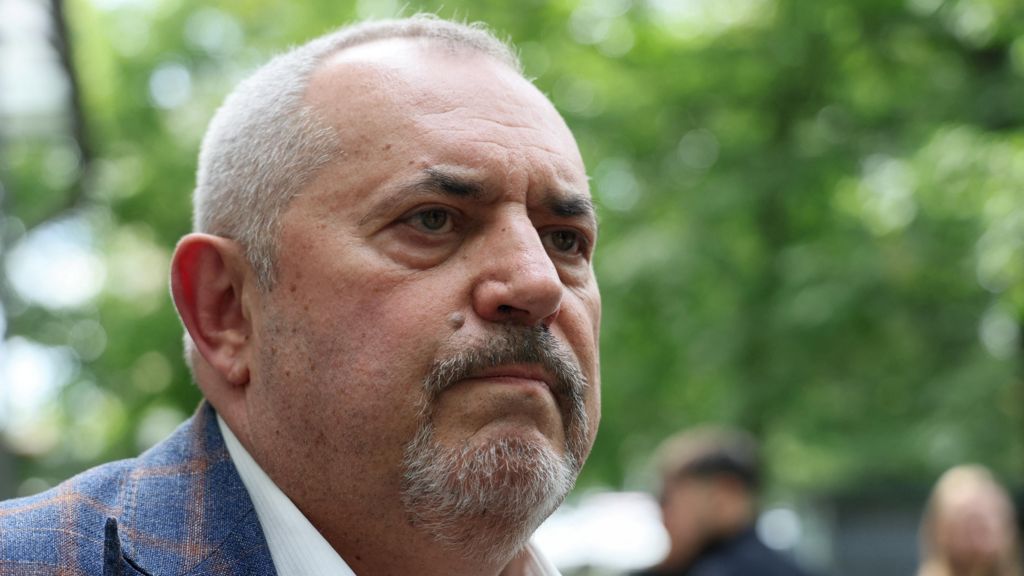
Prominent Russian anti-war opposition politician Boris Nadezhdin, who made an unsuccessful attempt to challenge incumbent Vladimir Putin in the 2024 national presidential election, has been taken into police custody, updates from his official social media channels confirm.
Nadezhdin was removed from his residential property and transported to a local police precinct in a town located west of Moscow on Monday morning. This arrest comes just several weeks after he formally declared his candidacy for September’s upcoming State Duma parliamentary elections. His press secretary confirmed the detention to BBC Russian in a brief statement, noting that authorities have not publicly disclosed a formal motive for holding Nadezhdin as of initial reporting.
The arrest follows a series of escalating regulatory actions against the politician. Just one week prior, Russia’s Ministry of Justice added Nadezhdin to the country’s controversial “foreign agent” registry. In the official designation, the ministry accused him of spreading disinformation about the Russian federal government and inciting public participation in unsanctioned public demonstrations. The foreign agent label already effectively barred him from appearing on the ballot for the September parliamentary vote, a restriction that preceded his Monday arrest.
Despite the mounting pressure, Nadezhdin pushed back against the regulatory actions in a public comment prior to his arrest. “What is there to say? I will continue to live and fight,” he stated. “This is unlikely to change anything in my political biography. I will continue to run for the State Duma and collect signatures.”
Nadezhdin first entered the global spotlight earlier this year, when he launched a 2024 presidential campaign centered on an explicit anti-war platform calling for an immediate end to the ongoing armed conflict in Ukraine. In an interview with the BBC ahead of the election, he claimed broad public support from “dozens of millions of people” who rejected what he described as “Russia’s current track of authoritarianism and militarism.” If elected, he outlined, his first priority in office would be “to stop the conflict with Ukraine, and then to restore normal relations between Russia and the Western community.”
Nadezhdin’s relatively restrained criticism of Putin personally led some political analysts to speculate that the Kremlin might permit him to remain in the race to lend the 2024 election a veneer of competitive, democratic legitimacy. Those speculations proved unfounded, however: the Russian Central Election Commission blocked his candidacy just weeks before polls opened, ruling that more than 15 percent of the voter signatures he submitted to qualify for the ballot contained invalid or fraudulent entries.
Nadezhdin challenged the ruling in court, but was unable to overturn the decision. He was not alone among critics of the Kremlin: all other credible opposition figures were also blocked from standing in the 2024 presidential vote.
Putin ultimately claimed a landslide victory in the March 18, 2024 election, securing a fifth presidential term. A 2020 constitutional amendment reset Putin’s eligibility term limits, clearing the way for him to hold office until 2036, when he would be 83 years old. The next presidential election is formally scheduled for 2030.
In an interview earlier this year, as the Kremlin expanded internet restrictions affecting millions of Russian citizens and the country’s ongoing economic pressures deepened, Nadezhdin argued that public opinion was shifting. “People are beginning to understand that there is a direct connection between their everyday problems, like healthcare, food prices, problems with internet, and the politics of Vladimir Putin,” he told the BBC.
Today, the Kremlin maintains near-total control over Russia’s domestic political sphere, and no independent candidates have been permitted to mount a serious challenge to Putin’s governing authority. All major opposition figures who could offer voters a clear alternative to the current administration are either incarcerated, living in forced exile abroad, or have been killed.