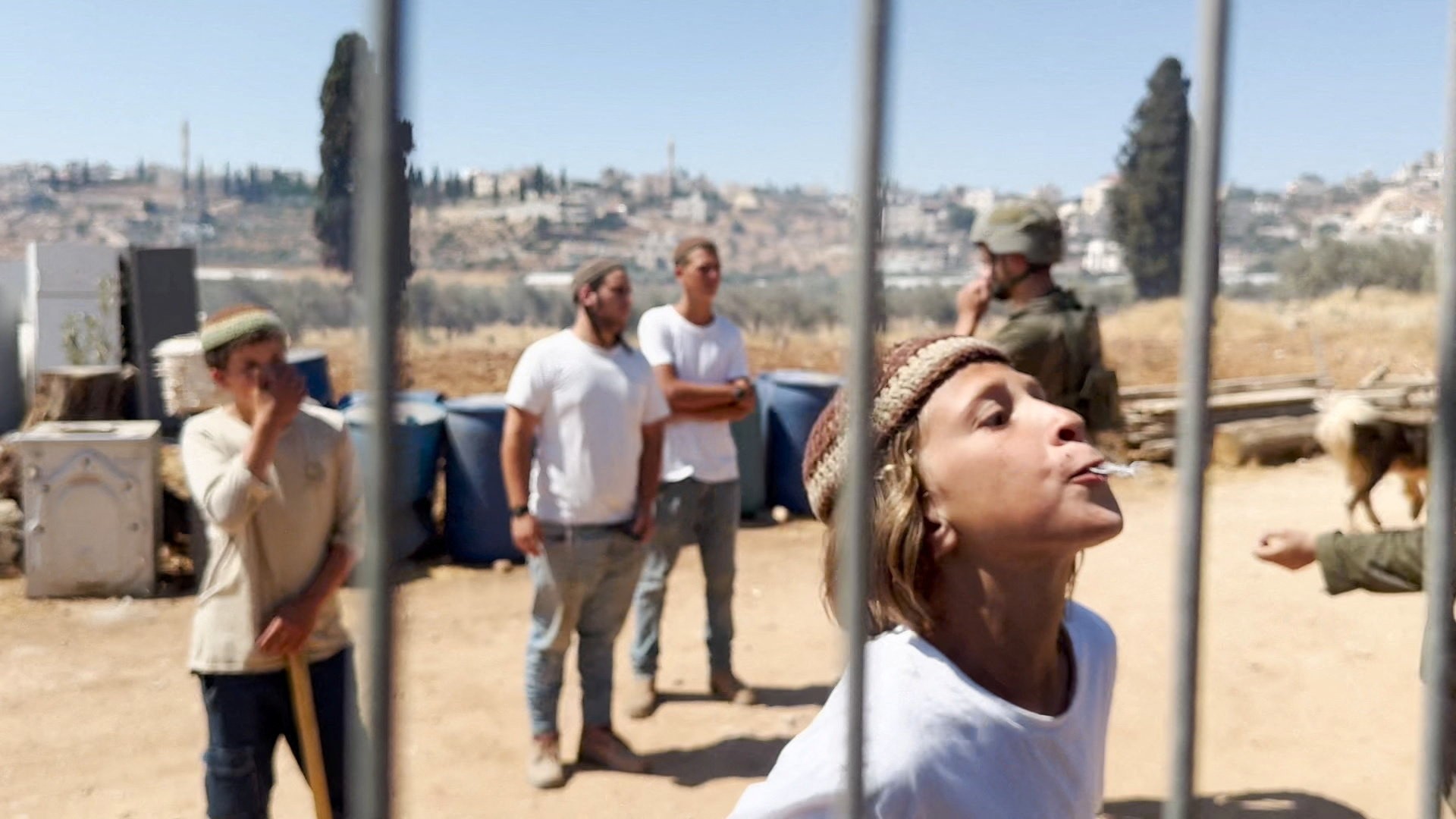
Israeli media has broken news of a controversial planned funding transfer: Israel’s Ministry of National Security, led by far-right politician Itamar Ben Gvir, is set to disburse 4 million shekels, equivalent to roughly $1.31 million, to Ahavat Gilad — an organization already sanctioned by multiple Western governments for its ties to illegal settler activity in the occupied West Bank.
The group was placed on sanctions lists in June this year by France, the United Kingdom, Canada, Norway, Australia and New Zealand. The international sanctions came after investigations confirmed Ahavat Gilad played a key role in enabling and funding a sharp rise in violent attacks by Israeli settlers against Palestinian communities in the occupied territory. Specifically, the organization was found to channel donations from the Farms Union, a body that provides financial and logistical support to settler agricultural operations, directly to unauthorised, illegal settler outposts that are established outside of Israeli government-approved boundaries.
According to documents obtained by Israeli newspaper Haaretz, which were submitted to relevant bodies by the Ministry of National Security, the allocated funding is officially framed as a resource to “reduce incidents of violence” and build “a network of mentors to accompany youth staying on farms throughout Judea and Samaria” — the Israeli term for the occupied West Bank. The 4 million shekel sum will be distributed over an 18-month period, with a built-in option to extend the funding agreement if the ministry chooses to do so.
This controversial funding move follows the Israeli government’s approval of a “national plan” in May, launched to address what officials described as a “negative phenomenon among youth” in the occupied West Bank. The announcement of the plan came as the country has faced growing international pressure to rein in the escalating wave of settler violence targeting Palestinian civilians and property. The national plan itself was officially designed to “prevent youths from entering cycles of violence”, according to official documents.
Per the ministry’s paperwork, Ahavat Gilad was selected as the recipient of public funds specifically because of its deep existing connections to “farmers, the army, the police and government ministries” operating in the West Bank. In a statement justifying the selection, the ministry argued that “providing an effective response to the youth requires relying on ‘responsible adults’ who come from the field, are figures familiar to the youth, share their living space with them and hold their trust”.
The ministry added that the initiative is intended to build a “professional system” that aligns on-the-ground conditions in the West Bank with the policy priorities of the National Security Ministry, a step it says is necessary “to ensure effective prevention” of youth violence.
Responding to Haaretz’s reporting on the funding allocation, the ministry pushed back against criticism. It stated: “It is very unfortunate that instead of praising the ministry for leading the move to reduce and prevent violence and risky behaviors among youth, Haaretz newspaper (which ironically would have attacked the ministry if such a plan had not been implemented at all) chooses to rely on baseless claims by anti-Israel elements”.