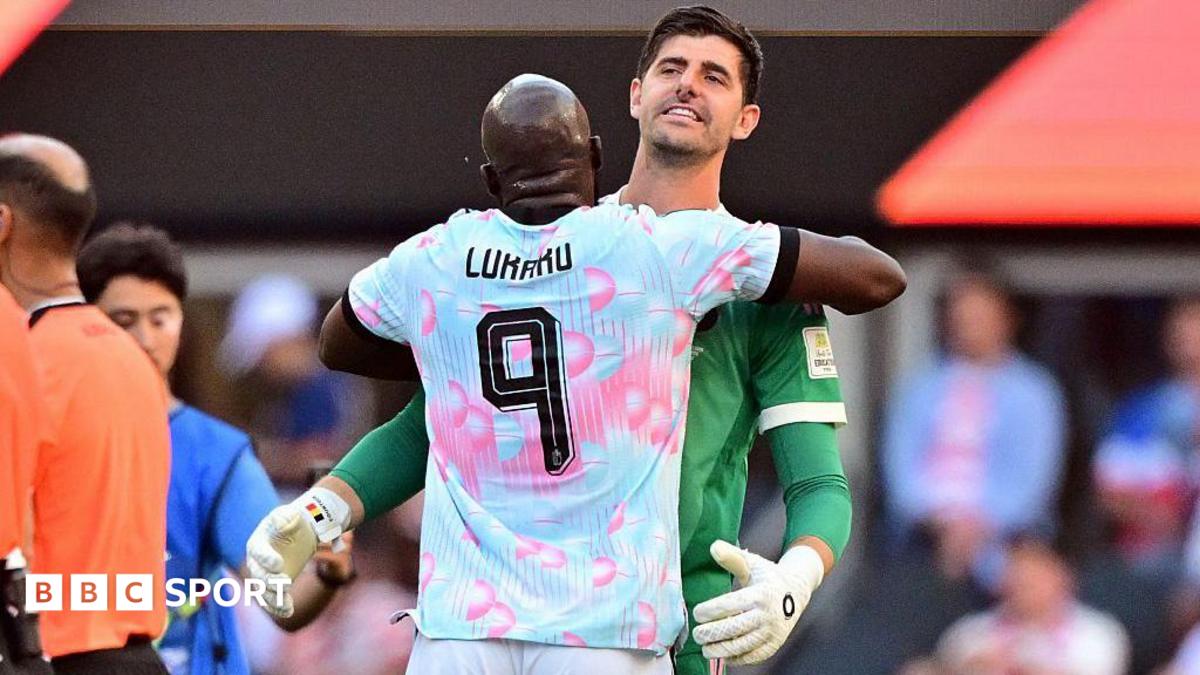
When the 2026 FIFA World Cup kicked off 30 days ago, barely any football pundits or fans counted Belgium among the tournament’s potential contenders. Many of the star names that anchored the Red Devils’ campaigns in past iterations of the competition had retired or moved on from international football, and few expected the current squad to advance deep into the knockout stage. That scepticism only grew deeper when Belgium found themselves trailing Senegal 2-0 with just five minutes of regulation time left to play in their Round of 32 clash. What has followed since that dire opening, however, has been one of the most remarkable turnaround stories of this World Cup: a legendary comeback to eliminate Senegal, followed by a dominant 4-1 victory over the United States on American soil that has carried Belgium into the tournament’s quarter-finals.
Gone are iconic Belgian figures like Eden Hazard, Mousa Dembele, Marouane Fellaini, and Vincent Kompany, who led the side to quarter-final finishes in 2014 and a historic semi-final run at the 2018 Russia World Cup – widely considered the peak of the country’s so-called golden generation. After a dismal 2022 Qatar World Cup campaign that saw Belgium crash out in the group stage, many wrote this veteran core off entirely. But the remaining veterans of that golden era – goalkeeper Thibaut Courtois, forward Romelu Lukaku, midfielder Kevin de Bruyne, and midfielder Axel Witsel – have helped transform a shaky start into a legitimate shot at World Cup glory. Now, as Belgium prepares to face Spain for a semi-final spot on Friday at 20:00 BST, the question looms: was the Belgian golden generation written off too soon, or has manager Rudi Garcia unlocked a new way to harness their veteran experience alongside emerging young talent?
Courtois, the Real Madrid shot-stopper competing in his fourth World Cup, framed this squad as a new chapter for Belgian football ahead of the USA match. “It is true that there are some players from the golden era, but the World Cup in Qatar for us was not that good,” he explained. “Now we have another generation with younger people, new people, willing to do great things and writing in the history pages for Belgium.”
Courtois’ assessment holds up under scrutiny. Of the four remaining veterans from the 2014 and 2018 squads, only 34-year-old Courtois has played every minute of the 2026 tournament. De Bruyne, 35, suffered an injury early in the Senegal clash, while 37-year-old Witsel has seen limited minutes off the bench. Thirty-three-year-old Lukaku has racked up an impressive three goals, but has played fewer than 50% of the team’s total minutes, mostly coming off the bench to exploit tired defences stretched thin by the high pressing of 25-year-old Atalanta forward Charles de Ketelaere. Full-back Thomas Meunier, another 2018 World Cup veteran, has also seen his playing time decrease as the tournament has progressed.
This does not mean the veteran core has not been integral to Belgium’s run. Courtois remains one of the top goalkeepers in the world, Lukaku’s clutch goals have swung critical matches, and De Bruyne delivered some of the squad’s best performances before his injury. But their role has shifted: rather than carrying the full weight of the team’s performance over 90 minutes, they now step up to make the difference in high-stakes key moments. So far, Garcia and Belgium have navigated this generational transition far more smoothly than most international sides manage when their golden generation begins to age.
For Garcia, the constant focus on the veterans’ age misses the point entirely, and downplays the quality he has in his squad. “I really can’t stand it when my four leaders are called ‘veterans’,” he said earlier in the tournament. “It is ugly. It is awful. If you are lucky enough as a country to have players of this calibre, then encourage them. This is what Belgium’s ‘old-timers’ can do.”
The veterans’ leadership has been complemented by standout performances from a new cohort of players who did not experience the pressure of the 2014 and 2018 runs, but already hold extensive experience at top European clubs. Arsenal winger Leandro Trossard has been particularly outstanding: he has created more chances (17) than any other player in the tournament so far, and notched two goals and two assists to put him 15th in the tournament for total goal contributions. De Ketelaere, while not a prolific goalscorer, has contributed two goals and one assist while creating critical space for wide attackers to operate inside the penalty area. Club Brugge midfielder Hans Vanaken, 33, who has spent his entire domestic career in Belgium, has added one goal and two assists, while captain Youri Tielemans scored both the equalizer and match-winner to pull off the incredible comeback against Senegal.
Of the 13 squad members aged 25 or younger, only Manchester City winger Jeremy Doku is already considered an elite talent at this stage, though fellow wingers Diego Moreira and Matias Fernandez-Pardo have shown clear potential, and Aston Villa midfielder Amadou Onana turned in strong performances before suffering an ACL injury against the USA.
The squad was further galvanized by controversy surrounding FIFA’s last-minute decision to uphold a one-match suspension for USA striker Folarin Balogun ahead of the Round of 16 clash. In a show of unity and defiance, Belgian players mocked former US President Donald Trump by mimicking his signature campaign trail dance on the pitch after scoring. After the match, Garcia praised the squad’s tight chemistry: “The group is very mature. We have leaders to help us.”
Beyond on-pitch chemistry, Belgium’s dressing room has a unique quirk that has shaped its leadership dynamic: linguistic diversity rooted in the country’s history and position at the heart of the European Union. The Belgian squad includes players with heritage from across the globe, including DR Congo, Ghana, Guinea-Bissau, Senegal, France, Italy, Portugal, and Spain. Lukaku alone speaks six languages fluently. With native Dutch speakers from northern Flanders and native French speakers from southern Wallonia, the team has intentionally adopted English as its primary shared language to avoid the political and identity tensions that can surround language use in Belgian public life.
“It’s a very strategic thing to do,” explained Dr. Jim Ureel, senior lecturer in applied linguistics at the University of Antwerp. “Language is a very sensitive topic in Belgium – it’s heavily linked to identity and politics. Dutch-speaking people don’t necessarily want to adapt for the French, and vice-versa. If the players were choosing one or the other, it could become a problem. English therefore becomes very useful – you can avoid those issues and it all becomes neutral, especially because young footballers almost always speak good English and lots play in English-speaking countries. When things become more personal, in smaller groups, they might switch into what they’re most comfortable with. I think it’s very clever how they do it.”
As Belgium prepares for their quarter-final showdown with Spain, the team’s veteran leaders will need to draw on all their experience to inspire the young squad to another upset. This run is not just the last hurrah for Belgium’s golden generation; it is a transition: a core of seasoned veterans stepping into new leadership roles, guiding the young players who will soon take over the future of Belgian football.