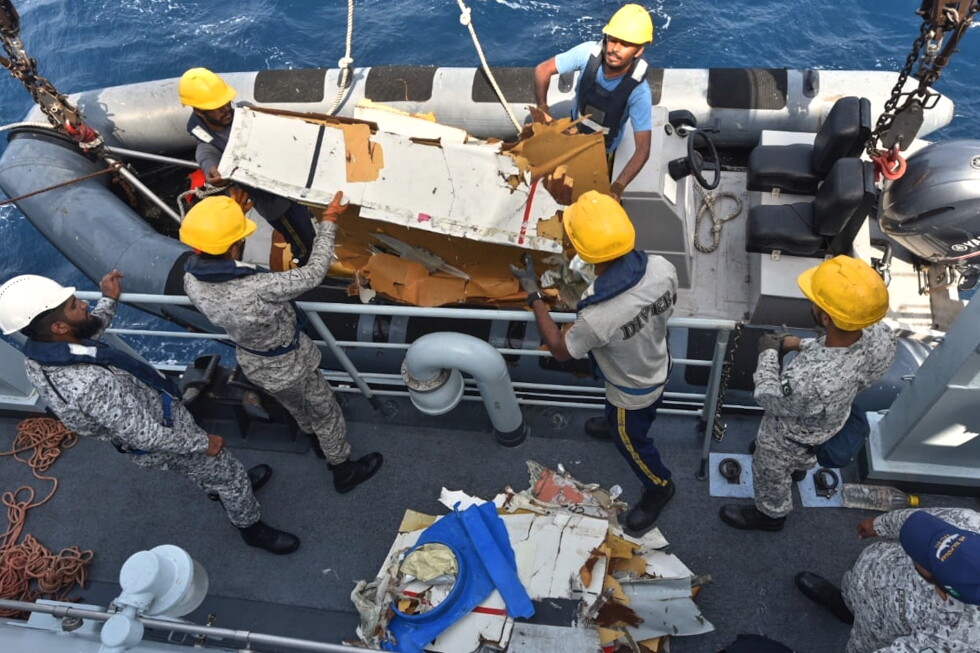
A day after wreckage fragments from a downed Pakistani cargo plane were pulled from the Arabian Sea, Pakistani naval search and rescue operations remained locked in a struggle against choppy, unforgiving waters on Thursday, as efforts to locate five missing crew members and the aircraft’s main fuselage stretched into a second full day of searching.
The cargo plane, operated by private Pakistani aviation firm K2 Airways, was traveling to Karachi — Pakistan’s largest and busiest urban and commercial hub — from Sharjah, United Arab Emirates, when it suffered a reported navigation system malfunction before all radio and radar contact was lost late Tuesday, according to official statements from the Pakistan Airports Authority. The aircraft disappeared from radar screens approximately 300 kilometers southwest of Karachi, and as of Thursday, the core fuselage of the plane and all five crew members remained unaccounted for, two anonymous officials familiar with the search operation confirmed to the Associated Press, noting they were not cleared to speak publicly about the ongoing mission.
Twelve hours after the plane vanished, Pakistan’s navy and the Pakistan Maritime Security Agency recovered scattered wreckage fragments roughly 100 kilometers off the coast of Ormara, a small coastal town in Balochistan province’s southwestern Makran Coast. The Pakistan Airports Authority published images on its social media platform X showing search crews lifting debris from the water, but officials warned that harsh conditions have hampered the mission: strong winds, turbulent seas and shifting ocean currents have carried floating wreckage far from the original crash site, spreading debris across a huge expanse of open water.
In a separate, successful rescue operation also carried out Thursday off Pakistan’s Arabian Sea coast, the Pakistani navy rescued all 20 crew members of a sinking traditional cargo dhow east of Ormara. The wooden vessel issued an urgent distress call after it began taking on water; the navy immediately dispatched a patrol ship and aircraft to the area, and all rescued crew members are now receiving onshore medical care, according to an official military statement.
Retired Rear Admiral Faisal Shah, a senior Pakistani naval expert, warned that locating the downed plane’s main airframe could be a months- or even years-long effort. The crash is believed to have occurred in waters reaching nearly 3,000 meters deep, a depth that requires specialized deep-sea search equipment not immediately available for the operation. Shah drew a parallel to the decades-long search for Malaysia Airlines Flight MH370, which disappeared over the Indian Ocean in 2014 and has never been definitively located, even after years of coordinated international search efforts. He added that floating debris recovered near Ormara does not definitively mark the crash site, as currents and wind can carry wreckage hundreds of kilometers from where the plane went down.
K2 Airways has publicly identified the five missing crew members: captain Muhammad Rizwan Idris, first officer Faisal Jatoi, flight engineers Muhammad Hamid and Muhammad Arif Siddiqui, and aircraft loader Muhammad Taufiq Khan. Pakistani Prime Minister Shehbaz Sharif has already directed all relevant state agencies to deploy every available resource to the search mission, and extended official condolences to the families of the missing men.
Preliminary radar data analyzed by the Pakistan Airports Authority shows the aircraft made an abrupt, unplanned change of course before entering a rapid descent shortly before contact was lost at 9:21 p.m. local time on Tuesday, 287 kilometers west of Karachi. The official cause of the crash remains under active investigation, with no preliminary conclusions released as of Thursday.
This crash comes as Pakistan has a decades-long history of fatal civil aviation accidents. In May 2020, a passenger flight operated by Pakistan International Airlines carrying 99 people crashed into a densely populated residential neighborhood near Karachi’s Jinnah International Airport during a landing attempt. The crash killed 97 of the 99 people on board, and a subsequent official government investigation attributed the disaster to preventable human error by both the flight crew and ground air traffic controllers.