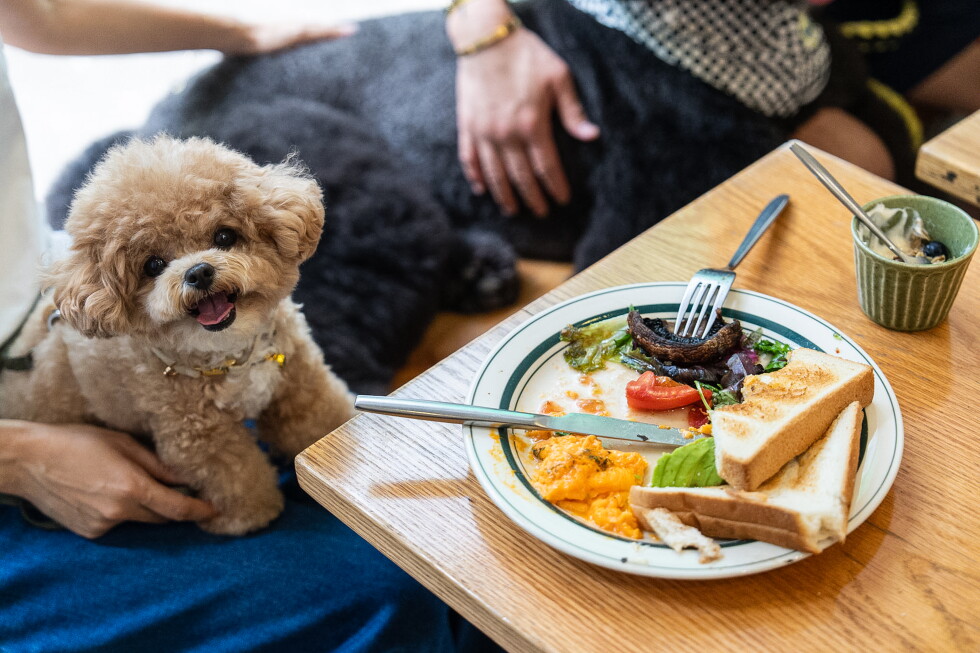
After nearly 30 years of strict restrictions, Hong Kong has rolled out a landmark policy change that opens the doors of hundreds of local eateries to domestic dogs, marking the city’s most visible step yet toward building a more inclusive, animal-friendly community.
Since 1994, Hong Kong’s food safety regulations only permitted service animals such as guide dogs and working dogs on official duty inside restaurant dining areas. That rule officially changed on Thursday, when the first phase of the relaxed policy went into effect, granting access to dogs at more than 900 government-approved food establishments across the city. This update is part of a broader series of reforms to accommodate pet owners across the region: in recent years, Hong Kong has already allowed pets on select ferry routes and rural metro lines, and public hospitals now permit supervised pet visits for palliative care patients to support patient well-being.
Official government data underscores the growing need for pet-inclusive policies: more than 240,000 households across Hong Kong, roughly 9% of all private households in the city, own more than 400,000 cats and dogs combined, making pet-friendly public spaces an increasingly urgent public demand.
For local business owners and pet parents, the change has been widely welcomed. Kelvin Chan, owner of Wan Land Cafe, was quick to display a new dog-friendly welcome poster at his establishment. Before the rule change, Chan could only allow dogs in his cafe’s outdoor seating area, a restriction that proved particularly uncomfortable for four-legged visitors during Hong Kong’s hot, humid summer months. Though Chan does not expect the policy to drive a dramatic surge in customer numbers, as a dog owner himself, he frames the change as a critical step toward shifting cultural attitudes. He acknowledges that the adjustment may feel challenging for diners unaccustomed to sharing dining spaces with dogs, but he hopes that responsible behavior from pet owners will gradually help non-pet owners embrace the shift. “Inclusivity for pets is a progressive move, and it could become a normal part of our daily lives,” Chan explained.
Franco Li, a regular customer at Wan Land Cafe who owns a Shiba Inu named Piku, says the new rule has already transformed his routine. Now, Piku can join Li at the dining table and socialize with other dog companions during outings. “This is such a great step forward for civilization,” Li said while holding Piku in his arms.
To help dogs adapt to their new dining environment, many owners have turned to specialized training ahead of the policy change. Heyton Lee, a professional dog trainer with 19 years of experience, saw a sharp increase in demand for his dog dining etiquette workshops in the weeks leading up to the policy launch. His two-hour training programs simulate full restaurant settings, walking owners through how to help their dogs stay calm in busy social spaces, avoid overexcitement when encountering other dogs, and get comfortable with passersby. Lee also teaches hand signals to reinforce good behavior, noting that dogs that spend most of their time at home often become nervous or defensive in public when unfamiliar people approach. The core goal of the training, he says, is to help dogs integrate smoothly into human public spaces.
The new policy comes with clear rules to uphold food safety and public comfort: all dogs must be kept on a leash no longer than 1.5 meters (5 feet), held by an adult or secured to a fixed fixture. Dogs are not permitted on dining tables, and they cannot eat directly from reusable human tableware. Dogs classified as fighting breeds under local government guidelines are banned from participating restaurants entirely, and eateries are prohibited from cooking food for dogs, though they are allowed to offer pre-packaged pet treats and meals.
Many local restaurants have invested in upgrades to welcome their new furry guests, and some business owners are optimistic the change will lift their bottom line. Old Fung Teahouse, a popular dim sum restaurant, spent more than 10,000 Hong Kong dollars (approximately $1,276 USD) on preparations: the venue installed new air purifiers, added simple partitions to create a separate dog-friendly dining zone, and offers complimentary access to pet strollers and pet-safe cleaning supplies for owners. The restaurant’s operators estimate that opening to dogs could boost their monthly revenue by as much as 15%. The proactive approach has already won praise from visitors, including Ma Ke, a tourist from mainland China. “By separating an area for dogs and their owners, this restaurant is managing the situation well, because it makes it easier for customers who are not that used to being with dogs to accept the situation,” Ma noted.