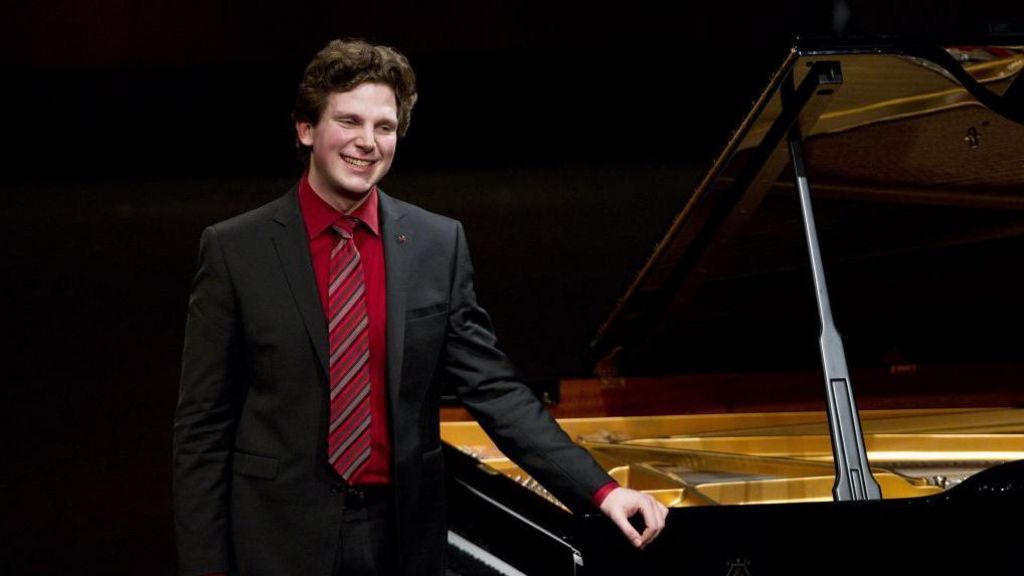
In a closely watched legal ruling that intersects artistic performance, free expression, and the Israel-Gaza conflict, acclaimed British-Australian pianist Jayson Gillham has lost his workplace discrimination lawsuit against Australia’s Melbourne Symphony Orchestra (MSO). The case stemmed from the MSO’s decision to cancel one of Gillham’s scheduled performances in 2024, just days after the pianist made public comments about Palestinian journalist casualties in Gaza during another concert.
The controversy traces back to an August 11, 2024, Melbourne performance where Gillham premiered a five-minute work *Witness*, composed by Connor D’Netto and dedicated to Gaza-based journalists. During his introductory remarks to the 150-person audience, Gillham stated that more than 100 Palestinian journalists had been killed by Israeli forces since the outbreak of the Gaza war in October 2023, alleging that Israel carried out targeted assassinations of high-profile journalists. He added that the deliberate killing of journalists constitutes a war crime under international law, carried out to suppress documentation and global reporting of war crimes. Independent press freedom advocacy group the Committee to Protect Journalists has recorded that 207 journalists have been killed in Gaza since the conflict began.
After receiving three formal complaints about Gillham’s comments, the MSO moved to cancel a recital Gillham was set to perform on August 15. The cancellation itself sparked nearly 500 counter-complaints, and the orchestra later described the original cancellation as an “error” and attempted to reschedule the performance. Gillham subsequently filed suit, arguing that the cancellation constituted unlawful workplace discrimination based on his political beliefs. His legal team maintained that he held a protected right to express his political views in his professional workplace, and that he should not face retaliation for those views.
In his final ruling, Federal Court Justice Graeme Hill rejected Gillham’s claim, finding that the performance cancellation was not motivated by opposition to Gillham’s personal political beliefs. Instead, Hill ruled that the MSO acted to mitigate expected harm to the orchestra’s business operations and public reputation resulting from the comments. The justice further noted that the MSO has an established policy of staying neutral, declining to formally endorse either side in the Israel-Gaza conflict, and that long-standing industry custom bars classical musicians from sharing unapproved stances on sensitive political or social issues from concert stages.
The trial ran for three weeks, concluding last month, with roughly two dozen witnesses giving testimony, including Gillham and senior MSO leadership. Ahead of the ruling, Hill urged both parties to negotiate a private settlement to avoid a public formal judgment. In the wake of the court’s decision, Gillham released a brief statement acknowledging the outcome. “I am disappointed and I need time to process the judgment before saying more,” he said.
The case has drawn widespread attention for raising difficult questions about the boundaries of political expression in professional artistic spaces, particularly amid the intense global debate over the ongoing Israel-Gaza war.