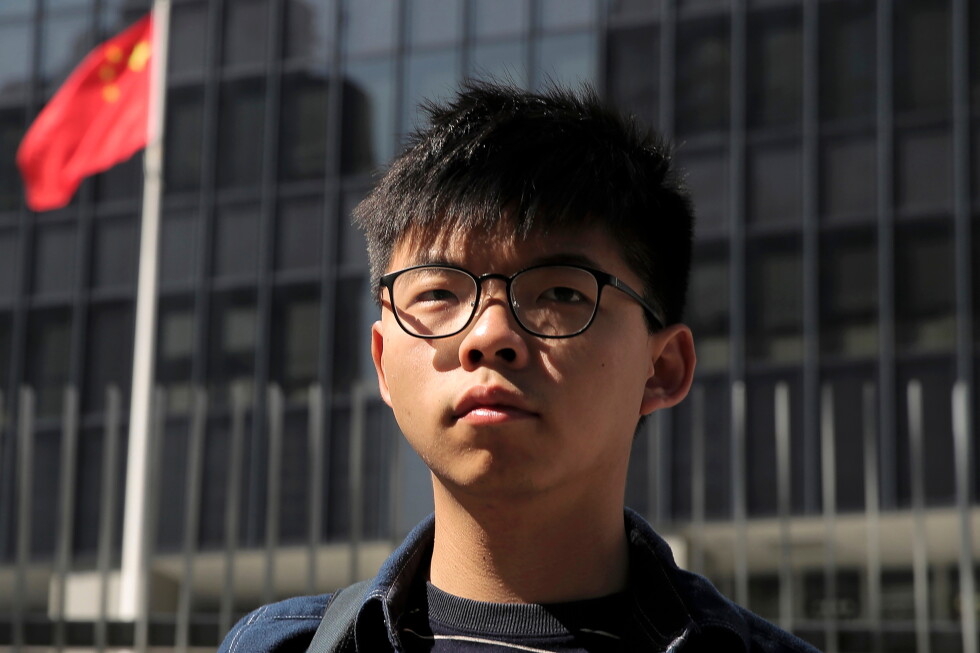
HONG KONG – A high-profile Hong Kong pro-democracy figure Joshua Wong will face formal sentencing this September over charges laid under the controversial national security law implemented by Beijing, a legislation widely criticized by international observers for systematically silencing the city’s once-vibrant pro-democracy opposition movement.
Wong, who first emerged as a student leader during early pro-democracy mobilizations in Hong Kong, was taken into custody in June 2025 on suspicion of conspiracy to collude with foreign forces to undermine China’s national security. This marks the second time Wong has faced charges under the 2020 national security law, a legislative package introduced in the wake of large-scale anti-government protests that roiled the semi-autonomous region in 2019.
Public records published on the Hong Kong judiciary’s official website this Tuesday confirm that a plea and sentencing hearing for Wong has been scheduled for September 2, with the proceeding expected to conclude within a single business day.
According to the charge documents, Wong is alleged to have conspired with fellow exiled activist Nathan Law and other unnamed co-accused between July 1 and November 23, 2020, to solicit foreign governments, global institutions and overseas individuals to implement sanctions, trade blockades or other hostile measures targeting both the Hong Kong Special Administrative Region and the central Chinese government. Under the national security law, this offense carries a mandatory prison sentence ranging from three to 10 years, with the possibility of life imprisonment if the court rules the offense qualifies as “of a grave nature.”
This is not Wong’s first conviction under the sweeping security legislation. Back in 2024, he pleaded guilty in an unrelated national security case tied to an unofficial pro-democracy primary election, for which he received a sentence of four years and eight months in prison.
Wong’s trajectory as an activist stretches back more than a decade. He first rose to public attention in 2012 as a high school student leading widespread public demonstrations against plans to introduce mandatory national education courses in Hong Kong’s public schools. He cemented his international profile three years later as one of the most visible young leaders of the 2014 Occupy Central movement, also known as the Umbrella Movement, which called for greater democratic reforms in the city. In 2016, he joined Nathan Law and other young pro-democracy organizers to co-found the political party Demosisto, which focused on advancing democratic self-governance for Hong Kong. When the national security law came into effect in 2020, Demosisto voluntarily disbanded to avoid widespread retaliatory action against its members.
During the 2019 anti-government protests, Wong played a key role in reaching out to international governments and organizations to build support for the pro-democracy movement. This activism prompted Beijing to officially label him a proponent of Hong Kong independence who actively “begged for foreign interference” in China’s internal affairs. Chinese and Hong Kong authorities have repeatedly stated that the national security law has restored stability to Hong Kong after the unrest of 2019.
In recent years, Hong Kong authorities have taken additional steps to target pro-democracy activists who have fled the city, including offering a reward of 1 million Hong Kong dollars (equivalent to roughly $127,600) for information that leads to the arrest of Nathan Law, who now resides in exile in the United Kingdom, and other overseas-based opposition figures. Just last month, a court in London handed down prison sentences to a former British border official and a retired Hong Kong police officer after convicting them of spying on Chinese dissidents and Beijing critics based in the U.K. Prosecutors in that case confirmed that Nathan Law was one of the key targets of the surveillance operation.