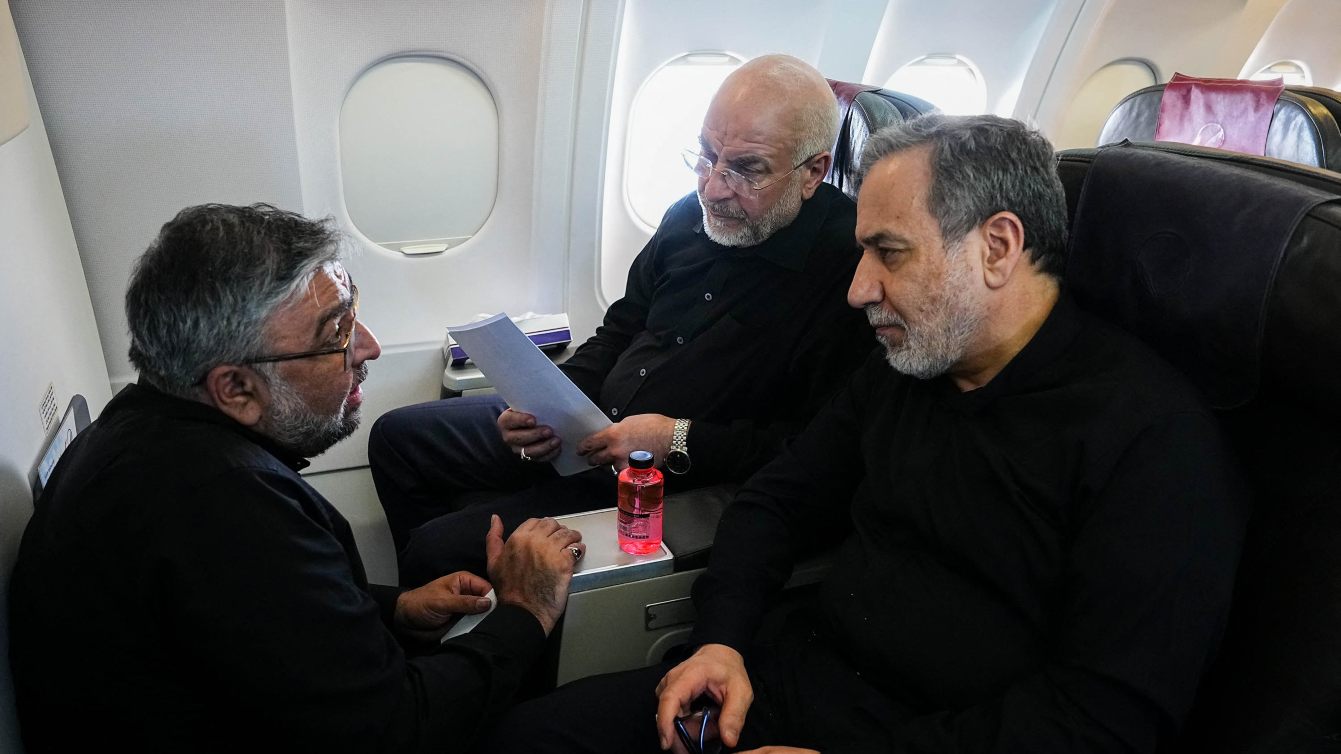
A high-stakes diplomatic crisis unfolded in the Middle East earlier this year, after a bombshell new report from The New York Times revealed that Israeli fighter jets penetrated Iranian airspace at the very moment Tehran’s top negotiating team was wrapping up diplomatic talks with U.S. officials in Pakistan. The incident, which unfolded against the backdrop of fragile U.S.-Iran peace efforts aimed at securing a long-term ceasefire and broader regional agreement, triggered alarm across Washington, Tehran and key regional intermediaries, as American officials warned that an Israeli assassination plot targeting two of Iran’s most senior negotiators could have derailed the entire peace process.
According to the Wednesday-published report, U.S. intelligence agencies grew increasingly concerned that Israel planned to target Iranian Foreign Minister Abbas Araghchi and Parliament Speaker Mohammad Bagher Ghalibaf as the two officials traveled back to Tehran from talks in Islamabad. These two figures had emerged as the primary Iranian interlocutors for negotiations that gained serious momentum starting in April, when the U.S. and Iran began working toward a ceasefire framework that would eventually be finalized in June. The report notes that Israel has long been skeptical of any diplomatic deal with Iran that fails to meet its maximalist security and political goals, which include forcing regime change in Tehran, dismantling Iran’s network of regional allied militias, and nearly completely eliminating Iran’s ballistic missile program. The emerging agreement under discussion did not meet these benchmarks, leaving Israeli leadership hostile to the talks.
After U.S. officials confirmed that Ghalibaf had been placed on an Israeli targeting list, Washington moved quickly to pressure Israel to stand down from any planned strike. The U.S. also reached out to regional partner nations to pass along warnings to Tehran about the looming threat to its negotiating team. For its part, Iran requested formal security assurances from Washington through intermediaries in Pakistan and Qatar, that Israel would not attack members of its diplomatic delegation.
Tensions reached a fever pitch during an April visit to Islamabad, where Ghalibaf was scheduled to hold a high-level meeting with U.S. Vice President JD Vance. Out of fear of an Israeli strike, Pakistani air force jets escorted the Iranian delegation’s plane both on arrival and departure from Pakistani airspace. On the return flight to Iran, Iranian security officials notified the pilot of Ghalibaf’s aircraft that intelligence had picked up signs of an imminent Israeli attack, and confirmed that two Israeli fighter jets had crossed into western Iranian airspace from the border near Iraq. Mahdi Mohammadi, a senior advisor to Ghalibaf who was part of the delegation, later publicly confirmed this account on his social media channels.
In response to the active threat, the Iranian plane made an emergency diversion landing in the northeastern city of Mashhad. Delegation members then completed the remaining trip to Tehran over land, an eight-hour overland journey across northern Iran. Writing to local Iranian media in April, Iranian lawmaker Mohsen Zanganeh praised the negotiating team for continuing their work despite the clear danger. “Today Mr. Ghalibaf and Mr. Araghchi, and other members of the negotiating team, have put their lives on the line knowing the grave security risks and this is called a real sacrifice, not political manoeuvring,” Zanganeh said.
Despite the reported threat on their lives, Araghchi and Ghalibaf did not withdraw from the negotiating process. The pair continued to travel for talks, holding additional meetings in Qatar before attending a June negotiating round in Switzerland with Vice President Vance and other senior U.S. delegates, which produced the preliminary framework agreement Washington had been working toward.
A spokesperson for the Israeli Embassy in Washington declined to provide any comment on the allegations when contacted by The New York Times. When asked about the U.S. warnings shared with Iran, a senior U.S. official only confirmed that President Donald Trump’s administration wanted the peace process to proceed without disruption, and noted that talks between the two delegations were ongoing at the time of the report.
This exclusive reporting was originally delivered by Middle East Eye, a publication that provides independent, in-depth coverage of the Middle East and North Africa region.