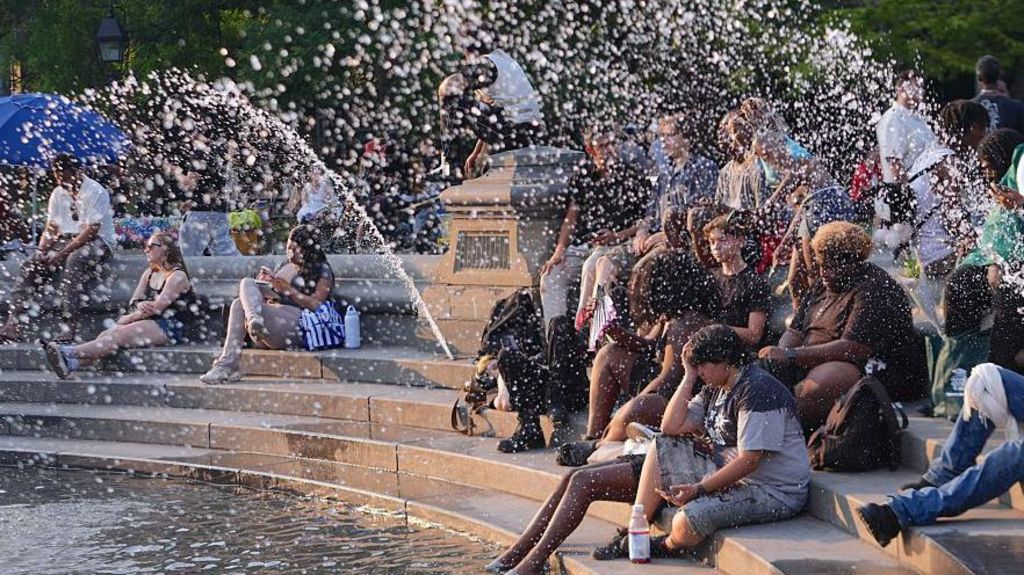
A relentless, dangerous heatwave has settled across the eastern half of the United States, bringing stifling, life-threatening heat and humidity that will affect millions of residents through the Independence Day holiday weekend. Forecasters confirm high temperatures will climb to 100°F (38°C) and hold at that level for several consecutive days, with the National Weather Service (NWS) warning that heat index values— which combine air temperature and humidity to calculate how conditions actually feel to the human body— could surge as high as 115°F in major population centers including Washington D.C., Philadelphia, and New York City.
The current heat event is building out of a stifling blast of heat that already gripped the U.S. Midwest, and is rapidly intensifying as it spreads into the Northeast and mid-Atlantic states starting Thursday and Friday. Extreme heat warnings already stretch continuously from the Upper Midwest all the way to the Northeastern seaboard. The NWS emphasized the unique risk of this event, noting that this rare, long-duration heat event offers little to no cooling relief even overnight, putting anyone without access to consistent cooling or sufficient hydration at severe risk of heat-related illness. By 9 a.m. EST Thursday, temperatures were already pushing 90°F in both New York City and Washington D.C., signaling what was to come through the rest of the day.
The timing of the heatwave, landing over the U.S. July 4 holiday weekend, has disrupted dozens of planned public events, including high-profile celebrations and high-stakes sports matches. President Donald Trump is set to host a large public celebration Saturday marking the 250th anniversary of American independence, and has insisted he will deliver his remarks outdoors despite the dangerous forecast. In a public comment, Trump joked that with forecast temperatures around 107°F, he would deliver an especially long speech to prove his resilience. In Washington D.C., U.S. Capitol Police announced Thursday that only essential personnel would be allowed to attend a scheduled July 4 concert rehearsal, canceling public access to avoid the risk of heat-related emergencies among large crowds. The nation’s capital is on track to hit 100°F for four consecutive days, a milestone that has only occurred twice in the city’s recorded history.
In New York City, forecasters predict Central Park will hit 100°F on both Thursday and Friday, a mark not seen in the city in 12 years. New York Mayor Zohran Mamdani issued a public warning urging all residents to stay indoors and keep cool during the peak heat. In a lighthearted nod to widespread reports that pop superstar Taylor Swift and NFL star Travis Kelce will host their wedding celebration Friday at the indoor Madison Square Garden arena, Mamdani noted the couple’s indoor venue sets a good example for the rest of the city.
The extreme heat is not limited to the U.S. This event follows an unprecedented early summer heatwave that broke temperature records across much of Europe earlier this season. Canada, America’s northern neighbor, is also facing its own dangerous heat this week, with temperatures forecast to approach 99°F in Ontario. Heat warnings cover most of Quebec, including major cities Montreal and Quebec City. The extreme heat forced organizers to cancel a public outdoor World Cup watch party in Toronto ahead of the Portugal vs. Croatia match.
Meteorologists explain the current heat event is being driven by a persistent high-pressure system trapped over central and eastern North America, a weather pattern commonly called a “heat dome”. Conditions on the ground are amplifying the heat: the coastal Northeast has been gripped by drought this year, leaving soil dry. Without moisture to evaporate and create mild cooling, all incoming solar energy goes directly into heating the ground, pushing temperatures even higher.
Climate scientists confirm that heat events like this are becoming more common, more intense, and longer-lasting due to human-caused climate change. Since the start of the industrial era, global average temperatures have risen roughly 1.1°C, and temperatures will continue to climb unless national governments implement deep cuts to greenhouse gas emissions.
Temperatures are set to drop slightly across the Northeast on July 4, with a chance of severe thunderstorms bringing temporary relief, though temperatures will still remain well above the seasonal average. A more significant cool-down will arrive Sunday and Monday, when a mass of cooler air pushes south from Canada.