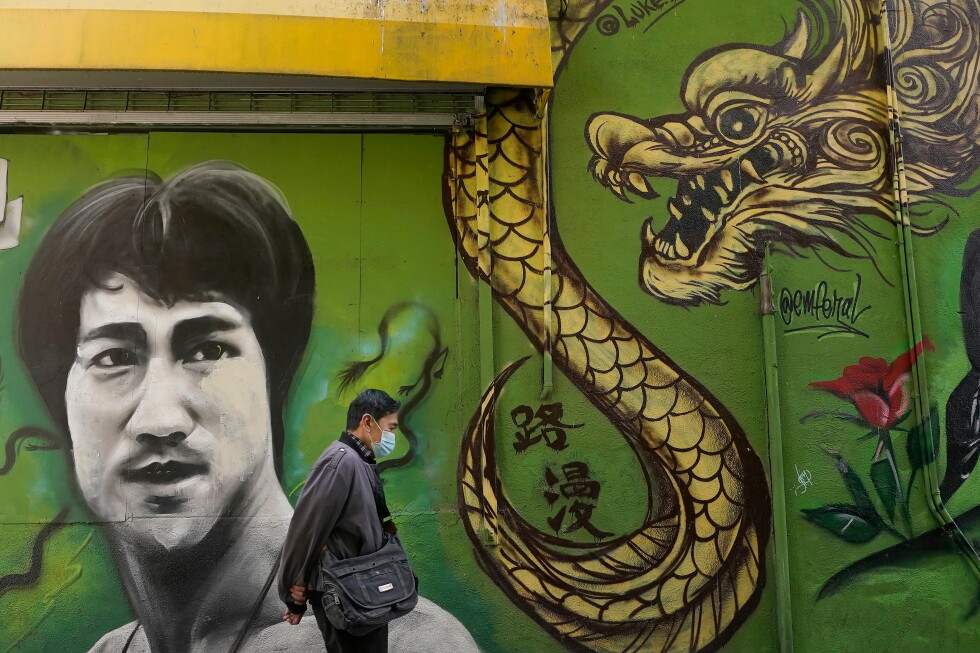
SAN FRANCISCO — A decades-long movement for recognition of Asian American cultural icons reached a landmark milestone this week, as California formalized an annual honor for San Francisco-born martial arts legend and cultural trailblazer Bruce Lee, making him the first Chinese American in state history to have an official namesake day.
Governor Gavin Newsom signed the legislation into effect Tuesday afternoon, officially setting May 17 as Bruce Lee Day, per confirmation from the office of California State Assemblymember Matt Haney, whose district includes San Francisco. The date was not chosen arbitrarily: 64 years ago, on May 17, 1959, an 18-year-old Lee returned to his birth city of San Francisco after spending his childhood and early adolescence in Hong Kong.
For his family and advocates, the new commemorative holiday is far more than a symbolic gesture. It is a public affirmation of Lee’s decades-long legacy as a bridge connecting Eastern and Western cultures, said Shannon Lee, Bruce Lee’s daughter and chief executive officer of the Bruce Lee Foundation.
“From young people who found confidence and possibility in his philosophy, to families who finally saw themselves represented on screen, to athletes who still draw on his teachings of discipline and inner strength, his reach is profound,” Shannon Lee shared in a prepared statement following the bill’s signing.
Haney echoed that sentiment, framing Lee as the quintessential embodiment of California’s core values of diversity, breaking barriers, and cultural exchange. “At a time when Asian Americans were too often absent from or stereotyped on screen, Bruce Lee helped generations see themselves represented with strength and dignity,” Haney said in his statement.
Moving forward, the Bruce Lee Foundation and a coalition of Asian American advocacy organizations across the state are encouraging communities to mark the annual holiday with voluntary, local activities, including public cultural exhibits, community gatherings, and educational lessons in K-12 and college classrooms.
To understand the weight of this designation, it is necessary to revisit Lee’s extraordinary, cut-short life. Born in 1940 to Chinese opera performers touring the United States, Lee claimed birthright American citizenship, a status that anchored his lifelong connection to his home state. Just months after his birth, his family returned to Hong Kong, where Lee launched his career as a child actor and began his formal training in Chinese kung fu. He permanently resettled in the U.S. in 1959, enrolling at the University of Washington in Seattle two years later, before leaving his studies to dedicate himself fully to practicing and teaching his martial arts philosophy.
By the 1960s, Lee had broken into Hollywood, earning his most prominent early role as Kato in the television series *The Green Hornet*. But the industry at the time was rife with anti-Asian bias: studios pushed Lee to conform to demeaning racist stereotypes and paid him a fraction of the salary offered to his white co-stars. Frustrated by the systemic barriers, Lee relocated back to Hong Kong, where he quickly rose to global superstardom as the face of a new wave of martial arts blockbusters, including *The Big Boss* and *Fist of Fury*.
Lee’s life and career ended abruptly in 1973, when he died at the age of 32 from an unexpected allergic reaction to a common pain medication. But nearly 50 years later, his influence has not faded. His name and image remain widely recognizable across generations, fans gather annually to celebrate his birthday, and an unproduced 1970s action series treatment that Lee wrote served as the creative inspiration for the hit HBO Max original series *Warrior*.