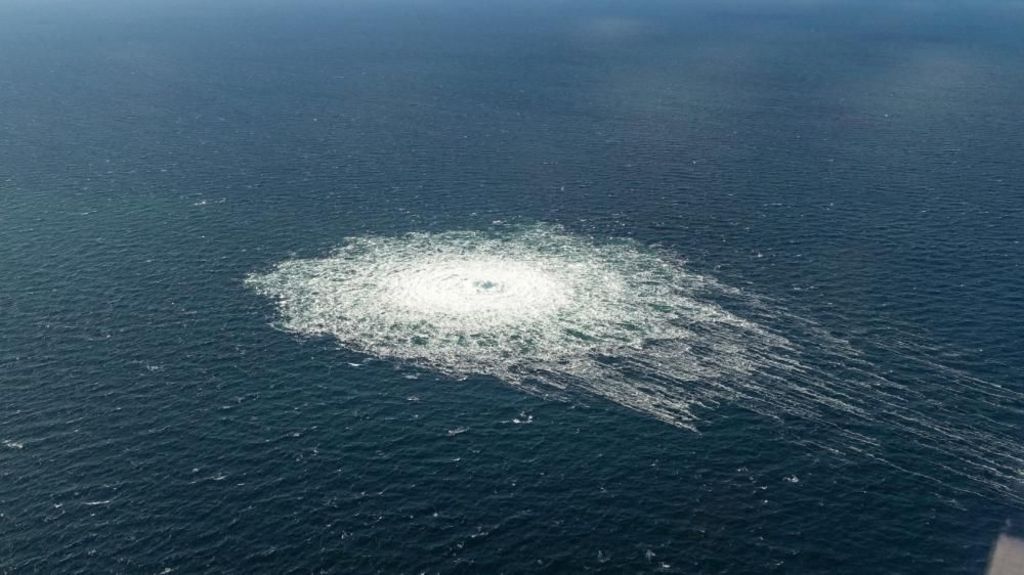
Nearly two years after mysterious explosions crippled three of the four Nord Stream natural gas pipelines beneath the Baltic Sea, German law enforcement has formally brought criminal charges against a Ukrainian national accused of masterminding the sabotage attack.
German media reports identify the suspect only as Serhii K, in compliance with the country’s strict privacy regulations. Prosecutors allege he organized and led the coordinated operation to destroy the multi-billion-dollar energy infrastructure, which was built to carry Russian natural gas to consumers across Western Europe. According to Germany’s public broadcaster DW, the suspect is accused of directing a cell of six additional accomplices in the plot, and faces charges including sabotage of civilian energy infrastructure, unauthorized detonation of explosives, and large-scale property destruction.
The accused is the same individual taken into custody by Italian law enforcement in summer 2023 and extradited to Germany last November. He has repeatedly denied any connection to the 2022 blasts, and his Berlin-based legal representation at Menaker law firm confirmed to Reuters that the indictment was officially served to the defendant on Wednesday. Neither the legal team nor federal prosecutors have released further details on the specific charges contained in the court document. Federal prosecutors later confirmed the pending charges to AFP, offering no additional comment on the ongoing investigation.
A second Ukrainian suspect was arrested just one month after Serhii K’s extradition, detained at his residence near Warsaw, Poland’s capital, under a separate German arrest warrant. That suspect has not been publicly charged as of this reporting.
The Nord Stream pipeline network was one of the largest subsea energy projects in European history, spanning 1,200 kilometers across the Baltic seabed from the Russian coast to northeastern Germany. While Nord Stream 2 was never brought online after Berlin froze its approval process just weeks before Russia’s full-scale invasion of Ukraine in February 2022, Nord Stream 1 had supplied consistent volumes of Russian natural gas to Western Europe for years before Russia shut down operations months before the blasts, citing technical maintenance issues. On September 26, 2022, multiple underwater explosions ripped through three of the four lines, leaving the entire network inoperable and releasing what has been recorded as one of the largest single methane emission events in human history, causing significant environmental harm to the Baltic Sea ecosystem.
For nearly two years, the perpetrators of the attack have remained unconfirmed, leaving a cloud of geopolitical uncertainty hanging over transatlantic and European relations. Western governments initially pointed suspicion toward Russia, while Moscow has repeatedly accused the United States and United Kingdom of orchestrating the sabotage. To date, no conclusive evidence has emerged linking any state actor to the attack.
The charges have introduced unexpected friction between Germany and Ukraine, a key diplomatic and military alliance for Berlin amid the ongoing war in Ukraine. Germany is the single largest contributor of military aid to Kyiv from European nations, and many within Ukraine view the destruction of Nord Stream as a major strategic blow to Russia’s energy export revenue, which funds its war machine. Many ordinary Ukrainians have expressed confusion over why German authorities are moving forward with the prosecution of a Ukrainian citizen for an attack that materially weakened Moscow’s war capacity.