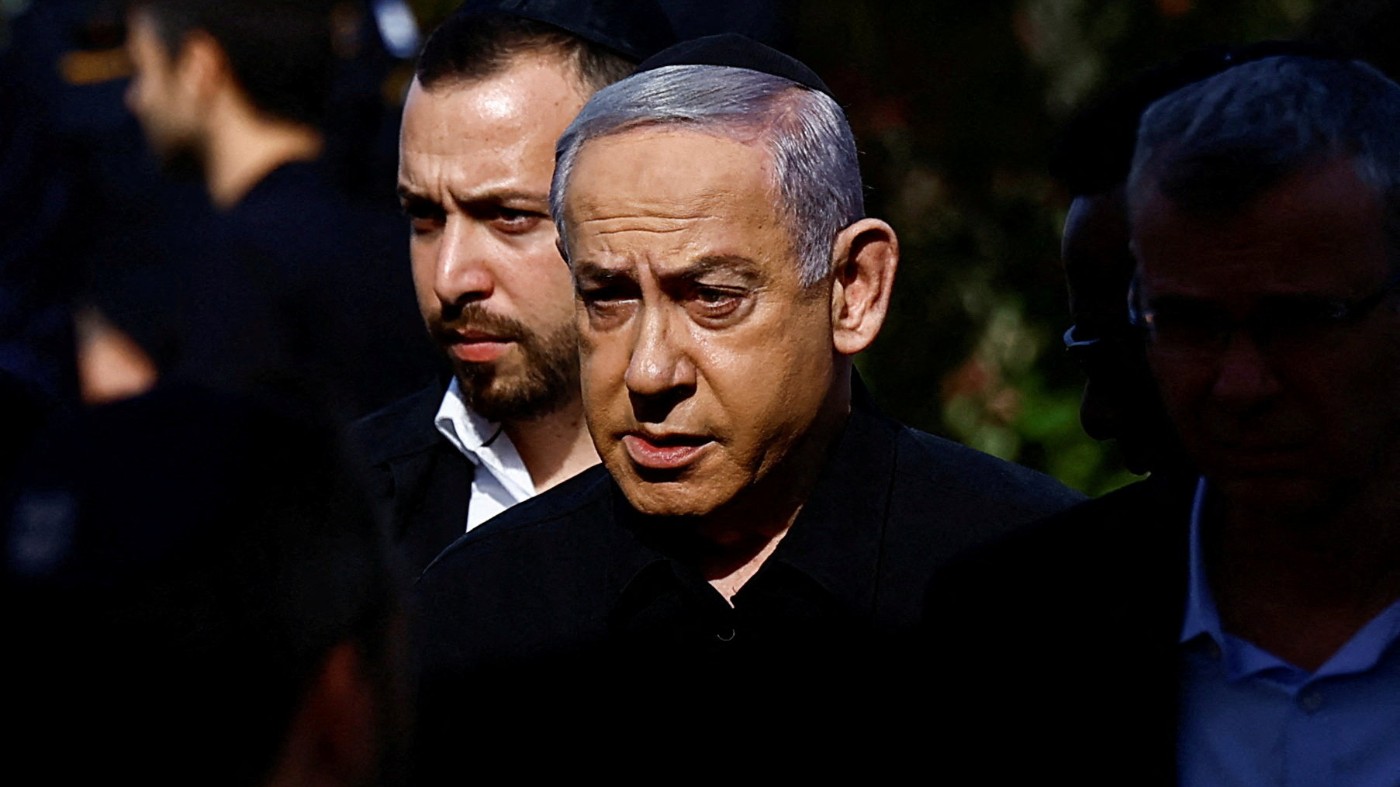
In a stark and unprecedented admission to Israeli right-wing outlet Channel 14 on Tuesday, Israeli Prime Minister Benjamin Netanyahu declared that Israel’s ongoing military campaigns across the Middle East will have no end, rejecting any prospect of a conclusion to the country’s regional conflicts. The lengthy interview, conducted with a media outlet widely viewed as a platform for Netanyahu’s political messaging, came in response to a question asking whether Israel’s multiple wars across the region were moving toward a close.
Netanyahu pointed to what he framed as major Israeli achievements to date, including the targeted assassinations of senior Hamas and Hezbollah leaders, and Israel’s ongoing military occupation of swathes of Gaza, southern Lebanon and Syrian territory. He also referenced the two military campaigns launched by Israel and the United States targeting Iranian-linked forces, claiming that “we broke the barrier of fear” that he said had prevented Israeli attacks on Iran for 47 years.
Pressed on whether his self-coined goal of “total victory” — announced immediately after the October 7, 2023, Hamas-led attack — remained within reach, Netanyahu doubled down on his indefinite conflict framing, stating simply, “it never ends.” He argued that military strength is a prerequisite for security in the Middle East and globally, asserting that “Israel is stronger than ever” before prompting applause from the studio audience, which complied with his request.
When questioned about the prospect of what the interviewer called “emigration” for Gaza’s Palestinian population, Netanyahu corrected the framing to specify what he called “voluntary emigration” — a widely criticized Israeli euphemism for the forced expulsion of Palestinians from the besieged enclave. He declined to elaborate further, saying only, “I prefer to talk less and do more.” He used the same vague, action-over-words framing when asked about proposals to establish new Jewish settlements in occupied Gaza, noting that Israel faces mounting international pressure over its policies, and “I don’t have to challenge the entire world at every moment and on every issue.”
Separate reporting from Israeli outlet Haaretz has shed new light on shifting social attitudes within Israel amid the ongoing Gaza conflict, revealing that a growing share of young Israeli students hold overtly racist views toward Palestinian citizens of the country, with upcoming student elections this October marking the first national student vote since the start of the Gaza war. The outlet cites growing concern from youth workers and academic researchers, who have documented a steady rise in extremist and exclusionary attitudes among Israeli teenagers over recent years.
Data from a poll conducted by Israel’s own education ministry shows a sharp increase between 2023 and 2025 in the share of students who believe groups including Palestinian citizens of Israel do not deserve equal membership in Israeli society. The poll breaks down attitudes by school type: 52 percent of students from religious Israeli Jewish schools back the exclusionary view, compared to 35 percent of students from secular Jewish schools and 34 percent of students from Arab-speaking Israeli schools.
A youth movement official told Haaretz that for Jewish Israeli students, rising nationalist sentiment has been paired with growing demands for a more rigid Jewish identity, alongside increased willingness to enlist in Israeli combat units. Another youth organizer noted that rising fear of Arab communities among Jewish students has been accompanied by a broader erosion of trust in Israel’s own democratic institutions. Beyond the rise in exclusionary views, the report found that most recent graduates of Israel’s secular education system no longer believe a lasting peace agreement with Palestinians is possible. One Jewish high school principal summarized the shift, telling Haaretz that today’s graduates “do not believe in peace or in a political solution to the conflict between the two peoples.”
In another alarming development, Israeli news outlet Ynet reported Wednesday on a new academic study that warns of devastating, long-term mental health harms facing the children of Israeli reserve soldiers, whose deployments to multiple ongoing fronts have stretched on for nearly two years. The study, conducted by researchers at Reichman University, surveyed more than 2,500 reservist families to measure trauma rates across generations.
The findings are stark: an overwhelming majority of young children under the age of seven whose parent is a reservist show measurable symptoms of post-traumatic stress disorder (PTSD). Seventy-five percent of these children meet the threshold for sub-clinical PTSD, while nearly 32 percent of symptomatic children meet criteria for full clinical PTSD. Researchers warned that the emotional and physiological harm being experienced by these children will create long-term costs for Israeli society if widespread, accessible treatment is not rolled out immediately.
The trauma is not limited to children: the study found that 35 percent of surveyed reserve fathers and 42 percent of reserve mothers also show symptoms of PTSD and other trauma-related conditions. After almost two years of continuous combat across multiple fronts, the study concludes that Israel has effectively become “a nation in trauma,” with reservist families raising young children bearing an especially severe and ongoing burden. Researchers described daily life for many of these families as “at times, utter chaos,” warning that the country is now facing an unprecedented “tsunami of mental health problems.”
Common symptoms reported in children include insomnia, bedwetting, frequent violent outbursts, and other behavioral disruptions, while 80 percent of parents reported a major, widespread decline across all areas of their daily lives, researchers confirmed.