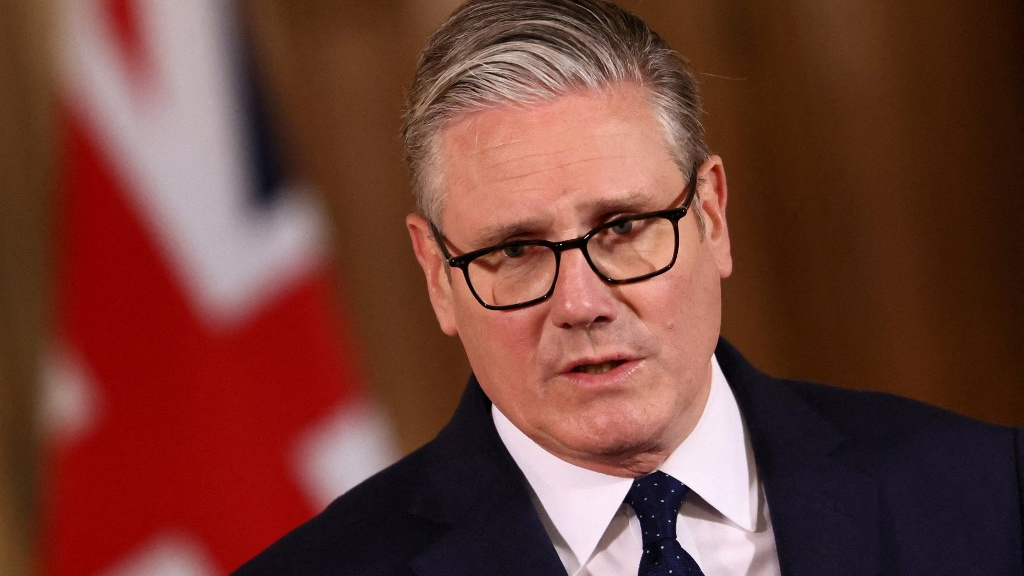
In October 2023, as Israel launched its military campaign in Gaza, Keir Starmer — then leader of the UK opposition — faced a pivotal question during a live interview with LBC’s Nick Ferrari. When asked about Israel’s deliberate use of starvation as a tool of conflict against Palestinian civilians in Gaza, Starmer’s response would reshape the future of the Labour Party: he stated he believed Israel held a legitimate “right” to cut off electricity and water supplies to Gaza’s civilian population, a move widely classified as a war crime under international humanitarian law. What Starmer did not anticipate in that moment was the lasting damage his words would inflict on Labour’s standing with its core supporters, particularly the UK’s Muslim community.
Historically, Labour has positioned itself as more sympathetic to the Palestinian cause and more open to Palestinian advocacy than the ruling Conservative Party. So Starmer’s remarks triggered an immediate wave of backlash from voices both inside and outside the party. Within just a few weeks, more than 150 Muslim Labour councillors penned an open letter to party leadership, demanding an immediate ceasefire in Gaza. The plea was brushed aside, and the first cracks in the long-standing alliance between the Muslim community and Labour quickly grew into a major political rupture.
Though Labour had held a consistent lead in national opinion polls since December 2021, translating to a landslide victory in the 2024 general election that delivered a majority government, the election exposed deep, costly rifts within the party. Starmer’s government took power with the lowest popular vote share for any UK ruling party in modern history, and the party lost multiple parliamentary constituencies with large Muslim populations. One of the most high-profile losses was the newly created Dewsbury and Batley constituency in West Yorkshire, a seat where 43% of the population identifies as Muslim.
Warning signs of this backlash had already emerged in the May 2024 local elections, when thousands of disaffected Labour voters threw their support behind independent candidates across the country. This trend held strong in the most recent round of 2026 local elections, particularly in the Kirklees metropolitan borough that covers Dewsbury and Batley. Yusra Hussain, a local councillor who defected from Labour to run as an independent, and who won a full term in Batley West alongside two other independent candidates, summed up the sentiment of many defectors: “I did not leave because my values changed. I left because I believe the party’s direction has changed.”
To understand Labour’s current unrest, observers say it is impossible to separate the Gaza backlash from the broader ideological shift the party has undergone over the past decade. Under Jeremy Corbyn’s leadership, Labour advanced a clear platform of radical left-wing policies centered on renationalization of key industries, massive public investment, and expanded social rights. It was on this platform of Corbyn’s “10 pledges” that Starmer won the 2020 Labour leadership contest — but within months of taking power, Starmer abandoned each pledge one by one, steering the party sharply to the right, further even than the centrist New Labour government of Tony Blair.
This ideological shift left Labour vulnerable in marginal seats with large Muslim populations. In the 2021 Batley and Spen by-election, for example, then-incumbent Labour candidate Tracy Brabin — now Mayor of West Yorkshire — saw her majority whittled down to just 323 votes, after prominent Palestine advocate George Galloway ran as a spoiler candidate and drew thousands of left-leaning pro-Palestine voters away from Labour. That same lack of a coherent, progressive appeal, paired with the party’s hard turn toward pro-Israel policy, cost Starmer the newly created Dewsbury and Batley seat in 2024.
Iqbal Mohamed, the independent MP who now holds the Dewsbury and Batley seat, explained the coalition that brought him to power: “What united so many voters was a firm belief that this country is — in a myriad of ways — failing the vast majority of people, their basic needs and their human rights, be that at home or abroad. Along with the abandonment of traditional centre-left viewpoints, moving the party towards a pro-Israel ideology was a devastating shift in this constituency.”
This electoral backlash is not limited to West Yorkshire. Independents also claimed key seats from Labour in Blackburn and Birmingham Perry Barr, both constituencies with even larger British Asian populations than Dewsbury and Batley. Political analysts note that Starmer’s abandonment of the party’s longstanding pro-Palestine position has proven even more disruptive to Labour’s voter base than his broader shift to the right. For decades, successive Labour leaders had backed Palestinian statehood: Ed Miliband oversaw a parliamentary vote in 2014 where the party voted in favor of recognizing Palestinian statehood, and Corbyn remained a consistent advocate for Palestinian rights throughout his leadership. Though Starmer eventually relented and recognized Palestinian statehood late last year alongside Canada and France, political analysts say the damage to Labour’s reputation among core supporters was already irreversible.
Post-election polling from 2026 confirms that the backlash extends far beyond the Muslim community. More than half of Labour’s former voters — across demographic groups — now cite the party’s inaction on the Gaza conflict as a key reason they switched their support to the Greens, Scottish National Party, Plaid Cymru, Liberal Democrats, or independent candidates. Beyond the Gaza issue, Labour has also lost much of its historic left-wing base after the ousting of Jeremy Corbyn, who has since reemerged as a prominent independent left voice. Many political analysts compare this sustained net loss of support to the collapse of other traditional center-left parties across Western Europe in the wake of the 2008 global financial crisis.
The Green Party has emerged as the primary beneficiary of this exodus, with a 2026 YouGov poll finding that more than one in five former Labour voters have now switched their allegiance to the Greens. The party’s new viability was on full display in the 2026 Gorton and Denton by-election in Manchester, where the Greens came within a hair’s breadth of taking the seat from Labour.
In Dewsbury and Batley, the impact of this political realignment is impossible to miss. The most recent Kirklees Council elections returned a minority administration led by the right-wing Reform UK party, whose incoming leader drew widespread public mockery for demonstrating a clear lack of understanding of basic parliamentary procedure. The council remains deadlocked without a permanent leader, with a new vote scheduled for later this month to break the impasse. Across the 16 wards covering Batley and Dewsbury, voters elected 11 pro-Palestine independent councillors and five Reform candidates — and not a single Labour candidate won a seat.
Mohamed, the independent MP for the area, argues that the result makes clear voters have rejected the UK’s longstanding two-party system entirely. “They deserted en masse a Labour Party that has for too long treated residents with contempt, taken their vote for granted, and aided and abetted the Israeli apartheid, occupation and genocide of the Palestinian people,” he said.
The original analysis, published by Middle East Eye editor and journalist Joe Gill in a 2026 opinion video, challenges Starmer’s core narrative that he rescued a party left morally, financially, and politically bankrupt by Corbyn. For analysts, the path to repairing Labour’s broken trust with voters will require decisive action to shift the party’s direction on both domestic and foreign policy — a change that has not yet materialized under Starmer’s leadership.