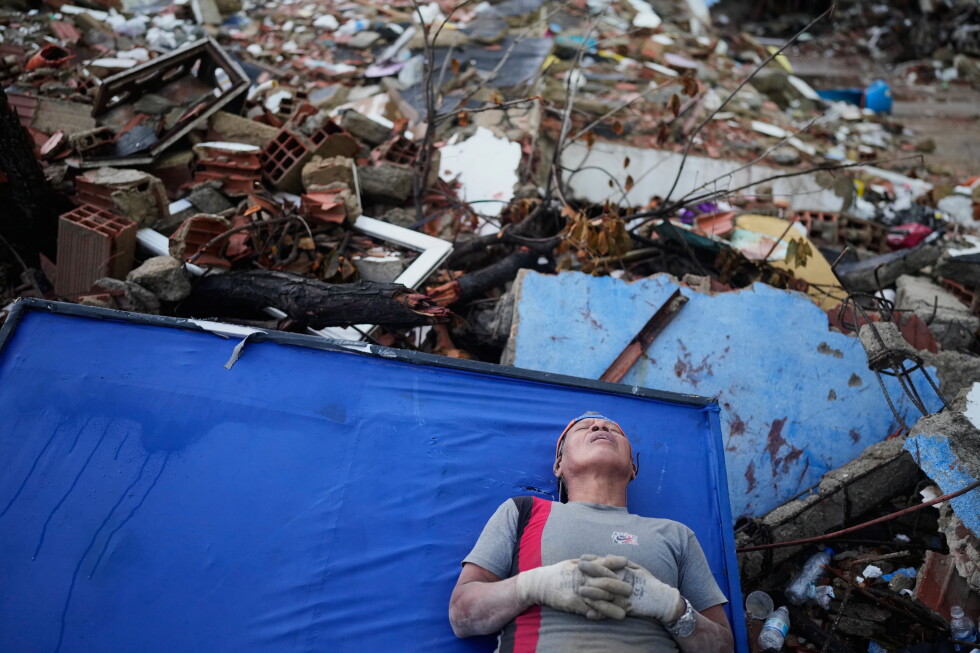
Nearly seven days after a pair of powerful earthquakes struck Venezuela, international and local aid organizations are sounding the alarm that the country’s already crumbling public health system has been pushed past its breaking point. Damaged, understaffed medical centers are overwhelmed by a surge of injured survivors, while rapidly deteriorating sanitation conditions across disaster zones have created the perfect conditions for infectious disease outbreaks to take hold.
Rescue and recovery operations led by dozens of international and domestic search teams continue to comb through collapsed infrastructure, pulling additional bodies from rubble each day as the official government death toll has climbed past 1,700. While search operations remain focused on locating any remaining trapped survivors, aid leaders warn a full-blown humanitarian emergency is already developing among the thousands of Venezuelans who survived the quakes but lost their homes.
United Nations agencies have highlighted the growing public health risks facing displaced populations, who have spent days sleeping in open-air spaces or overcrowded, unsanitary emergency shelters. Carlotta Wolf, spokesperson for the UN refugee agency, confirmed Tuesday that official Venezuelan government figures put the number of displaced people affected by the quakes at more than 15,800, a number Wolf says will continue to climb as assessments progress. Thousands of suddenly homeless residents are now sheltering in vehicles, public parks, and other unregulated spaces, with no adequate emergency housing infrastructure available to accommodate them. Widespread food shortages are also plaguing residents in La Guaira, the hardest-hit state, Wolf added.
Speaking at a press briefing in Geneva on Tuesday, World Health Organization spokesperson Christian Lindmeier explained that low pre-existing vaccination coverage across Venezuela leaves displaced populations uniquely vulnerable to outbreaks of vaccine-preventable illnesses such as measles. The post-quake disruption to sanitation and water systems has also sparked a resurgence of mosquito-borne and waterborne diseases including dengue, yellow fever, and malaria.
Venezuela’s national healthcare system was already strained by decades of chronic underfunding and years of deep economic crisis before the earthquakes struck, and it is now operating far beyond its capacity to handle the sudden surge of traumatic injury cases, Lindmeier said. Official government data shows 38 hospitals across the country suffered major damage or were rendered unsafe by the quakes. WHO teams have completed assessments of 21 of those facilities so far, finding three are completely non-operational, six sustained significant structural damage, and the remainder are buckling under the unprecedented volume of patients.
The crisis is compounded by the loss of critical medical personnel: many specialist doctors, including senior maternity care staff in La Guaira, remain trapped or missing under collapsed buildings. “Our assessments found chaotic care delivery and patient flow, marked by extreme overcrowding, growing backlogs for urgent surgical procedures, and a complete breakdown of basic biosafety protocols,” Lindmeier said. The chaos has also led to the collapse of forensic and morgue services, leaving authorities unable to properly document and store recovered remains.
Venezuelan authorities have released daily updates on the human toll, reporting a confirmed count of 1,719 dead and more than 5,000 injured as of Monday. But independent experts warn the official count is almost certainly a significant undercount, as thousands of people remain unaccounted for, and hopes of finding additional survivors fade with each passing day. The government has not released an official count of missing people, and widespread damage to cellular communications and other critical infrastructure has made it extremely difficult to track how many people remain buried under rubble. One independent non-governmental digital tracking platform has listed more than 50,000 people as missing, though it remains unclear how many of those listings correspond to people who have not yet been accounted for by official teams.
This report was compiled by DeBre from Buenos Aires, Argentina, with additional reporting from the Associated Press. Follow AP’s full coverage of Latin America and the Caribbean at apnews.com/hub/latin-america.