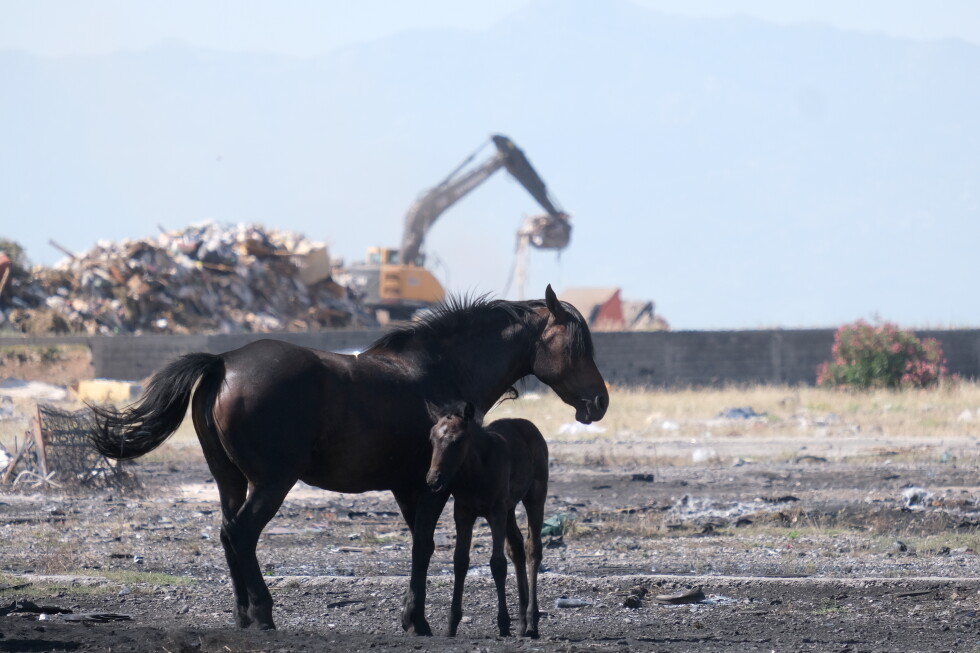
As a record-shattering heat wave that has already parched Western Europe rolls across the Balkan Peninsula this week, a long-neglected crisis has been thrown into sharp relief in the small Adriatic nation of Montenegro: the persistent lack of protections for thousands of abandoned animals, left to roam unprotected in deadly triple-digit temperatures.
Just 2.5 miles outside central Podgorica, Montenegro’s capital, dozens of unclaimed horses have been spotted wandering open terrain adjacent to an unregulated landfill and informal settlements. With no access to shade, clean drinking water or sufficient food as temperatures climb close to 104 degrees Fahrenheit, animal welfare activists warn the animals face a growing risk of heat exhaustion and death.
Activists stress that this crisis is unfolding not in a remote, unpopulated region, but within a short distance of the capital’s core. “This is only 4 kilometers from the city center. It is not in the middle of nowhere,” said Marta Darmanovic, a prominent Montenegrin animal protection advocate. Darmanovic blasted the national government for failing to address the decades-old problem of abandoned animals, pointing out that Montenegro still lacks any dedicated shelter infrastructure for large animals — including stray livestock, confiscated animals and wild species.
“Montenegro has effectively legalized animal abuse because it has failed to provide even minimum infrastructure needed for the regulations to be enforced,” Darmanovic added.
This year’s heat wave is one of the most severe on record across Europe, breaking all-time temperature benchmarks in dozens of nations, overwhelming public health systems, and forcing millions of people to seek emergency relief from the swelter. In France, this week’s high temperatures have already outpaced those of the devastating 2003 heat wave, which killed an estimated 15,000 people, most of them elderly.
The issue of animal welfare carries particular weight for Montenegro, a country of just 620,000 people that has set a target of completing accession negotiations and joining the European Union by 2028. As an official EU candidate country, Montenegro is required to implement and enforce comprehensive animal welfare regulations to meet membership standards.
Local authorities have pushed back against criticism, noting that the city of Podgorica has already built dedicated shelters for stray dogs and cats, and municipal inspectors are working to address the issue of abandoned large animals within existing legal frameworks. Branko Kovacevic, head of Podgorica’s Municipal Inspection Administration, told reporters that abandoned horses and other large domestic animals keep reappearing even after interventions, and that agencies are acting within the limits of current legislation. “As far as the law allows us, we deal with the problem,” Kovacevic said, but acknowledged a critical gap: “unfortunately, nobody is responsible” for providing ongoing food and water to the roaming animals.
While the Balkans is accustomed to hotter summer temperatures than much of Northern and Western Europe, national authorities have still issued public health warnings urging residents to stay indoors in the peak heat hours and stay hydrated. Meteorologists forecast that temperatures across the region will begin to cool starting Tuesday, bringing some relief.
Across the border in eastern Croatia’s Osijek, local zoos have taken proactive steps to keep their resident animals cool during the heat wave, with keepers serving custom frozen treats made from fruit and meat. Zeljko Busljeta, an employee at Osijek Zoo, told Croatia’s national public broadcaster HRT that many primate species have chosen to stay in climate-controlled indoor enclosures to rest, and staff offer cold watermelon, cantaloupe, grapes, lemonade and iced tea to help the animals beat the heat.