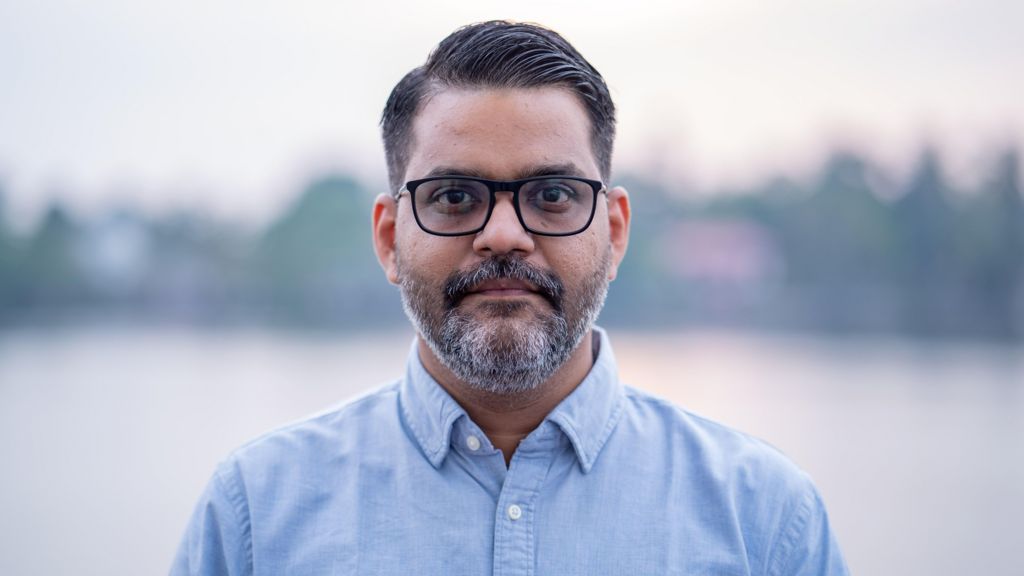
In the sun-dappled waiting room of Rajagiri Hospital’s hepatology clinic in Kochi, southern India, the air hangs thick with unspoken tension. Here, families grip tattered stacks of medical reports, their hopes pinned on the specialist inside, while patients weakened by end-stage liver disease wait quietly for a path forward. Few who enter this space would guess that the soft-spoken clinician greeting them is the same man who has upended India’s massive traditional medicine industry, sparked federal government inquiries, and become one of the most polarizing public figures in Indian healthcare.
Dr. Cyriac Abby Philips, known to over 300,000 followers on X as the outspoken “Liver Doc”, has built a reputation as a lightning rod for controversy since he began publicly challenging the safety and scientific validity of alternative and traditional Indian medicine. To his loyal supporters, he is a fearless defender of evidence-based care, shining a light on unregulated products that harm vulnerable patients. To his critics — which include thousands of alternative medicine practitioners, high-profile celebrities, and even India’s federal Ayush Ministry, which oversees traditional medicine — he is an abrasive, attention-seeking provocateur who disrespects India’s centuries-old cultural medical heritage.
Over the past six years, the backlash against Philips has been severe: he has faced 16 ongoing legal cases, been interrogated by police who traveled two days by train to question him over a social media post, and been the subject of two formal federal committee meetings convened solely to discuss his public criticism. Yet the man who confronts opponents with blunt, often uncompromising language online presents a far different face in person: calm, gentle, and deeply focused on the patients sitting across from his desk.
This combative online persona, Philips explains, is a deliberate choice, not a reflection of his true character. “They hate me. But they cannot invalidate the information I give,” he says without apology. “Sometimes you must make loud noises to be heard. I specially go after trolls, so they cannot deviate the attention from the message I am trying to give. If people think I’m rude or ill-tempered, even though it isn’t true, I’m willing to pay that price.”
Philips’ journey to this high-stakes public role was not one he ever planned for. Born into a medical family in Kerala — his father is one of the state’s most celebrated gastroenterologists — Philips initially dreamed of a career in writing and film, not medicine. He failed his first medical entrance exam, spent nine miserable months in a cramped residential coaching center, and only entered the field after a second attempt. It was not until his residency at a under-resourced 3,500-bed public hospital in Kolkata that he found his calling: watching overworked, under-resourced clinicians deliver compassionate care to desperate patients, he saw the profound human impact of medicine that he had never recognized before.
After training in hepatology in Delhi and returning to Kerala to help rebuild his family’s medical practice following a corporate takeover, Philips began to encounter a pattern of preventable harm that would shape the rest of his career. Time and again, he treated patients with severe liver damage caused by unregulated herbal remedies and homemade alternative treatments, marketed as safe and natural to millions of trusting Indians. One case that haunts him still: a six-year-old child brought to his clinic with acute liver failure after her family gave her a homemade herbal concoction to treat a common cold and fever.
That tragedy pushed Philips to formalize his research into the harms of unregulated traditional medicine. He immersed himself in the scientific and historical background of Indian alternative systems, published dozens of peer-reviewed studies documenting the link between traditional remedies and liver injury, and began sharing his clinical findings and research on social media to educate the public. When the Ayush Ministry disputed one of his published studies, he responded with a detailed, evidence-based rebuttal and continued his work. He has also led crowdfunded independent investigations into contaminated protein powders and low-quality generic drugs sold across India, and recently published a book documenting his experiences as a clinician.
Today, Philips limits his practice to just 25 patients a day — a fraction of the volume most of his peers see, a choice he made after the emotional toll of constantly caring for terminally ill liver patients and a near-fatal car crash while taking an urgent work call. Four years ago, he gave up drinking entirely, explaining that he could not ask his patients with alcohol-related liver disease to stop drinking if he continued the habit himself. Away from the clinic and social media, he is an avid gamer who prioritizes time with his wife and children, a far cry from his combative online image. His wife Teena, who has been with him since his residency in Kolkata, puts the difference simply: “He’s very patient… He’s not like that on social media. As a person, no.”
The personal and professional cost of Philips’ activism has been steep. He has spent millions of rupees on legal defense, despite some pro bono representation from sympathetic lawyers. A close colleague left India after being detained for questioning over a co-authored paper, and many researchers now refuse to be named on studies he publishes. He has received threats against his family, a burden that brings the fierce advocate to tears when he speaks of it, and he now takes constant safety precautions to protect his loved ones.
Still, Philips refuses to step back. For him, the work of informing the public about the risks of unregulated alternative medicine is worth any personal sacrifice. “Even before I started paying for legal expenses, I was already paying from my own pocket to analyse these medications,” he says. “The whole aspect of somebody being there for the public, letting them know the truth they would never know about — I think this is much more important than looking at your own safety and comfort.” “I want my children to remember me as somebody who stood for what he believed was right,” he adds.