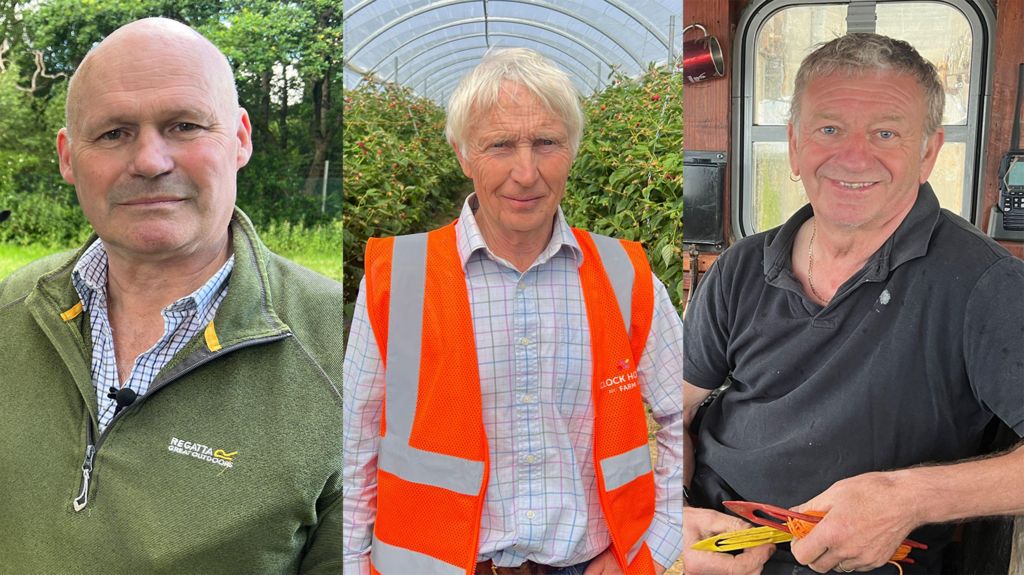
Ten years have passed since the 2016 United Kingdom European Union membership referendum, a vote that reshaped the nation’s political and economic trajectory forever. Ahead of that historic ballot, polling data already revealed deep divisions over Brexit among England’s rural and coastal industries: while a thin majority of farmers leaned toward leaving the bloc, the fishing industry was far more unified, with a pre-referendum survey recording that 92% of fishermen planned to back an exit. A decade on, the BBC set out to revisit communities in South East England, asking producers whether, equipped with the hindsight of 10 years of post-Brexit reality, they would cast the same vote today.
For Simon Maiklem, a Surrey-based beef producer who backed remaining in the EU in 2016, the outcome of Brexit has only confirmed his original opposition. In an interview with the BBC, Maiklem explained that he has yet to see any tangible benefit from the UK’s exit from the bloc, and in many ways, conditions have turned out worse than even remain campaigners predicted. His entire business model was built around exporting high-health, premium pedigree cattle to customers across the European single market – a market that vanished overnight once the UK completed its withdrawal. That valuable export space has now been fully captured by farmers in Southern Ireland, Maiklem noted, who retain full EU membership and face none of the post-Brexit trade frictions that have locked him out of the continent. On top of lost export access, he added, successive changes to government policy have eroded the farm subsidies he once relied on. While he acknowledged that the EU had become bloated with excessive bureaucratic regulation, Maiklem argued that reforming the bloc from within would have been a far better path for British agriculture. Promises of reduced red tape after Brexit, he said, have failed to materialize. Echoing a famous quip from decades ago, he noted: “A very old friend of my father’s said that farmers voting for Brexit was turkeys voting for Christmas. I think he might have been proved right.”
For fishermen who overwhelmingly backed leave in 2016, the story has been one of unmet promises and lingering frustration. Mark Ball, a Sussex fisherman who supported an exit, said his core motivation for voting leave was ending the unfair one-sided arrangements that defined UK membership of the EU’s Common Fisheries Policy. “I felt that if we could leave, we could get control back of our waters and hopefully make fishing a bit better,” he explained. At the time, he pushed for a full ban on European fishing vessels operating within 12 miles of the UK coast. A full decade later, however, Ball says nothing has changed. EU vessels still operate as close as six miles to UK shores, while British fishermen now face overwhelming new red tape when exporting their catch to the continent. “It’s so unfair. They’ve got everything they wanted and more on top. And all we’ve got is a load of regulation,” he said. Even so, Ball says he would still vote to leave today, arguing that the failure is not with Brexit itself, but with the flawed withdrawal agreement the UK negotiated with the bloc. He called for the current deal to be scrapped and replaced with a far better arrangement for British fishing, warning that without meaningful change, inshore UK fishing has no long-term future. “I just think they’re bullies,” he said of EU negotiators.
Jim Partridge, a veteran fish seller with 69 years of industry experience who runs Shoreham-based Monteum Ltd, echoed Ball’s frustration. He also voted leave in 2016, and says he has yet to see any of the promised freedom from EU rules that leave campaigners promised. French vessels are still allowed to operate in the Channel as close as six miles to the Sussex coast, he pointed out, under outdated “historical rights” provisions that UK negotiators failed to renegotiate. UK fishing crews have long demanded a new boundary drawn down the middle of the Channel, a change that would give British fleets full access to valuable local stocks. Instead, Partridge said, French boats are harvesting most of the prime fish off the Sussex coast – including Dover sole, plaice, cod, brill and turbot – leaving almost nothing for local crews. Comparing current fish stock levels to when he started working in the industry at age 8, Partridge said the difference was like “chalk and cheese”, adding that British fishing has suffered continuously since former Prime Minister Ted Heath took the UK into the bloc decades ago. When asked about growing calls for the UK to rejoin the EU, Partridge said there was “no question” he would vote leave again today, and would make the same choice a second time.
Not all leave-voting farmers have uniformly negative views of the post-Brexit landscape, however. Robert Pascall, a fruit grower based in Kent who backed leave in 2016, acknowledged that from a purely economic perspective, remaining in the EU would likely have been the right choice for his business. He said that national pride was a major factor in his 2016 vote, explaining that at the time of the referendum, he felt the UK was overly dominated by EU institutions. Today, his business no longer qualifies for the same level of subsidies that EU-based fruit producers receive, putting him at a major competitive disadvantage in the European market. Even so, Pascall pointed to some unexpected benefits of Brexit. Tighter post-Brexit plant health checks, introduced to block the spread of harmful pests and diseases into the UK, have made importing stock plants far more difficult. But this trade friction has also pushed his farm to expand its own domestic production of stock plants, ending its historical reliance on imports shipped through the Channel Tunnel.
In response to questions from the BBC, a spokesperson for the UK’s Department for Environment, Food and Rural Affairs said the government is “determined” to deliver the support that farmers, fishermen and food exporters need to thrive post-Brexit. The government has renewed its Sustainable Farming Incentives scheme, invested roughly £800 million in supporting British farmers and food producers, and allocated an additional £360 million through the Fishing and Coastal Growth Fund. The spokesperson added that the government’s reformed Sanitary and Phytosanitary (SPS) scheme will also make trade with the EU – the UK’s largest single export market – cheaper and easier for British producers in the coming years.