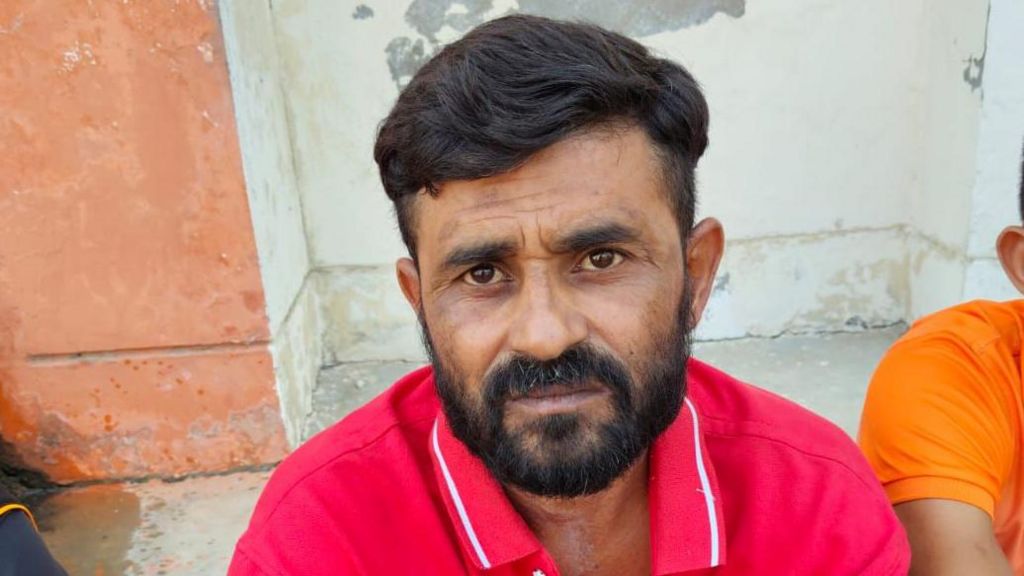
A shocking case of modern-day slavery has been uncovered in the northern Indian state of Uttar Pradesh, where law enforcement officials have rescued 12 men who were held captive and forced into unpaid bonded labor at a small disposable plate manufacturing facility. The horrific ordeal of these workers, which included months of systematic abuse, starvation, and violence, has reignited fierce national debate over India’s persistent failure to eliminate a practice outlawed half a century ago.
According to Uttar Pradesh Police, the case emerged after authorities received an anonymous tip-off last week reporting captive workers at the factory located in Muzaffarnagar district. Senior police officer Sanjai Kumar told reporters that investigators deployed an undercover decoy to confirm the allegations before launching a coordinated raid on the facility on Monday, alongside officials from the state labor department and district administration.
Investigations reveal the factory operators targeted vulnerable job seekers at crowded public hubs such as railway stations, luring them with false promises of steady work, free meals, and safe accommodation. Once the workers arrived at the site, their personal communication devices were immediately seized, their official identity documents were destroyed, and they were locked inside the factory premises to prevent escape. For months, and in some cases nearly two years, the men were forced to work around the clock without pay, surviving on just one meager meal of dry flatbread or bran bread a day, with pit bull terriers deployed to guard them against escape attempts. Any attempt to demand owed wages or request to leave was met with brutal violence: multiple rescued workers showed visible injury marks across their bodies from repeated beatings with sharp wooden sticks.
Twelve men were freed in the raid, with origins across four Indian states — Uttar Pradesh, Haryana, Bihar, and Uttarakhand — plus one worker from Nepal. One worker from Nepal, Dan Bahadur Thapa, told reporters he had been held captive for almost two full years with no contact whatsoever with his family back home. Narayan, a worker from Chhattisgarh who took the job to support his two young children and brothers, said he had missed his family desperately during his four months of captivity. Ramu, from Uttarakhand, described the workers being “kept like prisoners,” with their Aadhaar national identity cards burned to cut off any outside connection.
Kumar, the senior police official, described the conditions workers were held in as marked by “tremendous atrocity,” adding that the scale of injury on the men’s bodies was “shocking.” To date, two suspects have been taken into custody in connection with the case, while the factory’s owner remains at large as a manhunt continues. Authorities have opened a formal case under India’s Bonded Labour System (Abolition) Act, alongside other relevant statutes, and have assembled a special investigation team to fully probe the operation. Police are also examining alarming allegations that multiple workers may have died at the factory during the period of captive operation.
The news of the rescue and the graphic accounts of abuse have sparked widespread outrage across India, with intense condemnation pouring in on social media and from political leaders. Opposition leader Rahul Gandhi condemned the incident as a direct attack on human dignity, writing on social platform X that “Victims must receive justice along with rehabilitation and the perpetrators the harshest possible punishment.” Social media users have expressed shock that such systematic abuse could persist decades after bonded labor was criminalized, with many describing the incident as “inhumane” and “a stain on our collective conscience” that demands swift, exemplary justice.
As of the latest update, all 12 rescued workers have received urgent medical treatment for their injuries and are currently undergoing psychiatric counseling to help them process their traumatic ordeal. Eight of the 12 have already been reunited with their families, according to police, while authorities work to locate the remaining workers’ next of kin and coordinate with state agencies to arrange long-term rehabilitation support for all victims.
The case has once again drawn unwanted attention to the ongoing problem of bonded labor across India. Though the practice was formally abolished by federal law 50 years ago, it remains endemic in many low-wage, informal sectors of the economy, where impoverished and marginalized workers are often trapped through debt bondage, coercion, and systemic threats, with weak enforcement allowing abusers to operate with impunity in many regions.