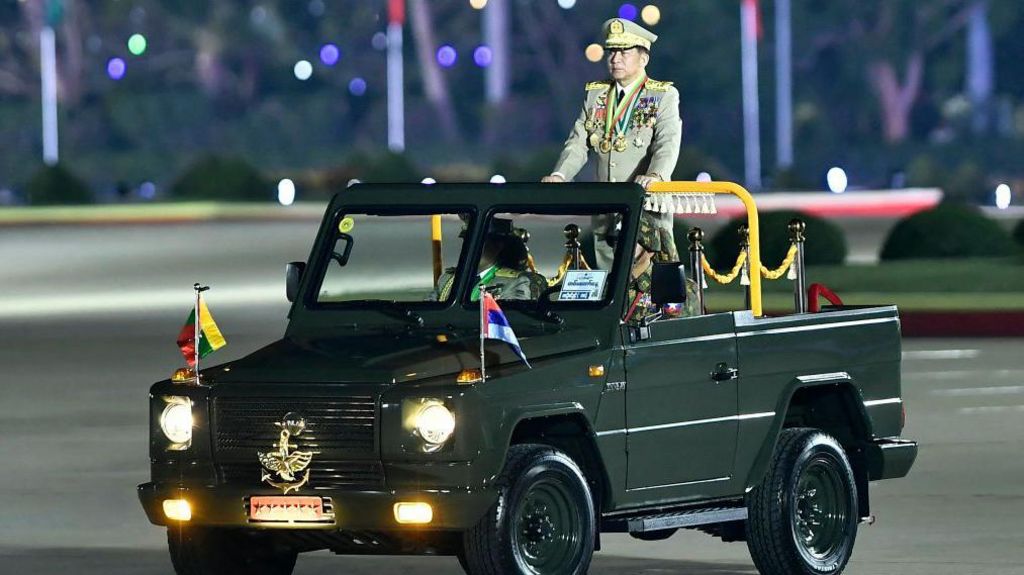
Five years after seizing power in a 2021 coup that ousted Myanmar’s democratically elected government and threw the nation into a devastating civil conflict, the country’s military regime has been implicated in the deaths of more than 700 civilian lives in just six months preceding its widely discredited 2025 election, according to a new United Nations Human Rights Office investigation. The report, which tracks violence from August 2025 through January 2026, draws on cross-verified data from multiple credible on-the-ground sources to confirm a minimum of 702 civilian fatalities, including 224 women and 153 children. The period in scope began when the military junta officially announced its long-promised electoral process — a vote dismissed by the global community as a fraudulent sham, after all major opposition parties were barred from participating and entire swathes of the country controlled by armed opposition groups were excluded from balloting. Myanmar’s civil conflict has already claimed thousands of lives and displaced millions of people across the country since the 2021 coup, with large territories remaining outside the junta’s control. The UN report singles out military air strikes as the single leading cause of widespread destruction and civilian suffering across the nation. The northwestern region of Sagaing, where the military has launched sustained offensives to retake territory from opposition groups, was identified as the deadliest area for civilians, accounting for 191 confirmed civilian deaths, including 60 women and 30 children. The investigation documents two particularly brutal mass casualty attacks that targeted civilian gatherings. In October 2025, a military strike on a crowd gathered outside a school in Chaung-U, Sagaing killed 23 people, four of them children, and wounded more than 60 more. At the time of the attack, attendees were holding a peaceful candlelit vigil to mark the end of Buddhist Lent, demand the release of political prisoners, protest military forced conscription, and reject the junta’s planned election. A second deadly strike in December 2025 hit a public tea shop in Tabayin, Sagaing where civilians had gathered to watch a football match, killing at least 19 people and injuring 20 more. Beyond junta-perpetrated violence, the report also documents ongoing human rights abuses against the Rohingya minority, who are targeted with killings, arbitrary detention, sexual violence, and forced recruitment at the hands of the Arakan Army. In a stark rebuke of fading global engagement with the crisis, UN High Commissioner for Human Rights Volker Türk emphasized that the people of Myanmar have already endured unthinkable suffering under military rule, only to be abandoned by the international community. Cuts to international assistance have drastically exacerbated hardship for millions of people across the country, Türk noted, adding that funding for local civilian protection initiatives has long been the only lifeline for communities facing constant, indiscriminate military attacks. The withdrawal of this support, he said, only compounds the harm already inflicted on vulnerable populations. In the months following the election, the junta has solidified its grip on power: in April 2026, Min Aung Hlaing — the general who led the 2021 coup — was sworn in as the country’s president. The election’s outcome was never in doubt: leading opposition parties were banned from running, conflict-affected regions were barred from participating, the military is constitutionally guaranteed a quarter of all parliamentary seats, and the junta’s own party, the Union Solidarity and Development Party (USDP), secured nearly 80 percent of the remaining contested seats in a process rigged heavily in its favor. Following a period of major rebel gains starting in 2023, the junta has regained the upper hand across most of the country in recent months, boosted by expanded forced conscription drives and increased access to advanced drone technology that has strengthened its offensive capabilities.