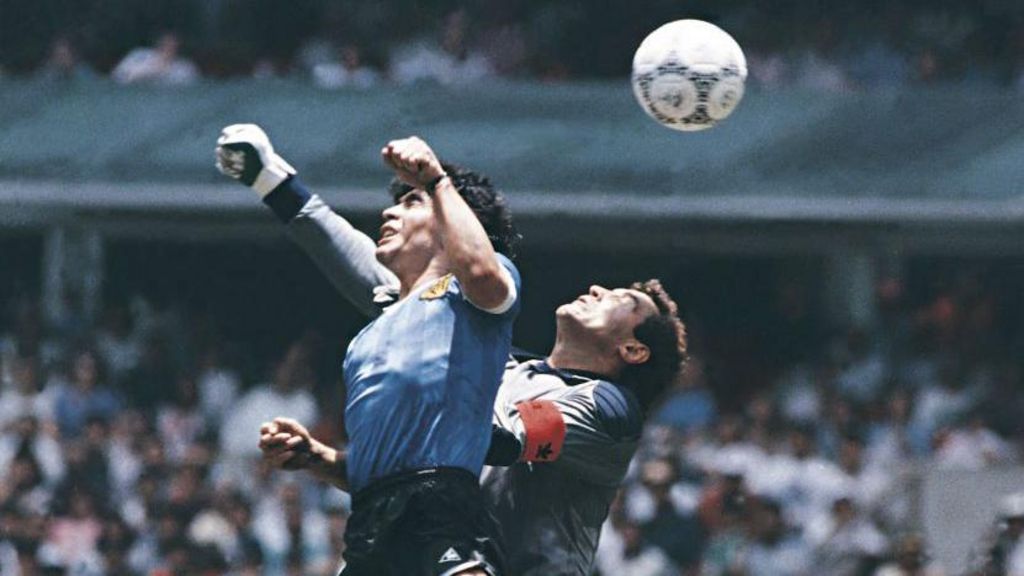
It was a completely unplanned afternoon that would go on to stick with me for the rest of my life. At 17 years old, I had never stepped foot inside a professional football stadium, and I had zero interest in the sport. But a last-minute phone call would land me a front-row spot to one of the most iconic matches in World Cup history: the 1986 quarter-final between Argentina and England.
That morning, my family had no plans for the day. Then a call came in: a friend of my father had two extra tickets he couldn’t use, and he offered them to my mother and I. My father hesitated. It had been less than five years since the Falklands War ended, and he feared lingering political tensions would spill over into the stands between Argentinian and English supporters. My mother, though, did not overthink it. This was the World Cup, she argued – a once-in-a-lifetime experience that no teenager should miss. We were going.
I treated my first ever football match like I was heading to a night out, not a sporting event. I pulled on my nicest clothes, caked on far more makeup than I needed, and spent more time daydreaming about meeting attractive foreign fans than focusing on the legendary players we were going to watch. My mother gave me a raised eyebrow but let me have my fun. The buzz started long before we reached the stadium, as we drove across Mexico City. Flags flapped out of every car window, and strangers yelled shared chants across stalled traffic. I joined right in, screaming “Viva México!” alongside everyone else, even though Mexico had already been knocked out of the tournament. Football didn’t matter to me then, but being part of that electric collective moment did.
Walking into the Azteca Stadium for the first time took my breath away. The sheer size of it, the deafening noise, the explosion of color from fans’ kits and face paint – it felt like the entire world had converged on that single spot. Fans from every corner of the globe packed the stands, singing, laughing, and decked out in costumes. I barely paid attention to the kickoff; I was far too caught up joining the Mexican wave, swept along in the crowd’s rhythm. The match itself felt distant, almost like a background detail.
Then everything changed in an instant. Suddenly, the entire stadium was on its feet. There was a burst of celebration, then confusion, then shouting as arguments broke out across the stands. It was a moment that would be debated for decades. The ball floated high above England’s penalty area, and Argentina’s Diego Maradona launched himself into the air to contest it with England goalkeeper Peter Shilton, who jumped to punch the ball clear. Instead, the ball bounced off Maradona and trickled over the goal line.
At first glance, it looked like a clear header. For me, that was the moment the football stopped being background noise and became the only thing that mattered. Fans around me immediately started questioning the call: had he really scored with his head, or had he used his hand to push it in? Loud boos and protests rang out from the section of English supporters. Confused, I turned to the man sitting next to me and asked what all the commotion was. He explained Maradona had punched the ball into the net with his hand, but the referee had missed the foul and allowed the goal to stand. I was puzzled, and I had no idea in that moment that I had just watched one of the most infamous incidents in sports history. It would later become known globally as the “Hand of God”, named for Maradona’s own famous quip after the match: the goal had been scored “a little bit with my head, and a little bit with the hand of God.”
The stands were still buzzing with heated debate over the controversial goal, so much so that almost everyone nearly missed what came four minutes later: Maradona’s second, far more extraordinary goal of the match. When I look back on that day, the Hand of God is not what I remember first. What sticks with me is that second run of play. Unlike the chaotic celebration that followed the first goal, the entire stadium went dead silent as Maradona dribbled the ball up the pitch from his own half.
He spun past two English defenders right at the start of the run, then wove side to side down the field, dodging tackle after tackle, until he broke into the penalty area and slotted the ball into the back of the net. In an instant, the silence exploded into roars. I remember sitting there thinking: this is why people love football. Now I get it. What amazed me most was that even some of the English fans sitting near us joined in the applause, awed by the sheer brilliance of the play.
When the final whistle blew, Argentina had sealed a famous 2-1 victory. As my mother and I walked back to our car, what stuck with me wasn’t just the match – it was the feeling of being inside the Azteca, a vast, iconic venue woven into the fabric of Mexico’s national history. It was more than just a stadium; it was part of our collective memory. Just one year earlier, Mexico City had been shattered by a devastating earthquake that left whole neighborhoods in rubble. I could still vividly remember the weeks after the disaster, when the air smelled of dust and grief, and the whole city held its breath. The Azteca had been one of the largest refuges for families who had lost their homes, a place where they found shelter and hope. Just standing there felt profound, almost sacred, yet outside those walls, the city had transformed into a joyful, alive hub of global celebration.
As we walked, we ate tacos and fresh fruit covered in chile and lime from street vendors, talking and laughing, and I felt an overwhelming sense of pride in being Mexican. We laughed about how we leaned into every warm, loud stereotype of our country – the bright colors, the sombreros, worn with humor and defiance – and how as hosts, we opened our doors to the world with generosity and joy. Even the tournament’s official mascot, a chile pepper wearing a sombrero, captured that spirit perfectly: bold, playful, and unmistakeably Mexican.
It took me many years to fully understand what I had witnessed that day. Football never became a huge passion of mine even after that match, but that moment has never faded. The first goal will always be controversial, it angered millions then and still sparks debate decades later, and when I later lived and worked in Argentina, my friends never missed a chance to tease my English colleagues about the Hand of God. But that controversy often overshadows what I saw next: a goal so spectacular, so breathtaking, that I would never have believed it possible if I hadn’t seen it with my own eyes. For me, that second goal is the one worth celebrating – the moment a 17-year-old girl who didn’t care about football finally understood why the sport captivates the world.