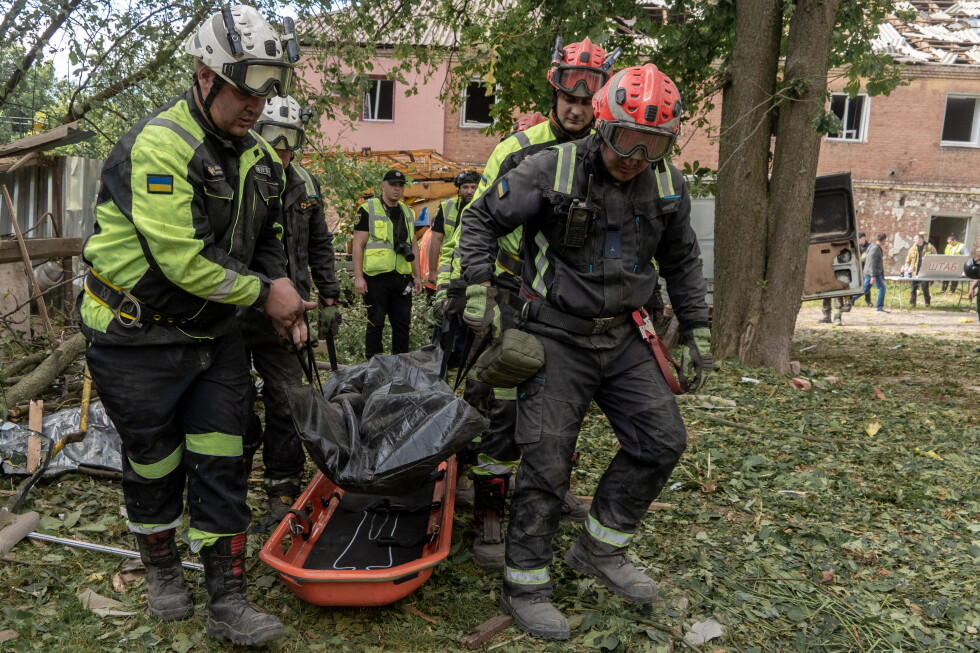
Fresh exchanges of long-range strikes between Russian and Ukrainian forces have pushed the ongoing full-scale conflict into another deadly chapter over the weekend, with civilian infrastructure and energy targets hit on both sides, leaving multiple non-combatants dead and wounded.
The first deadly incident unfolded early Saturday in Kharkiv, Ukraine’s second-largest city located in the country’s northeast. According to local authorities, Russian guided bombs directly hit a low-rise residential apartment building in the city’s Kholodnohirskiy district. Hours after the attack, rescue teams pulled one dead body from the collapsed rubble, Kharkiv Mayor Ihor Terekhov confirmed in an official post on the messaging platform Telegram.
Regional administration head Oleh Syniehubov added that at least nine people were wounded in the apartment block strike, among them a 6-year-old child. Five of the injured required immediate hospital care for their wounds. This attack marked the second deadly Russian strike on civilian targets in Kharkiv within 24 hours: on Friday evening, a Russian drone hit a privately owned civilian car, killing a male passenger and leaving the female driver injured, Syniehubov said.
As of Saturday, Moscow has not issued any public acknowledgment or comment on these strikes against Kharkiv civilian infrastructure.
Concurrent to the ground reports from Ukraine, Ukrainian air defense command announced Saturday that its anti-air systems successfully intercepted 92 out of 99 Russian drones launched across Ukrainian territory overnight. Only seven of the Russian drones managed to evade interception and strike intended targets across three unspecified locations, the force said.
The cross-border strike activity extended deep into Russian territory as well, with Russian officials reporting a repelled drone attack on a key oil refinery in Tyumen, a city in Western Siberia thousands of kilometers from the Ukrainian border. Tyumen Governor Alexander Moor confirmed Saturday that all incoming drones were intercepted by Russian air defenses, no structural damage was recorded at the refinery, and all on-site staff were evacuated as a safety precaution.
This attempted strike on the Russian refinery aligns with Ukraine’s long-declared strategy of targeting Russian energy infrastructure. Kyiv has repeatedly launched attacks on Russian oil processing and distribution facilities to cut off Moscow’s fossil fuel revenue that funds its invasion, and to spread the impacts of the war to everyday Russian citizens. The strikes have already led to reported fuel shortages in multiple Russian regions. Just two days before the Tyumen attack, Ukraine carried out one of its largest drone strikes since the 2022 full-scale invasion, hitting a major oil refinery on the outskirts of Moscow for the second time in a single week. That strike generated massive plumes of black smoke visible across the capital and forced the diversion or cancellation of hundreds of commercial flights.
Russia’s Defense Ministry said Saturday that its air defense systems shot down 177 Ukrainian drones across Russian territory overnight. The ministry did not specify how many remaining drones reached their intended targets. Moscow Mayor Sergei Sobyanin added that two drones were intercepted before they could reach targets inside the capital.
Moscow has not commented on any casualties or damage from the overnight Ukrainian drone strikes outside of the confirmed interceptions. This latest wave of mutual cross-border strikes comes as European Union leaders remain publicly divided over potential diplomatic outreach to Moscow, and a growing diplomatic rift between Ukraine and Poland over a recent decision by Warsaw to strip Ukrainian President Volodymyr Zelenskyy of a historic Polish honor.