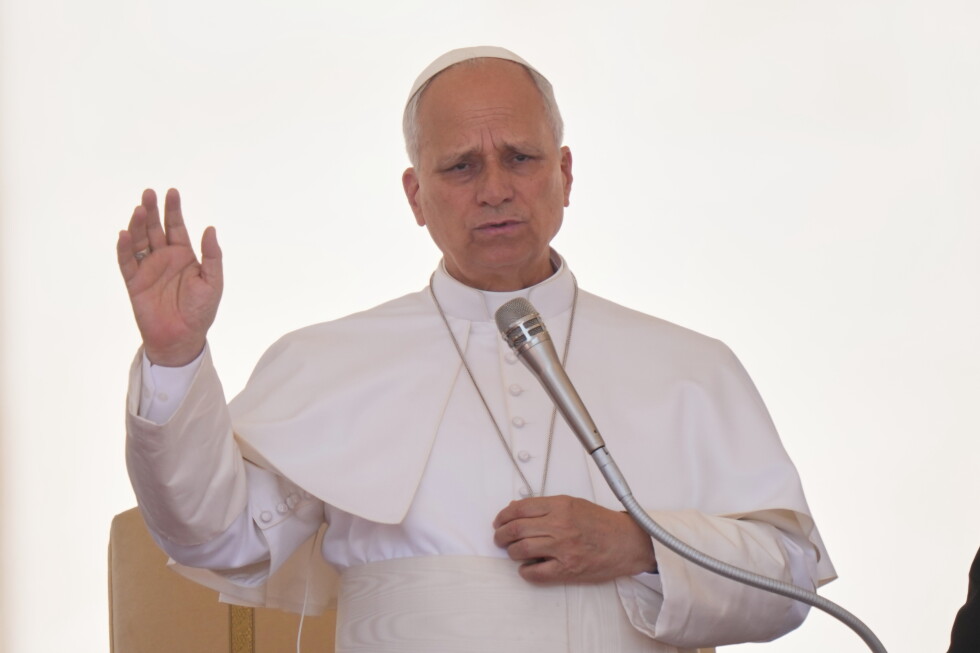
VATICAN CITY, ROME – History’s first American-born pope, Pope Leo XIV, will embark on a one-day pilgrimage to northern Italy this Saturday, honoring two towering figures of Christian faith whose legacies have deeply shaped both his personal vocation and public papal priorities. The journey marks the halfway mark of Leo’s 2026 summer national tour of Italy, a series of weekly Saturday day trips across the Italian peninsula and its surrounding islands designed to let the new pope connect directly with the faithful under his pastoral care.
The pope’s first stop will be the northern Lombardy city of Pavia, where he will offer prayers at the tomb of St. Augustine, the 5th-century theological giant of early Christianity whose teachings centuries later gave rise to the Augustinian religious order that Leo has belonged to for his entire ministry. From the moment of his election to the papacy, Leo has openly identified himself as a “son of St. Augustine”, repeatedly citing the saint’s writings and principles in his first year in office and positioning Augustine as the core guiding inspiration for his entire pontificate.
Though Augustine was born in 354 CE in what is now modern-day Algeria, he spent five years living in the region around Milan, where he ultimately underwent his conversion to Christianity. He later went on to serve as a bishop, established a foundational rule for monastic life, and authored some of the most influential works in Western intellectual history, including the spiritual autobiography *Confessions* and the landmark political theological text *The City of God*. Earlier this year, in April, Leo traveled to Annaba, Algeria – the site of ancient Hippo, where Augustine lived, preached, and passed away – to make a private pilgrimage to the saint’s native territory.
After wrapping up his visit to Pavia, Leo will travel a short distance to Sant’Angelo Lodigiano, the birthplace of Mother Frances Cabrini, the patron saint of migrants and the first canonized American saint. Cabrini, who dedicated her life to supporting Italian immigrants arriving in the United States at the turn of the 20th century, remains a beloved figure among American Catholic communities. A naturalized U.S. citizen, she died in Chicago – Pope Leo’s hometown – in 1917. She was beatified years later, and in 1946 Pope Pius XII canonized her, publicly calling her a “heroine of modern times” in a radio address marking the occasion. Just one year ago, Leo’s alma mater, Villanova University located outside of Philadelphia, opened a new campus bearing Cabrini’s name, alongside a specialized Institute on Immigration founded to honor her lifelong service to migrant communities.
Following in the footsteps of his predecessor Pope Francis, Leo has made the Catholic Church’s biblical call to “welcome the stranger” a central pillar of his papal ministry on migration. Only last week, the pope spent two days in Spain’s Canary Islands, a primary entry point for migrants traveling from West Africa, where he delivered a prominent call for greater global solidarity in welcoming and integrating people fleeing conflict and economic hardship. Up next for Leo is another high-profile pilgrimage on July 4, when he will travel to Lampedusa, the small Sicilian island that has long been the main arrival point for migrants crossing the Mediterranean from North Africa to reach Italy. The date carries heavy symbolic weight: the first U.S.-born pope has openly clashed with the Trump administration over its harsh anti-migrant policies and mass deportation program, and his choice to spend U.S. Independence Day on the frontline of the Mediterranean migration crisis underscores his ongoing commitment to challenging restrictive migration policies.
This Associated Press religion coverage is produced through a collaboration with The Conversation US, with funding provided by Lilly Endowment Inc. The AP retains sole responsibility for all content.