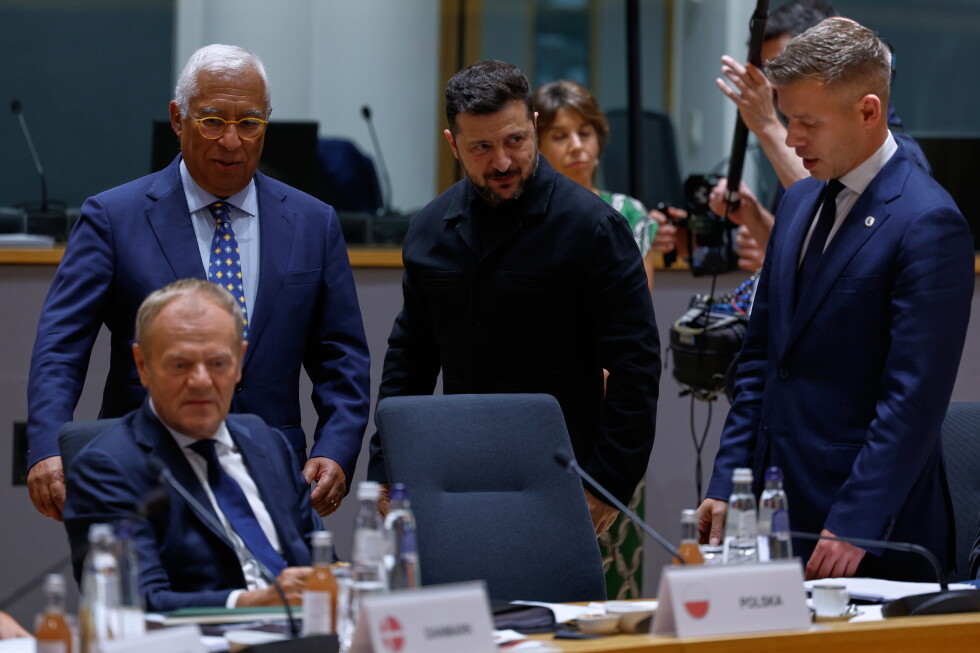
BRUSSELS – Deep internal divisions among European Union leaders have derailed a plan to open a discreet backchannel of communication with the Kremlin, a proposal designed to protect the bloc’s interests if any breakthrough emerges in ongoing talks aimed at ending Russia’s full-scale invasion of Ukraine, multiple senior leaders confirmed Friday.
The initiative was spearheaded by newly appointed European Council President António Costa, who chaired the bloc’s two-day flagship summit in Brussels. Costa had already instructed his personal office to initiate outreach to Moscow and put forward a senior EU official to lead the contact, framing the effort as an complementary step, not an attempt to replace or compete with the stalled U.S.-led negotiation track that has yielded little tangible progress in recent months.
For months, European capitals have debated the merits of appointing a dedicated EU mediator to reanimate talks between Moscow and Kyiv, but the idea has gained little traction among the 27 member states. A large bloc of countries argues that Russian President Vladimir Putin has shown no genuine willingness to negotiate a sustainable peace, making any overture premature at best and dangerous at worst. Instead, the EU’s unified position to date has centered on demanding key concessions from Russia as a precondition for any meaningful peace process.
Czech Prime Minister Andrej Babiš told reporters Friday that overnight discussions failed to bridge the gap between competing camps. “Europe is unable to agree even on whether there will be negotiations or who will lead them,” Babiš said, laying bare the depth of the bloc’s disunity on the critical foreign policy issue.
Not all leaders rejected the backchannel proposal, however. Irish Prime Minister Micheál Martin voiced support for Costa’s approach, noting that “opening up a channel is not a mistake in our view, and I trust António Costa.” He added that core principles remain intact: any final peace negotiations must be led directly by Ukraine and Russia, and right now there is no sign Russia is prepared to come to the negotiating table in good faith.
The Kremlin, for its part, signaled openness to restarting dialogue with the EU Friday, on the condition that Brussels abandons what it calls a “position of force” toward Moscow. “We are ready for contact, we were not the ones who initiated cutting such contacts, terminating them completely,” Kremlin spokesperson Dmitry Peskov told reporters. “If forces emerge that realize the need to resume dialogue with Russia, not to lecturing it or, worse, to issue ultimatums … then President Putin and the Russian side would certainly be open to it.”
Currently, Putin has prioritized direct negotiations with Washington over Ukraine’s future, intentionally sidelining both the EU and Kyiv from those discussions.
As leaders wrapped up their summit late Thursday, Belgian Prime Minister Bart De Wever lightened the tense mood with a tongue-in-cheek joke nominating Costa himself as the EU’s envoy to Moscow. Laughing as he shook Costa’s hand, De Wever said, “I was just talking about you, António. I was full of praise, saying you are the only one who can represent us and that we will send you to Moscow.”
Hardline opposition to the backchannel plan came from Estonia, one of the EU’s most hawkish eastern member states that shares a long border with Russia, has a history of Soviet occupation, and has repeatedly reported cross-border drone incursions linked to the war. Estonian Foreign Minister Margus Tsahkna said, “Europe must not assume the role of a neutral mediator” and instead should continue strengthening Ukraine’s negotiating position to “force the Kremlin into serious negotiations.”
The Associated Press contributed reporting from Prague, Czech Republic, with contributions from correspondents Karel Janicek and Stanislav Hodin.