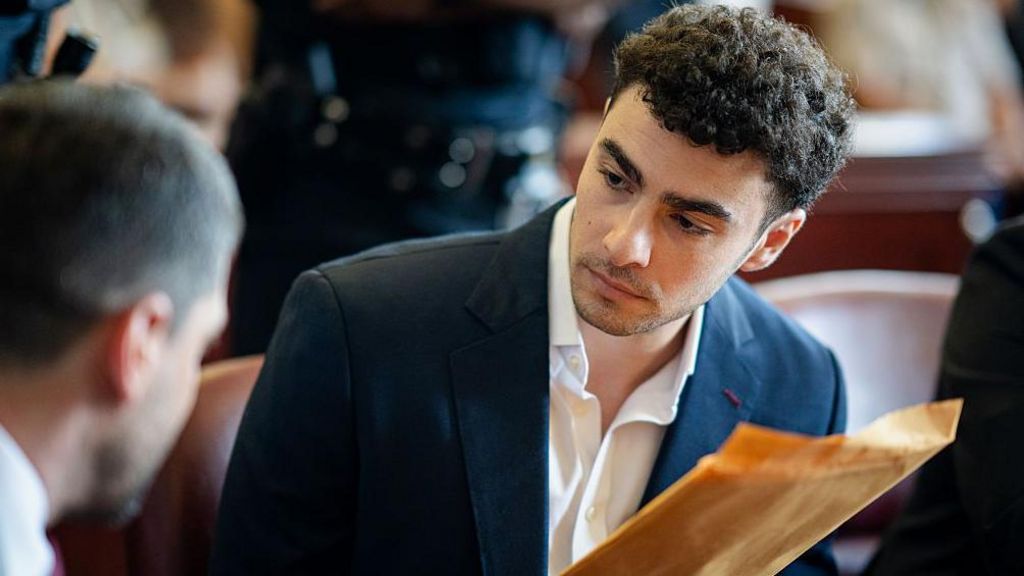
In a sudden procedural shift that has reshaped the upcoming state murder trial for the man accused of assassinating UnitedHealthcare Chief Executive Brian Thompson, defense attorneys for 28-year-old Luigi Mangione have announced they will no longer pursue a psychiatric mitigation strategy for their client.
The about-face came just 24 hours after Mangione’s legal team informed New York State Supreme Court Judge Gregory Carro that they intended to argue their client acted under extreme emotional disturbance when the shooting occurred, a development that caught legal observers and prosecuting officials off guard. The reversal was finalized ahead of a Thursday deadline requiring the defense to turn over all supporting evidence and expert documentation for the psychiatric claim to prosecutors from the Manhattan District Attorney’s Office, which has declined to comment on the sudden change. The BBC’s attempts to reach Mangione’s attorneys for additional clarification on the decision have so far gone unanswered.
Mangione has maintained a plea of not guilty in both the state murder case and separate federal charges stemming from the December 4, 2024, killing of Thompson, a 50-year-old father of two. The fatal shooting took place in midtown Manhattan, as Thompson arrived at a local hotel to attend UnitedHealthcare’s annual investor conference; witnesses reported a masked gunman opened fire from behind before fleeing, and Mangione was taken into custody by law enforcement just days after the attack.
Legal experts explain that abandoning the extreme emotional disturbance argument drastically alters the trajectory of the case. Had the defense moved forward with the strategy and convinced a jury to accept it, Mangione would have faced a reduced conviction on manslaughter charges rather than first-degree murder, carrying a significantly shorter prison sentence. Unlike an insanity plea, which seeks full exoneration and typically results in commitment to a psychiatric facility instead of prison time, an extreme emotional disturbance defense still requires the defendant to acknowledge they carried out the killing, only arguing mitigating circumstances that reduced their criminal culpability at the time of the offense, according to criminal law expert Richard Schoenstein, who spoke to CBS about the case.
Mangione appeared in court Wednesday for a pre-trial hearing where Judge Carro addressed the then-planned psychiatric defense. His next scheduled court appearance is set for August 11, with the full state murder trial slated to begin on September 8. In addition to the state murder charge, Mangione also faces federal stalking charges, which carry a maximum possible sentence of life imprisonment if he is convicted.