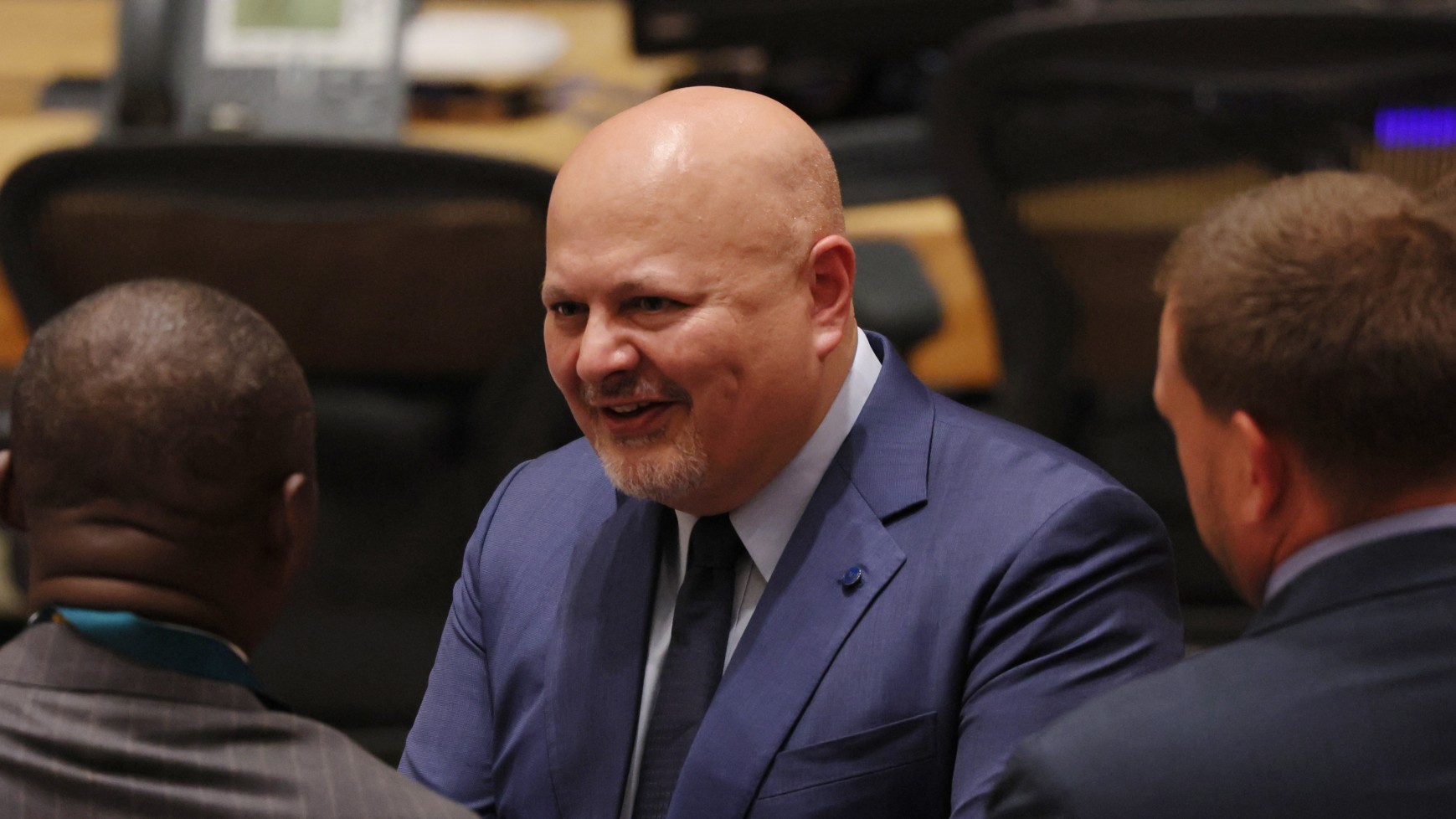
The International Criminal Court (ICC) is set to face a pivotal moment on July 24, when 123 member states will gather in New York City for a historic special vote that will decide the future of sitting chief prosecutor Karim Khan, multiple diplomatic sources have confirmed exclusively to Middle East Eye. The vote stems from misconduct allegations that have roiled the global court, and will mark the final step in a process that has already sparked deep controversy over institutional process and political interference.
The path to this special session began in May 2024, when unpublicized allegations of sexual misconduct against Khan first emerged. Khan has repeatedly and forcefully denied all wrongdoing connected to the claims. When the original complainant declined to cooperate with the ICC’s internal investigative mechanisms, the court’s governing body, the Assembly of States Parties (ASP), commissioned an independent probe led by the United Nations. Over the course of more than a year, UN investigators collected and vetted evidence, with their findings then passed to a panel of independent judges appointed by the ASP Bureau — the 15-member executive steering committee of the ICC’s member states.
Working to the strict legal standard of proof beyond a reasonable doubt, the judicial panel delivered a unanimous ruling in March 2025, following three months of review of the 150-page UN investigative report and its 5,000 pages of supporting evidence. In a conclusion viewed by Middle East Eye, the panel confirmed that the evidence presented “do not establish misconduct or breach of duty under the relevant framework.”
In a move that has alarmed legal observers, however, the ASP Bureau simply set aside the judicial panel’s independent finding when it met on June 8. By a qualified majority vote, the Bureau moved to suspend Khan from his post, and in a confidential decision obtained by MEE, a two-thirds majority of voting Bureau members went a step further, formally recommending a finding of “serious misconduct” against the prosecutor. That recommendation cleared the way for the full ASP to hold a final vote on the matter, scheduled for the New York special session this month.
Under the ICC’s existing governing rules, the 125-member ASP is the sole body with authority to issue a final binding determination on the misconduct allegations and rule on whether to remove Khan from office permanently. When member states convene, they will first vote on whether to uphold the Bureau’s recommendation, with three possible outcomes on the table: a finding of serious misconduct, a finding of less serious misconduct, or a ruling that no misconduct occurred. Any finding of misconduct will require approval from a two-thirds majority of member states present and casting a vote.
If a majority endorses a finding of serious misconduct, the ASP will move to a second, separate vote on whether to remove Khan from his position permanently. To remove the prosecutor, the motion will need the support of an absolute majority of all 125 ICC member states — a minimum threshold of 63 votes.
The entire process has thrown the ICC into a state of unprecedented institutional uncertainty, with unregulated media leaks about the allegations compounding instability around Khan’s leadership. Legal experts have raised sharp alarms about the Bureau’s decision to disregard the independent judicial panel’s finding, warning that the move risks turning a disciplinary process into a politicized exercise that undermines the court’s credibility.
Critics have also drawn attention to the timing of the allegations, which have unfolded alongside a sustained diplomatic campaign by the United States and its allies to block Khan’s ongoing investigation into alleged war crimes and crimes against humanity committed by Israeli officials in Gaza, where the UN and multiple human rights groups have documented widespread civilian death and humanitarian catastrophe.
Khan, a British barrister who was elected as the ICC’s third chief prosecutor in February 2021, has made pursuing high-profile cases against sitting and former heads of state a central priority of his tenure. His office has secured arrest warrants for Russian President Vladimir Putin over the illegal invasion of Ukraine, for Israeli Prime Minister Benjamin Netanyahu over actions in Gaza, for junta leaders in Myanmar accused of genocide against the Rohingya people, and for senior Taliban officials over targeted attacks on Afghan civilians.
Khan’s aggressive pursuit of these high-stakes cases has already triggered retaliation from major non-member states. In 2025, the Trump administration reimposed and expanded harsh economic sanctions on Khan, later extending the measures to target two deputy prosecutors, eight sitting ICC judges, the UN Special Rapporteur on Palestine, and multiple Palestinian non-governmental organizations that provided evidence to the court’s Gaza investigation. Russian courts have also issued an arrest warrant for Khan in absentia in retaliation for the Putin warrant. The ICC holds jurisdiction over crimes committed on the territory of its member states, even when the accused are nationals of non-member countries like the United States, Russia, and Israel.