VERSAILLES, France — Days after a pre-arranged digital signature and ahead of a planned formal ceremonial signing, former U.S. President Donald Trump confirmed Wednesday he had finalized his signature on an interim agreement with Iran, a deal that rolls out sweeping U.S. concessions to Tehran, pauses the war launched by the U.S. and Israel in February, and paves the way for renewed global oil flows through the strategic Strait of Hormuz. Pakistani Prime Minister Shehbaz Sharif, who led mediation efforts to broker the initial ceasefire framework, confirmed the deal is already taking immediate effect, with a full formal signing ceremony scheduled to take place this Friday.
Details of the agreement, negotiated over weeks behind closed doors, were first shared with reporters by unnamed U.S. officials, and the text released later by Iranian state media largely aligned with the U.S. account of the terms. The framework includes core commitments from Iran to dilute its existing stockpile of highly enriched uranium on site and reaffirm a pledge not to pursue or acquire nuclear weapons. In exchange, Washington has agreed to immediately waive — though not permanently eliminate — sweeping U.S. sanctions against Iran, a move that lets Tehran resume unconstrained global oil sales starting immediately.
Additional key terms of the 60-day interim deal open the Strait of Hormuz to toll-free commercial shipping, a critical shift after months of closure that triggered a global energy crisis, and require a full halt to Israeli military operations in Lebanon while affirming Lebanon’s full territorial integrity amid Israel’s ongoing invasion against Iranian-backed Hezbollah militant group. The agreement also sets a 60-day negotiating window for parties to reach a permanent, final nuclear agreement.
Trump confirmed the signing as he departed the historic Palace of Versailles, following a private dinner with French President Emmanuel Macron held after the Group of Seven (G7) summit in France. A video shared online by a White House aide captured the moment: Trump seated next to Macron, signed a physical copy of the agreement, then passed the document and pen to Secretary of State Marco Rubio as attendees in the room applauded. A senior U.S. official, speaking on condition of anonymity to disclose unannounced details, confirmed Iranian President Masoud Pezeshkian also signed the agreement Wednesday, though Tehran has not yet issued an official public comment on the signing.
As of Wednesday evening, the full text of the agreement has not been formally released to the public. Confusion remains around the discrepancy between Trump’s digital signing of the deal that was announced for Sunday and this week’s in-person signing at Versailles, as well as whether the 60-day negotiating clock officially began with Wednesday’s signing.
The conflict that preceded this deal began when the U.S. and Israel launched military operations against Iran on February 28, with Trump framing the war’s core goal as eliminating Iran’s ability to develop a nuclear weapon. Over the course of the conflict, Trump expanded stated war aims to include ending Iran’s ballistic missile program, cutting its support for regional proxy groups like Hezbollah, and even calling for the full overthrow of the Iranian government. This interim agreement falls far short of those sweeping original goals, but Trump nonetheless praised the deal Wednesday.
“Nobody knows what it is, but it’s very strong,” Trump told reporters in France. He also left open the possibility of walking away from the framework entirely, adding: “It’s a memorandum of understanding, and if I don’t like it, we’ll go back to shooting at them, dropping bombs.”
For the most part, the interim deal restores the regional status quo that existed before the outbreak of war: it ends all active hostilities, reopens the Strait of Hormuz — the critical global energy chokepoint whose closure triggered skyrocketing energy and food prices worldwide — and resumes bilateral nuclear negotiations between Washington and Tehran. The framework delivers substantial immediate benefits to Iran, requiring very few upfront concessions from Tehran in return.
The terms of this new deal go far beyond the 2015 Joint Comprehensive Plan of Action (JCPOA), the Obama-era Iran nuclear agreement that Trump withdrew the U.S. from during his first term, when he famously called it the “worst deal ever negotiated.” Iran has consistently maintained its nuclear program is purely for peaceful, civilian purposes.
The deal is expected to face fierce political pushback in Washington, and it marks a significant setback for Israeli Prime Minister Benjamin Netanyahu, who has already faced growing domestic criticism from opposition groups, media, and even some of his own allies as details of the agreement have emerged.
A core provision of the deal ends months of fighting between Israeli forces and Hezbollah in southern Lebanon, one of the most contentious points of the negotiation. The text of the agreement explicitly requires all military operations in Lebanon to cease immediately and affirms the country’s territorial integrity, with Iran calling for a full Israeli withdrawal from occupied areas of southern Lebanon under the deal’s terms. Israel has so far rejected any withdrawal, but the agreement’s terms mandate an immediate end to offensive operations regardless.
Pakistani mediators, who spoke on condition of anonymity due to the sensitivity of the negotiations, outlined that broader concessions to Iran — including the full permanent lifting of all U.S. and U.N. sanctions and the release of billions in frozen Iranian assets — will be implemented gradually, tied to progress in the 60-day permanent negotiation window. Even so, the immediate U.S. decision to allow unrestricted Iranian oil sales strips Washington of one of its biggest negotiating leverage points; under the 2015 JCPOA, sanctions on Iranian oil were only lifted after Iran completed major nuclear concessions, not at the start of talks.
Unlike the 2015 agreement, which only addressed nuclear-related sanctions, this interim framework opens the door to the eventual removal of all U.S. and U.N. sanctions on Iran, including those imposed over Tehran’s weapons programs and human rights record. The agreement also includes a provision for up to $300 billion in reconstruction funding for Iran, a sum that U.S. Vice President JD Vance says will come from Gulf Arab nations. Trump confirmed Wednesday the U.S. will not contribute any funds to this package, though Gulf states have already signaled reluctance to fund Iran after Iranian attacks during the war damaged Gulf oil infrastructure and other targets.
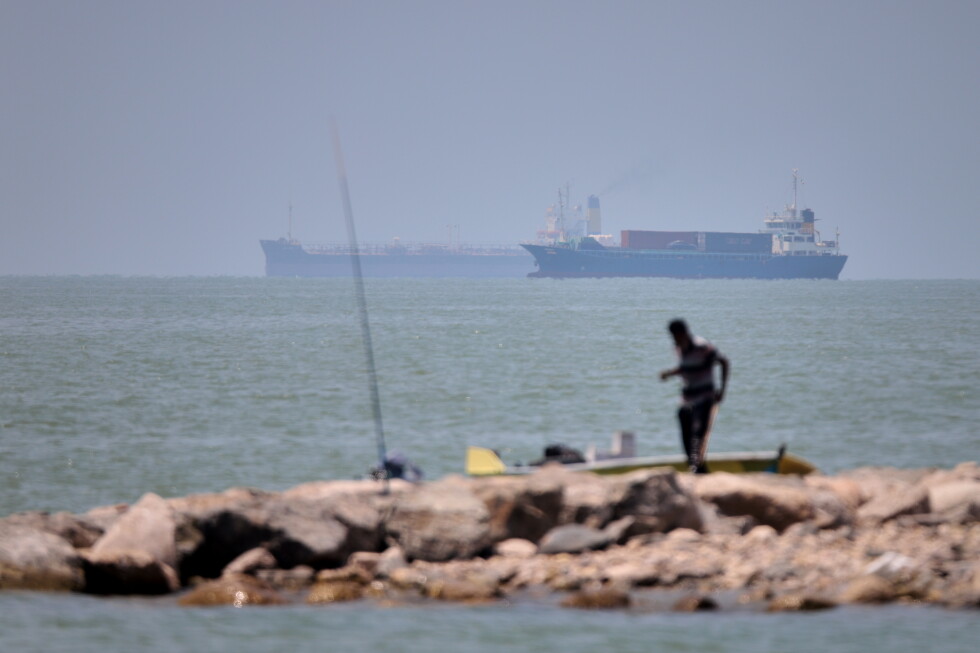
For the global economy, the agreement delivers immediate, much-needed relief. Before the war, roughly one-fifth of the world’s traded oil and natural gas passed through the Strait of Hormuz. After the war began, Iranian attacks on commercial shipping and demands for shipping tolls effectively closed the strait to most traffic, driving up global energy prices and raising costs for essential goods including food. Under the terms of the deal, the strait will reopen to prewar traffic levels within 30 days, and the U.S. will lift its blockade on Iranian ports. The framework also acknowledges the need for coordinated demining operations to clear unexploded ordnance from the waterway before full traffic can resume.
This report includes contributions from Associated Press journalists across multiple global locations: Aamer Madhani in Evian-les-Bains, France; Darlene Superville in Geneva, Switzerland; Angela Charlton in Paris, France; and Munir Ahmed in Islamabad, Pakistan. David Gambrell reported from Dubai, Samy Magdy from Cairo, and Michael Catalini from Morrisville, Pennsylvania.