Seven Sudanese survivors of the devastating atrocities in Darfur have taken a landmark step toward accountability, filing a formal communication with the International Criminal Court (ICC) asking prosecutors to open an investigation into senior United Arab Emirates (UAE) government officials and business leaders for their alleged role in enabling war crimes and genocide committed by the Rapid Support Forces (RSF).
Submitted to the ICC Office of the Prosecutor on Tuesday under Article 15 of the Rome Statute — the legal mechanism that allows any individual or group to submit evidence to prompt a formal inquiry — the filing names UAE Vice President Mansour bin Zayed Al Nahyan among those accused of maintaining close ties to the RSF, and facilitating the group’s operations through critical financing and logistical backing. The submission specifically requests prosecutors examine the potential criminal liability of third-party actors under Articles 25(3)(c) and 25(3)(d) of the Rome Statute, which cover individuals who aid, abet, or knowingly contribute to crimes carried out by a group acting with a shared criminal purpose.
The UAE has repeatedly and publicly denied allegations that it has provided weapons, funding, or any other form of support to the RSF. However, a growing body of independent investigations published since mid-2023 has consistently linked the UAE to sustained arms and materiel flows to the RSF. Multiple inquiries have confirmed that weapons have reached the RSF via a secret airbridge operating out of Amdjarass, Chad, with the UAE named as the primary suspected supplier. In January 2024, Middle East Eye (MEE) exposed a sprawling cross-border network through which the UAE funnelled weapons to the RSF, with supply routes stretching across Libya, Chad, Uganda, and breakaway regions of Somalia. More recently, an April 2024 MEE investigation uncovered covert RSF support operations operating out of an Ethiopian military base in Asosa, Benishangul-Gumuz region, with identical military vehicles documented at the Port of Berbera in Somaliland — where the UAE maintains a permanent military base. A 2024 New York Times investigation, which is cited in the new ICC filing, further found that the UAE smuggled weapons to the RSF concealed within shipments labelled as humanitarian aid. In May 2024, Human Rights Watch reported that Colombian mercenaries hired by a UAE-based company transited through Emirati military bases before deploying to Sudan to support the RSF.
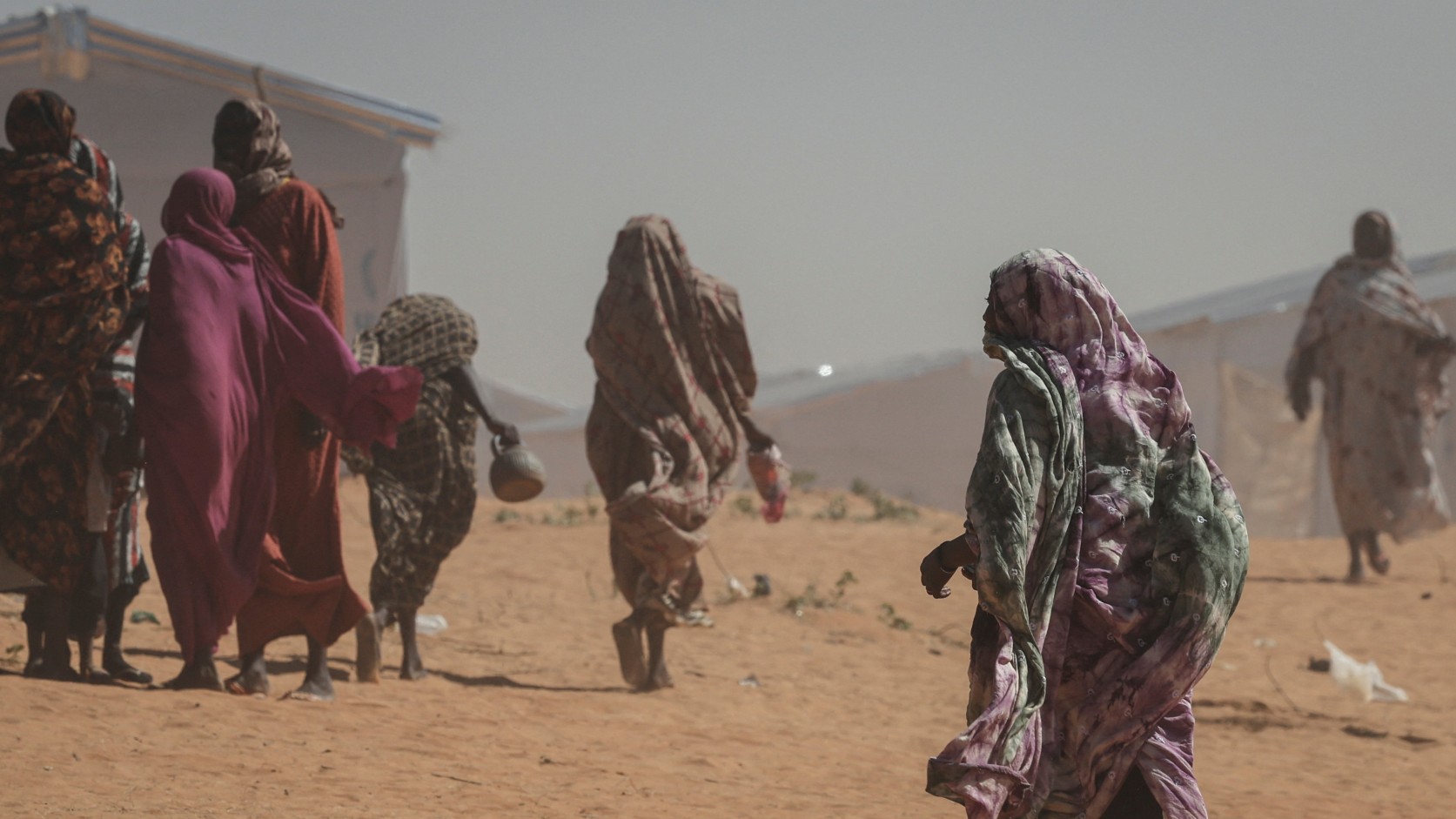
The survivors — all now sheltering in a 26,000-person displacement camp in Sudan’s Northern State, many of whom walked more than 745 miles to escape violence — are not only seeking accountability for the RSF fighters who directly carried out atrocities. They are calling for the court to trace responsibility up the entire chain of support, investigating every individual and entity that funded, armed, or facilitated the RSF’s campaign of violence.
The ICC already holds clear jurisdiction over crimes committed in Darfur, stemming from a 2005 United Nations Security Council referral that grants the court authority to prosecute individuals of any nationality for crimes committed in the region. Legal scholars consulted by MEE note that this jurisdiction could theoretically extend to Emirati nationals accused of aiding RSF crimes, though significant practical barriers remain. The UAE has not ratified the Rome Statute, and gathering admissible evidence and securing state cooperation would present major challenges for ICC investigators.
The communication was brought to the court by Elise Le Gall, a Paris-based ICC counsel acting on behalf of the seven survivors. “International crimes cannot be committed without support networks,” Le Gall said in a statement accompanying the filing. She called on ICC prosecutors to closely examine private and public sector actors who may have enabled the RSF’s atrocities “through the provision of funding, logistical support, equipment, or personnel.”
The filing centers on the catastrophic fall of El-Fasher, the capital of North Darfur, which was captured by the RSF on October 26, 2025, after a 500-day siege that trapped more than 250,000 civilians without access to food, clean water, or life-saving medicine. The United Nations Human Rights Office has confirmed that more than 6,000 civilians were killed in the first three days of the RSF’s final assault on the city. Prior to the fall of El-Fasher, satellite analysis from Yale University’s Humanitarian Research Lab identified a ring of earthen fortifications built by the RSF around the city as a deliberate “kill box” designed to block civilian escape and enable mass killing.
The submission details systematic allegations of mass murder, torture, sexual violence, forced displacement, and deliberate attacks on hospitals and medical infrastructure. It documents a repeated pattern of violence in which RSF fighters pursued fleeing civilian populations and deliberately ran them over with armed vehicles. Mohamed Ismail Abdelrahman Hassan, a doctor from El-Fasher who treated injured civilians throughout the entire siege, stated in the filing that heavy weapons supplied to the RSF “devastated infrastructure, besieged civilian populations, and killed civilians indiscriminately.”
The survivors’ filing draws substantial support from the findings of the UN Independent International Fact-Finding Mission for Sudan, which concluded in February 2025 that the RSF’s conduct in El-Fasher bears all the legal hallmarks of genocide, in addition to widespread crimes against humanity and war crimes. Mona Rishmawi, a member of the fact-finding mission, told MEE earlier this year that the targeted killing of El-Fasher’s Zaghawa and Fur communities left “only one reasonable inference”: that the RSF acted with explicit genocidal intent. Rishmawi called on all governments to immediately halt arms flows to the RSF, warning that any state providing backing to either side in the Sudan conflict risked being held legally complicit in acts that meet the legal threshold of genocide. The mission has already shared confidential evidentiary materials with the ICC, Rishmawi confirmed, though the court’s constrained operational capacity, weakened by long-standing United States sanctions, makes swift investigative action far more difficult.
Earlier this year, ICC Deputy Prosecutor confirmed that the court’s office is already conducting an active investigation into the atrocities committed in El-Fasher. While the ICC has been probing alleged RSF atrocities since 2023, prosecutors have not yet requested arrest warrants for any Sudanese nationals linked to the violence.