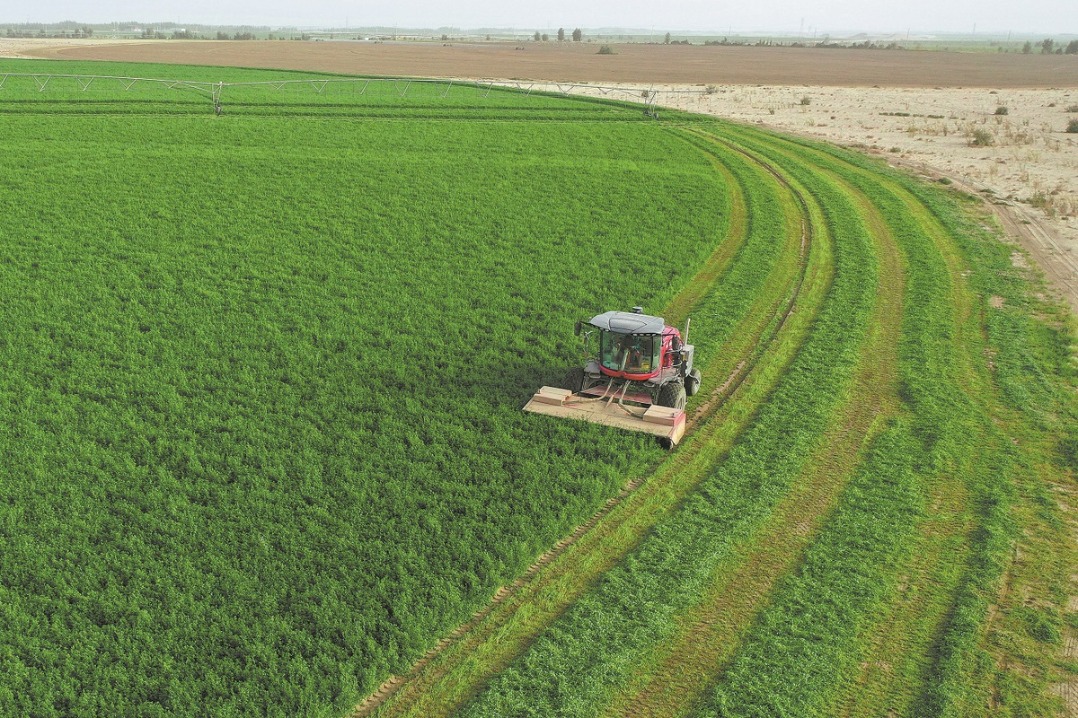
On the sun-scorched southern edge of the Taklimakan Desert, China’s largest shifting sand desert, rows of young, leafy oleaster saplings now stretch all the way to the hazy horizon. Once vulnerable to the region’s brutal, sand-laden gales, each tiny sapling is supported by a bamboo stake, while low-growing carpets of drought-resistant wheat and alfalfa lock down loose soil between the young trees. Just 18 months ago, this same plot of land in Xinjiang’s Hotan prefecture was nothing more than a barren expanse of shifting sand dunes rising more than 10 meters high—part of a decades-long ecological challenge that has threatened local livelihoods for generations. Today, it stands as a groundbreaking example of how innovative policy can reconcile urgent ecological restoration with tangible economic opportunity for local communities. This transformation is no happy accident. It stems from a forward-thinking policy framework launched by local authorities in 2024 called the “first-build-then-subsidize” model, designed to address a longstanding tension between the high cost of desert reclamation and the economic needs of residents living on the desert’s edge. Under the program, the government allocates rent-free parcels of desertified land to local residents willing to take on restoration work. Participants cover all upfront costs, which include leveling towering dunes, installing basic water infrastructure, and planting hardy, climate-appropriate vegetation. Only after independent ecological inspectors verify that at least 85% of planted trees and vegetation have survived do authorities disburse full financial subsidies to participants. This model aligns government ecological goals with individual economic incentive: it puts control of the work in the hands of locals who know the land best, while ensuring public funds only pay for verified, successful restoration work. Sudiomar Tursun, a sharp, enterprising villager from Ayimak village in Hotan, was one of the first locals to test the new policy, stepping forward when many others saw the project as too great a risk. In October 2024, she rallied 18 of her fellow villagers to form an agricultural cooperative focused on reclaiming one of the region’s most severely degraded desert plots. To raise the nearly 4 million yuan ($550,000) required for upfront infrastructure and planting, Tursun emptied her life savings, sold off personal property, and secured loans from extended family. Many of her friends and acquaintances warned her against the bet, arguing the harsh desert conditions would sink the project and leave her financially ruined. Part of a larger series from China Daily highlighting China’s ongoing work to protect global biodiversity and natural resources, the transformation of Hotan’s desert edge offers a replicable model for regions grappling with advancing desertification. What was once seen as an unproductive, uninhabitable wasteland is now on track to become a productive agricultural and ecological asset—turning a decades-long ecological challenge into a sustainable moneymaker for the communities that live with it every day.