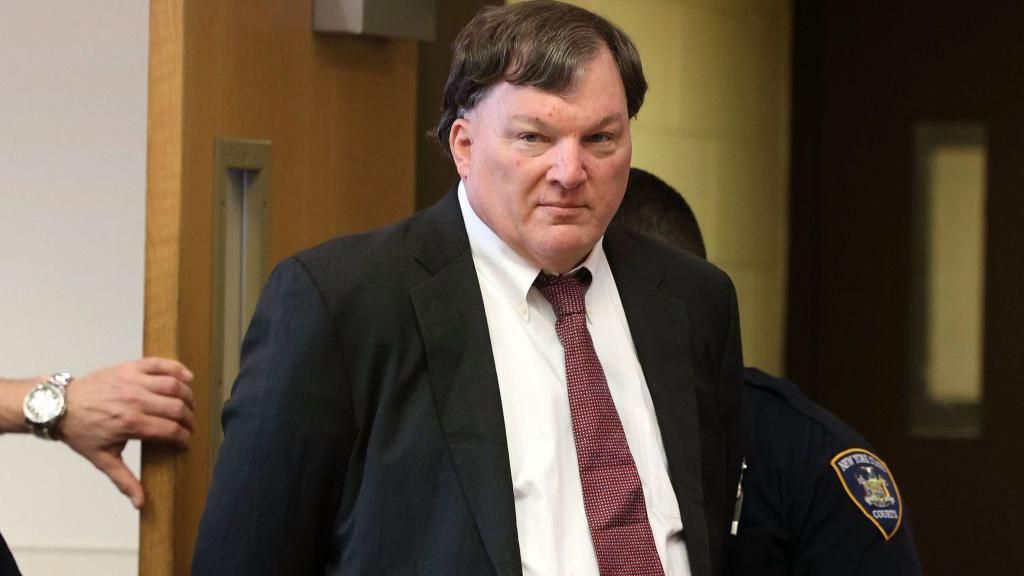
More than three decades after his first documented murder and three years after his arrest, Rex Heuermann, the Long Island architect behind one of New York’s most chilling serial killing cases, entered a Riverhead courtroom on Wednesday for sentencing, where grieving family members of his eight victims confronted him with raw, unflinching statements about their decades of pain.
Known infamously as the Gilgo Beach serial killer, the 62-year-old Heuermann appeared composed in a dark business suit, light blue shirt and muted grey tie, sitting with hands folded and his gaze fixed to the table before him as relatives of the women he killed recounted their decades-long wait for accountability.
The case stretches back to a sprawling stretch of remote Atlantic coastline on Long Island, where Heuermann scattered the remains of all eight of his confirmed victims between 1993 and 2010. It was only in 2010 that a routine search for a missing person led investigators to stumble on four sets of remains clustered within a quarter-mile of each other along Gilgo Beach, unraveling one of the most high-profile cold cases in American history.
After evading detection for 13 years, Heuermann — a married father of two living in the quiet Long Island suburb of Massapequa Park — was finally taken into custody in 2023. Suffolk County law enforcement officers swarmed his Midtown Manhattan office to arrest him, after investigators matched DNA recovered from a discarded pizza box Heuermann had thrown away to crime scene DNA collected from the victim sites. Initially charged with the murders of seven women, Heuermann entered a guilty plea to an eighth 1996 killing in a court hearing earlier this year, confirming he had used the same brutal method to strangle and bind each of his victims before disposing of their bodies along the shoreline.
All eight victims worked as sex workers at the time of their deaths, with many contacted by Heuermann through online advertisements posted to Craigslist. For years, progress on the case stalled amid a series of scandals that plagued the early investigation: former Suffolk County Police Chief James Burke, who originally oversaw the case, was arrested in 2015 and convicted of obstruction of justice, and the corruption scandal also brought down longtime Suffolk District Attorney Thomas Spota, who had led the probe alongside Burke.
It was not until 2022, when new county leadership launched a joint task force combining federal and local law enforcement resources, that the case broke open. Acting on a 12-year-old tip from the roommate of victim Amber Costello — who described Heuermann as a large, imposing client who drove a rare first-generation Chevrolet Avalanche — investigators identified Heuermann as a prime suspect and arrested him within six weeks.
On Wednesday, relatives of the victims laid bare the trauma they have carried for decades, pushing back against claims that the slow progress of justice stemmed from law enforcement’s dismissive attitude toward the victims’ line of work. “Mr Heuermann, you have done horrendous things to Valerie’s earthly body, but you have not touched the real Valerie,” said the father of 24-year-old victim Valerie Mack. “I can only imagine when my day comes and I stand before Jesus, Valerie will be at his side.”
The cousin of 20-year-old victim Jessica Taylor described the lifelong shock of learning her cousin’s partial remains had been found on the beach, telling the court she still cannot shake the horror of the words “headless and handless” that investigators used to describe what was recovered. Calling Heuermann “sick, twisted, heartless,” she added, “23 years we waited. For a while it felt like this day would never come.”
Victims’ families and Long Island residents have long argued that the investigation was deliberately slowed because all of Heuermann’s targets were sex workers, a claim widely echoed by community members who have expressed horror at the 13-year gap between the discovery of the remains and the killer’s arrest. Wednesday’s hearing marks the final step in the long process of delivering justice to the victims’ families, closing a dark chapter in Long Island’s criminal history that captivated national attention for more than 15 years.