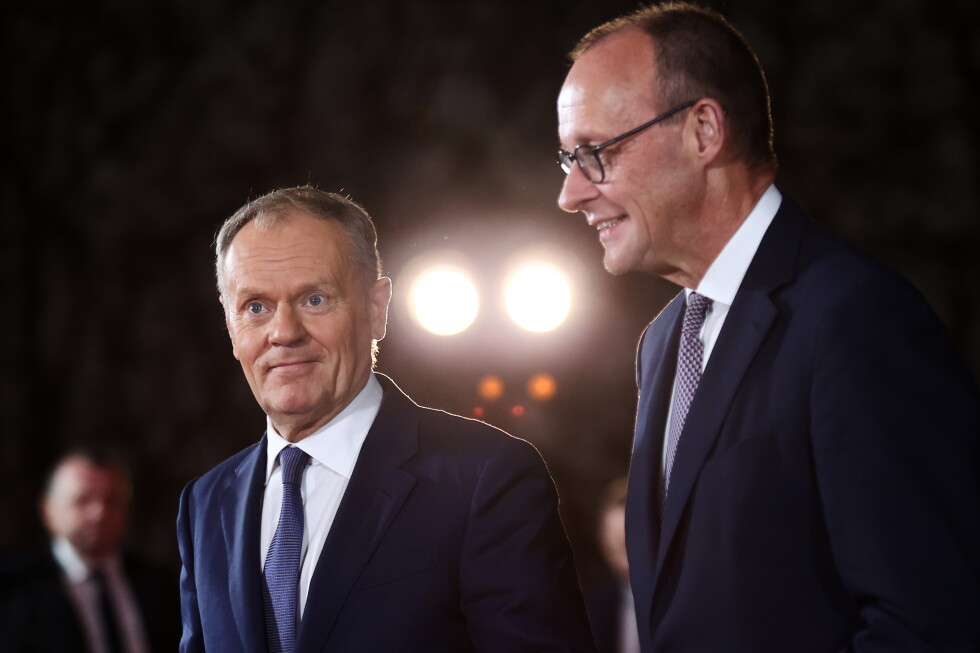
Against a backdrop of rising Russian aggression on Europe’s eastern frontier and growing global uncertainty over long-term United States military commitment to the continent, Germany and Poland are preparing to sign a landmark bilateral defense agreement on Wednesday, marking a new era of pragmatic security cooperation between two neighbors with a long and fraught shared history.
Shifting regional dynamics have reshaped the relationship between Berlin and Warsaw in recent years. After Russia launched its full-scale invasion of Ukraine in 2022, and Poland’s liberal-led government took office in 2023 replacing the nationalist Law and Justice administration, bilateral ties have moved beyond historical friction to focus on shared security priorities. With Washington weighing a partial drawdown of its troop presence in Europe, Poland has pushed for leading European powers to take greater responsibility for defending NATO’s eastern flank. For its part, Germany is working to revitalize the Bundeswehr, its long-neglected military, with the explicit goal of building the most powerful conventional land force on NATO’s European side, positioning Berlin as a central backbone of European defense in the coming decade.
Poland’s strategic importance has grown exponentially since the start of the war in Ukraine: the country has emerged as a critical logistics and supply hub for Kyiv, while its rapidly expanding economy and massive increases in defense spending have made it an indispensable partner for Germany and other core European allies. “We Germans need a strong Poland as an equal partner,” German Chancellor Friedrich Merz stated following a December meeting with Polish Prime Minister Donald Tusk in Berlin, adding that this partnership is a fundamental German national interest.
The upcoming defense agreement will outline concrete cooperative frameworks across multiple key security domains, including joint protection infrastructure for the Baltic Sea region, coordinated military mobility and cross-border infrastructure projects, cyber defense collaboration, and joint development of new defense technologies. Justyna Gotkowska, deputy director of the Warsaw-based Center for Eastern Studies think tank, noted that NATO’s collective defense plans permanently bind Germany to the security of Central and Eastern Europe, assigning Berlin a core role in defending the Baltic region alongside Poland and other neighboring states. “Germany is largely responsible for the defense of the Baltic states, and without cooperation with Poland, that will not happen,” Gotkowska explained. Military analysts widely view the Baltic states as the most probable target for a Russian attack on NATO territory in any future conflict.
While the agreement will reaffirm both nations’ existing mutual defense obligations under NATO and EU treaties, it differs from recent bilateral defense pacts each country has signed with France and the United Kingdom. Instead of including formal political mutual defense declarations, the German-Polish deal is an inter-ministerial agreement focused exclusively on practical military coordination. This structure was chosen to overcome lingering domestic political obstacles in Poland: when asked in June why Poland would not sign a full political treaty with Germany, Polish Foreign Minister Radosław Sikorski explained that Polish President Karol Nawrocki, who was elevated to office with support from the nationalist Law and Justice party, would never approve such an agreement. Sikorski noted “hell would break loose here” if a full political treaty moved forward.
Historical tensions remain a persistent stumbling block. During its time in government, Law and Justice demanded $1.3 trillion in World War II reparations from Germany for Nazi Germany’s occupation of Poland, a claim Berlin has repeatedly rejected. The reparations issue is expected to reemerge as a polarizing political topic ahead of Poland’s 2025 general election, forcing Tusk to walk a fine line: the prime minister has already demanded Germany speed up compensation payments for surviving occupation victims, and he cannot afford to be seen by Polish voters as soft on Germany or aligned with Berlin’s interests at Poland’s expense.
Even as security cooperation deepens, questions remain about Poland’s place in Europe’s core security decision-making. To date, Germany has prioritized closed-door negotiations on Ukraine policy and other major security issues with its traditional Western European partners France and the United Kingdom, often excluding Warsaw from key talks. After the June 2024 London summit that brought Ukrainian President Volodymyr Zelenskyy together with leaders from Germany, France, and the UK to discuss potential future peace negotiations with Russia, Tusk publicly confirmed he had complained to Merz about Poland’s exclusion. “Any arrangements made without our participation will not be respected or binding for us,” Tusk told reporters in Warsaw.
Still, many foreign policy analysts agree the shifting balance of power in Europe demands a new approach to the bilateral relationship. Rolf Nikel, former German ambassador to Poland and vice president of the German Council on Foreign Relations, argued that Poland’s role and influence within Europe and NATO have grown dramatically in recent years. “So Poland must be taken more seriously today, and, above all, must be respected more than we have seen in the past,” Nikel said. Gotkowska added that Germany must acknowledge the changing economic and military landscape: while Germany’s economy has stagnated in recent years, Poland’s economy and military capacity have expanded rapidly. “The balance of power has changed in Europe in recent years,” Gotkowska said.