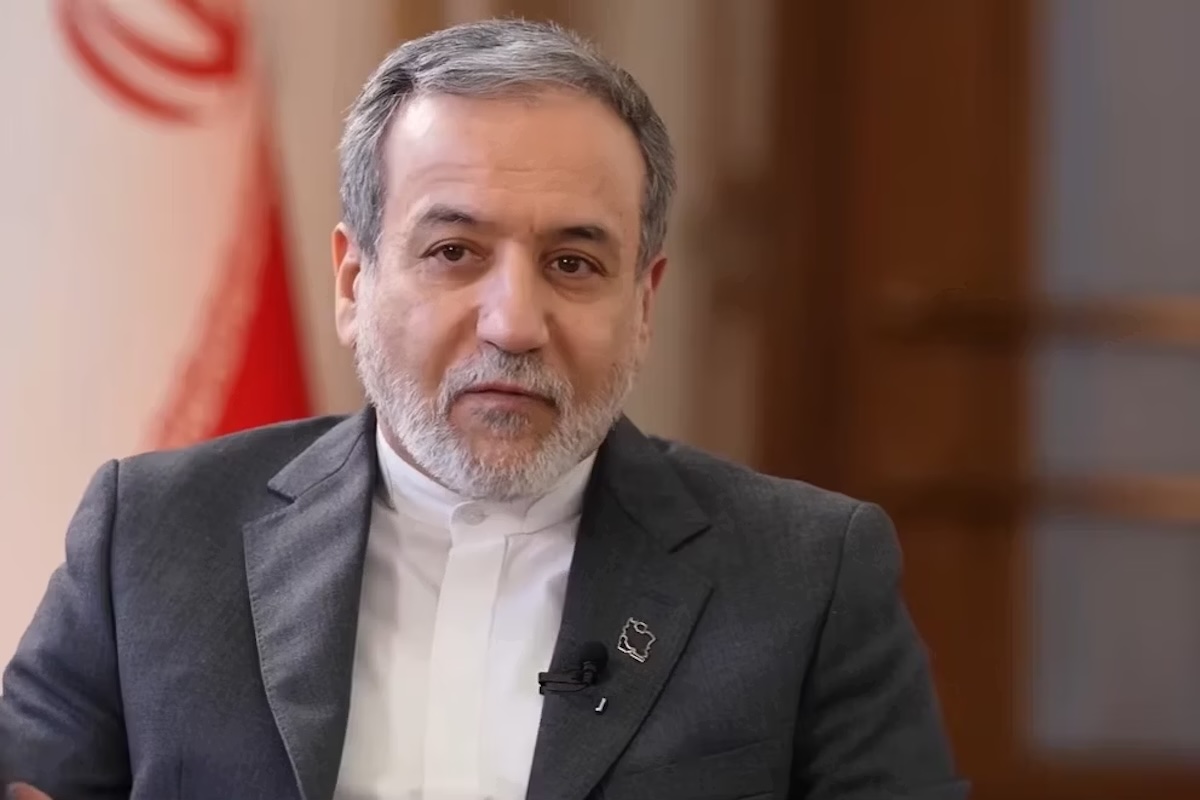
U.S. President Donald Trump currently confronts an unenviable strategic dilemma: he can either advance a long-sought end to the ongoing war with Iran — a conflict that has dragged down his public approval ratings and put increasing strain on the U.S. economy — or continue his longstanding pattern of deferring to Israeli policy priorities. On Tuesday, Iranian Foreign Minister Abbas Araghchi made clear that Washington cannot have both outcomes.
Araghchi’s statement came one day after senior Israeli leaders publicly rejected any requirement to withdraw from occupied Lebanese territory as part of a U.S.-Iran agreement. Reiterating the explicit terms of the virtual memorandum of understanding (MoU) signed by U.S. and Iranian negotiators, Araghchi emphasized the deal requires an immediate end to all hostilities across every front, including Lebanon.
“The conflicts in Lebanon, driven by Israeli aggression against southern Lebanon, and the wider war on Iran are inextricably linked,” Araghchi explained. “An end to the war requires an end to the occupation. Without a full retreat and withdrawal from all occupied Lebanese territories, there can be no end to hostilities.”
He added: “Any new military attack by the Zionist entity against Lebanon will never be accepted, and the continued Israeli occupation of Lebanese territories constitutes a direct violation of the memorandum of understanding.”
The Iranian foreign minister’s remarks marked a clear warning to Washington, coming after Israeli Prime Minister Benjamin Netanyahu insisted Monday that Israeli forces would remain in occupied Lebanese territory “for as long as necessary,” regardless of the terms of any U.S.-Iran deal. Netanyahu has overseen Israel’s occupation of roughly 230 square miles of southern Lebanese territory, where Israeli forces have forcibly expelled more than 1 million Lebanese civilians and systematically destroyed dozens of villages. “We established deep security zones around the state of Israel,” Netanyahu said. “I want to make it clear: We will remain in these security zones … to protect our country.”
Other senior Israeli officials went even further in rejecting U.S. authority over the agreement. “Trump’s agreement does not bind us. Israel is not subordinate to the United States. We are an independent and sovereign country,” Israeli Security Minister Itamar Ben-Gvir stated flatly. Defense Minister Israel Katz echoed the sentiment, confirming the occupation would continue “without any time limit,” that villages would remain “cleared of local residents,” and that Israel would refuse to withdraw “despite all the existing pressures” from the U.S. “We are committed only to our citizens and to the security of the state of Israel,” Katz added.
Trump has a long track record of aligning with Israeli preferences and backing Netanyahu, even when the Israeli prime minister derailed previous ceasefire negotiations with Iran. But during a Tuesday press conference at the Group of Seven summit held in France, the U.S. president struck a noticeably harsher tone toward his once-closely allied partner.
Trump said he “didn’t like” a recent attack Netanyahu ordered against the southern suburbs of Beirut Sunday, where Israeli warplanes bombed a five-story residential apartment building, killing three civilian people. “I saw that attack. I saw where that bomb went,” Trump said, describing the strike as “vicious” and “too much.”
“You don’t need to knock down an apartment every time you’re looking for somebody,” he said, in what marked one of the most forceful public criticisms any U.S. president has leveled at Israel’s repeated targeting of civilian infrastructure. He went on to suggest that if Israel cannot carry out its operations without mass civilian casualties, “Syria should do the job” of countering Hezbollah.
“Without the United States, there would be no Israel,” Trump asserted. “Without me, there would be no Israel, because no other president was willing to do what I did.”
Acknowledging his longstanding positive relationship with Netanyahu, Trump added: “I’ve had a great relationship with Bibi, but now Bibi has to be more responsible with respect to Lebanon. The ongoing invasion throws a negative light on the big deal, and that’s the deal with Iran.”
Despite the unusually sharp public criticism, policy analysts note that public friction between U.S. presidents and Netanyahu is not new, and rarely results in tangible changes to U.S. policy toward Israel. Kenneth Roth, former executive director of Human Rights Watch, pointed to Trump’s previous description of Netanyahu as a “very difficult guy” after the Israeli leader attempted to derail ceasefire talks just days earlier. “The question is: why does Trump facilitate this obstruction by continuing to provide Israel with arms and military aid?” Roth asked.
Mehdi Hasan, editor of Zeteo News, argued that Trump’s shifting rhetoric reflects the president’s well-documented erratic approach to foreign policy. “Such is the madly erratic nature of Trump, that he can go from sounding like the most hawkish, pro-Israel president one day, to the most dovish, anti-Israel president the next day,” Hasan said. “Which is why listening to Trump is pointless; what matters is paying attention to what he does.”