For decades, Iran’s national football squad, popularly known as Team Melli, stood as one of the rare unifying forces cutting across Iran’s deep political, social and generational divides. From the 1998 World Cup upset over the United States that sent entire cities of Iranians at home and abroad into street celebrations to tournament runs that drew cross-spectrum backing from both government supporters and opposition figures, the national side once united Iranians of all backgrounds for 90 minutes of sport.
That historic unity began to fray as political polarization seeped into global football, most dramatically at the 2022 Qatar World Cup. Just weeks before that tournament erupted nationwide protests across Iran following the death of 22-year-old Mahsa Amini in morality police custody, sparked by anger over the country’s mandatory hijab laws. When Iran took the pitch against England in their opening group match, players refused to sing the official national anthem in a gesture of solidarity with protesters, but the anthem was still loudly booed by anti-government fans in the stands. For many diaspora Iranians who had previously set political disagreements aside to support the team, this moment permanently changed their relationship with the squad.
In the years that followed that fracturing tournament, Iran has undergone profound upheaval: crippling economic sanctions have gutted household incomes, ongoing political unrest has reshaped daily life, and a February 2024 joint US-Israel strike that killed senior Iranian officials also claimed the lives of 168 schoolchildren and teachers in the southern city of Minab. Ahead of this year’s global tournament preparations, the Iranian Football Federation made a gesture of mourning: dedicating the team’s campaign to the children killed in Minab, requiring players to wear lapel pins marked with the number 168 in official photos, and holding portraits of the victims and children’s schoolbags during pre-match national anthem ceremonies for warm-up friendlies.
When the team scheduled pre-tournament friendlies in the United States, long-standing visa restrictions imposed by the US government on Iranian teams created immediate barriers. Two planned matches in Los Angeles, a city home to more than 700,000 Iranian-Americans and a major hub of anti-Islamic Republic sentiment, were thrown into chaos when US officials forced the team to relocate its training camp to Tijuana, Mexico. Even when the team arrived in Inglewood for a high-profile friendly against New Zealand at SoFi Stadium, political tensions continued to overshadow preparations. FIFA, which controls all stadium access and rules for World Cup-related events, revoked the Iranian Football Federation’s allocated 8 percent of stadium tickets at the last minute, a decision the federation blamed squarely on US political interference. Bans on pre-revolutionary Lion and Sun flags and political protest symbols inside the stadium were also enforced, despite a legal challenge from local community activists that was ultimately dismissed.
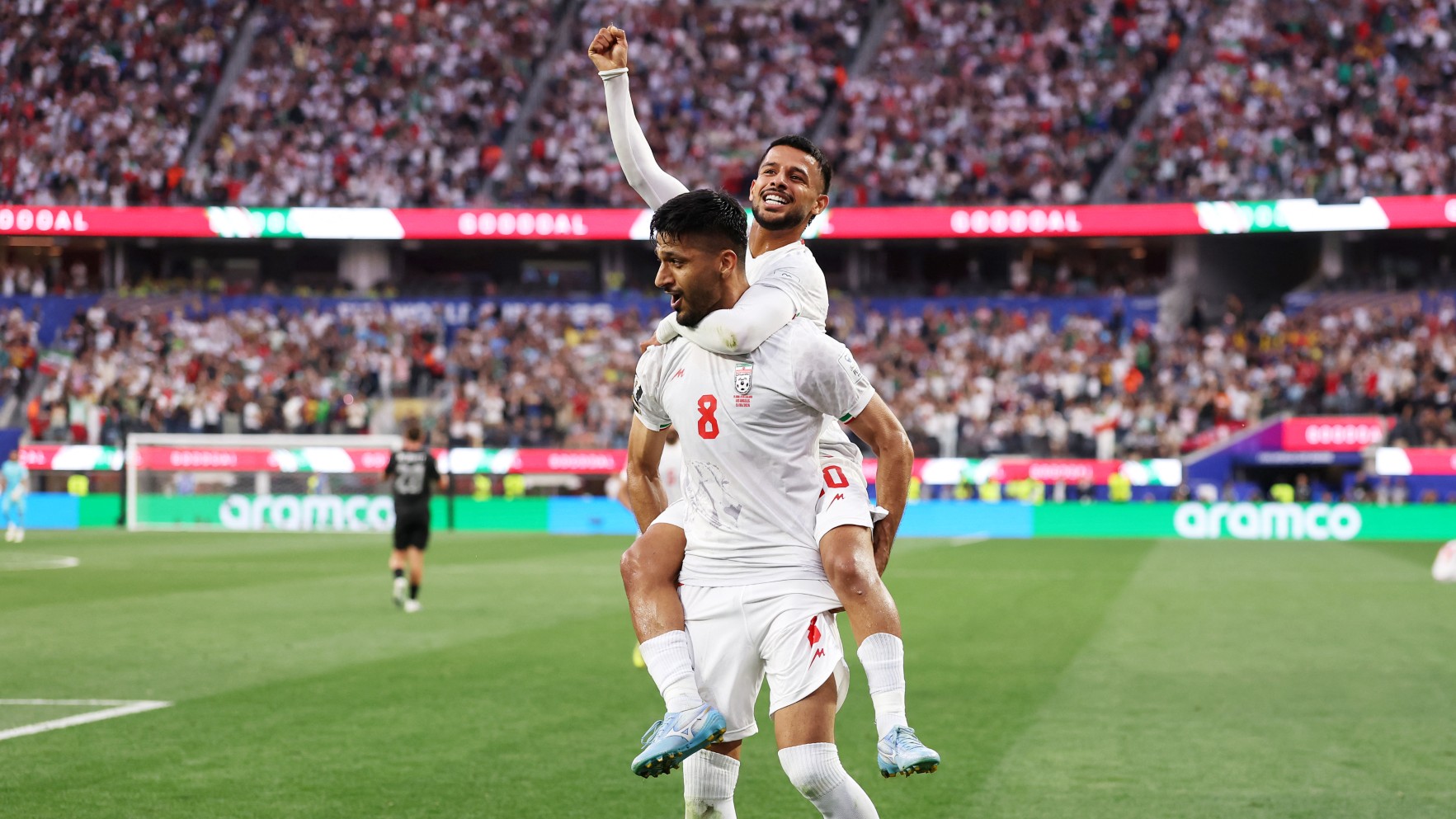
Heading into kickoff, few could predict how the crowd would react. Anti-government voices dominated public discourse online and in regional media, and a small protest greeted the team upon its arrival in LA. But inside the 70,000-seat stadium, the energy defied expectations. When the national anthem played, cheers from pro-Team Melli fans easily outnumbered boos. Every attacking move from the Iranian side drew loud, unified encouragement. When New Zealand scored an early opening goal, a hush fell over pro-Iranian sections – but that tension turned to eruption when fullback Ramin Rezaeian slotted home an equalizer in the 32nd minute.
The connection between the squad and the crowd only grew stronger in the second half. After New Zealand retook the lead, supporters launched a steady chant of “Iran, Iran” that lifted the team, and striker Mohammad Mohebi leveled the score once again with a well-placed header off Rezaeian’s cross. Though the match ultimately ended in a 2-2 draw with no late winner for Team Melli, the moment carried enormous symbolic weight. After four years of deep polarization, political upheaval, and global tensions that have split Iranian communities abroad, a spirited, competitive performance on US soil won over the majority of fans in attendance.
For fans like Hossein Alizadeh, a 40-year-old supporter who traveled from Toronto to attend the match, the outcome was more than just a draw. “Team Melli is an institution that belongs to all Iranians, no matter what their political beliefs are,” he said ahead of kickoff. “I want them to do well and bring back that love people used to share for the national team.” The team will get another chance to build on this moment when it faces off against Belgium in southern California on Sunday.