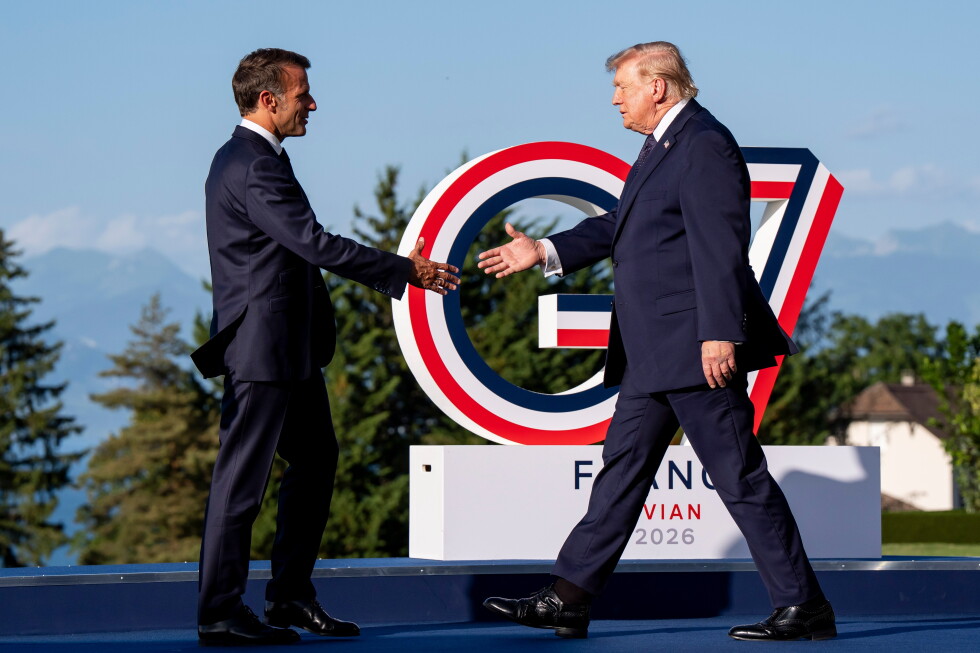
EVIAN-LES-BAINS, France — The Group of Seven’s annual gathering of the world’s major industrialized democracies opened its first full working day on Tuesday with a packed slate of high-stakes discussions, led by urgent negotiations to advance a resolution to Russia’s ongoing war in Ukraine and de-escalate simmering tensions across the Middle East. Ukrainian President Volodymyr Zelenskyy joined the summit in person after receiving an official invitation from France, the event’s host nation.
The discussions around Ukraine come fresh off a major announcement from U.S. President Donald Trump, who revealed a landmark agreement to end the three-and-a-half-month U.S. military conflict with Iran. In recent weeks, the Iran confrontation pushed the nearly four-year-old Russian invasion of Ukraine out of global media and diplomatic headlines, marking a significant shift in geopolitical priorities. Trump confirmed Sunday that he held constructive separate talks with both Zelenskyy and Russian President Vladimir Putin, telling reporters during a Monday bilateral meeting with French President Emmanuel Macron that “now that this (Iran) is finished, we’re going to be focusing on that.”
Macron has publicly outlined his goal to convince Trump to maintain long-standing U.S. military and diplomatic support for Ukraine and ramp up international pressure on Moscow to create conditions for a lasting peace deal. The push for talks comes against a grim backdrop: just hours before the summit’s official working sessions got underway, Russia launched a massive coordinated barrage of hundreds of drones and dozens of missiles targeting Ukraine’s largest urban centers. The attack left 11 civilians dead and destroyed a historic religious landmark, underscoring the ongoing intensity of the conflict even as diplomatic momentum builds.
Tuesday’s agenda also includes a dedicated working session focused on “ending crises and ensuring stability in the Middle East,” with senior leaders from Egypt, Qatar, and the United Arab Emirates joining the G7 delegations for the talks. The Iran ceasefire agreement has already created new divisions between Trump and his European G7 counterparts, who have openly criticized the U.S. leader for failing to consult the alliance before launching military action against Iran. In recent weeks, Trump has even threatened retaliatory measures — including drawing down U.S. troop deployments in France, the United Kingdom, Germany, and Italy, all core NATO members — over their lack of public support for the Iran campaign.
Despite these frictions, allied leaders have adopted a measured tone in Evian, eager to lock in rapid progress to reverse the economic damage caused by the months-long blockade of the Strait of Hormuz, a critical global chokepoint for oil supplies that drove energy prices higher in recent months. Just ahead of the summit, the leaders of France, Germany, Italy, and the United Kingdom released a joint statement — also signed by Canada — congratulating Washington, Tehran, and diplomatic mediators on what they called a “diplomatic breakthrough.” The statement emphasized that detailed follow-on negotiations and swift implementation of the ceasefire deal are essential to reopen the strait to commercial tanker traffic without delay.
Macron added that France and other Western partners “are ready to take action very quickly” to support a peaceful reopening of the strait. Paris and London have already led planning for an international mission to reestablish maritime security in the waterway once conditions permit, though Trump downplayed the need for a large-scale multilateral military deployment during his meeting with Macron. “I don’t think we’re gonna need much help,” he said. “But I don’t think it’s a bad idea to have a ship or two up here from a few countries. You’d be a great country to do it.”
Trump also celebrated early signs of economic relief following the ceasefire announcement, telling reporters: “I think a lot of great things are going to happen in the Middle East right now, and very importantly the oil is plummeting down and the stock market is shooting up like a rocket today.”
On the Ukraine front, Monday brought a key symbolic milestone for Kyiv: the country officially launched European Union membership negotiations, a years-long process that will require sweeping political and institutional reforms even as the war with Russia continues. Ukraine frames EU accession as a core security guarantee for its long-term stability once hostilities end. While Kyiv views full NATO membership as its ultimate security safeguard, the Trump administration has openly ruled out Ukrainian NATO membership, and other Western allies remain wary of extending membership while the active conflict continues.
Macron laid out his vision for peace talks in comments to French television, saying: “The right negotiation is one in which Ukraine and Russia are at the table, but with Europeans and Americans present as well.” The exchange of phone calls between Trump and both Zelenskyy and Putin — which took place Sunday, on the U.S. president’s 80th birthday — confirms that Washington has not abandoned diplomatic efforts to end the fighting that began with Russia’s full-scale invasion of Ukraine in early 2022.
While campaigning to return to the White House, Trump infamously claimed he could end the entire Russia-Ukraine conflict within 24 hours of taking office. He has since acknowledged that reaching a lasting resolution has proven far more complex than his initial projection, and he has publicly voiced frustration at the slow pace of progress toward a ceasefire.
Beyond the two core geopolitical topics, Tuesday’s schedule sees Trump hold one-on-one meetings with the Emir of Qatar and the President of the United Arab Emirates, before joining other delegations for an evening cultural performance and working dinner. The G7 bloc comprises France, the United States, Canada, Germany, Italy, Japan, and the United Kingdom. This year’s summit has also invited guest partner nations including Brazil, India, Kenya, and South Africa to participate in select working sessions.