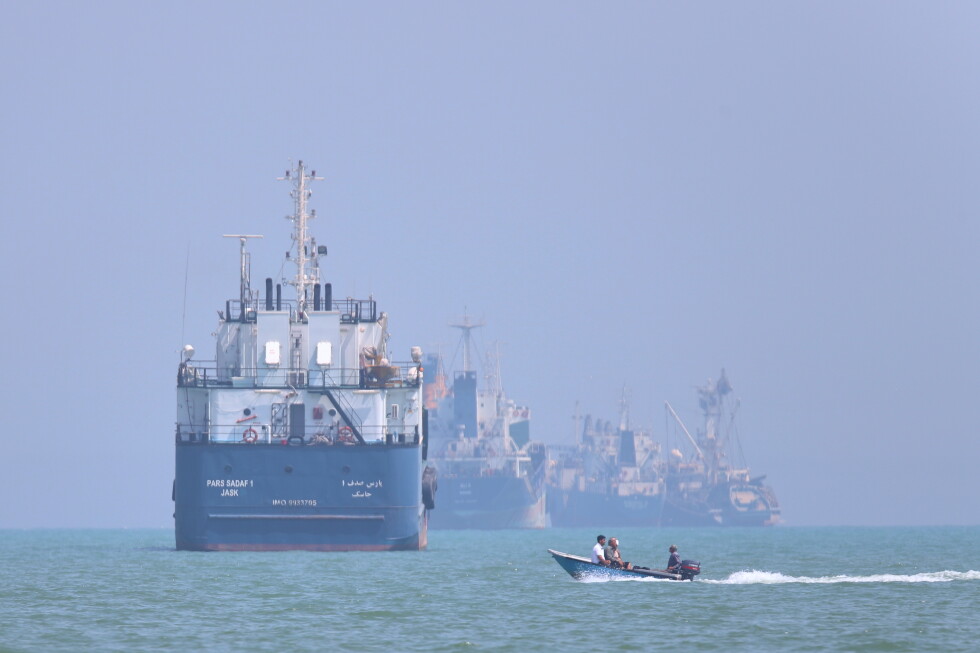
EVIAN-LES-BAINS, France — Against the backdrop of a newly reached tentative ceasefire deal between the U.S. and Iran to end the recent conflict, Western G7 allies have spent months refining a plan for a defensive naval mission in the Strait of Hormuz, a critical global maritime chokepoint that drives much of the world’s energy supply. The proposal is designed to restore confidence among commercial vessel crews and maritime insurance providers, clearing the waterway of explosive ordnance and providing armed escort to guarantee safe passage for global shipping.
The initiative has been spearheaded by France and the United Kingdom, with French President Emmanuel Macron first publicly floating the framework back in March, when active conflict across the region was still intensifying. At that time, Macron outlined that coalition warships would escort commercial tankers and container ships through the strait once hostilities subsided. The proposal gained the formal backing of Germany, Japan, Italy, and later Canada, all fellow G7 member states, which released a joint statement affirming their commitment to securing unconditional and unrestricted freedom of navigation through the strategic waterway as part of the post-ceasefire transition.
Speaking to Macron on the sidelines of the Group of Seven summit in France on Monday, U.S. President Donald Trump struck a muted tone. He argued that a large-scale mission was unnecessary, asserting that the strait would soon be fully open to traffic under the terms of the tentative Iran agreement. Still, Trump offered cautious approval of the allied plan, noting that a small contingent of vessels from coalition partners would be a welcome contribution to regional security.
Macron confirmed that French military assets are already positioned to deploy on short notice if the mission moves forward. France’s flagship nuclear-powered aircraft carrier, the Charles de Gaulle, which was dispatched to the eastern Mediterranean in early March before transiting the Suez Canal to the Arabian Sea, is already operating in the broader region. According to Macron, French fighter jets could begin surveillance flights over the strait as early as the day after his meeting with Trump, with frigates arriving within 48 hours and the Charles de Gaulle joining within two to three days. Other nations with existing military deployments in the region, including the United Kingdom, Italy, and the Netherlands, are also prepared to contribute assets quickly.
“Of course, all this supposes that it is desired and requested,” Macron noted. “Perhaps it will not be wanted and perhaps it will not be necessary. But in any case, it reflects our willingness to help.”
A core component of the mission is mine clearance operations. Explosive ordnance placed in the strait ranges from stationary seabed mines triggered by sound, movement or light to rocket-propelled and cabled devices, all of which pose a major lethal hazard to commercial shipping. Trump acknowledged that some mines have already been located, with clearance operations ongoing, and confirmed that the strait is already partially open to traffic. The United Kingdom has already highlighted its specialized mine-clearing expertise, hosting journalists aboard the Royal Fleet Auxiliary vessel RFA Lyme Bay off the coast of Gibraltar last month as the ship stood by for potential deployment.
Coalition navies already have extensive on-the-ground experience escorting commercial vessels through hostile conditions in the broader Middle East region. Over recent months, French, British, and American warships have fended off repeated attacks on commercial shipping in the Red Sea carried out by Iran-aligned Houthi rebels based in Yemen. In 2024, the French frigate Alsace intercepted and destroyed three ballistic missiles while escorting a container ship through the Red Sea, its commander later describing continuous engagements as mentally and physically exhausting for crew. Similar high-tension operations have taken a toll on U.S. Navy personnel deployed to the region.
If the ceasefire holds, analysts and military leaders anticipate the Strait of Hormuz mission will face far lower risks than recent Red Sea operations. Still, military planners are preparing for potential contingencies: Iran is still believed to hold large stockpiles of missiles, drones, and other offensive weaponry, so coalition warships would retain full defensive capabilities to repel attacks if the ceasefire collapses.
Max Bergmann, an analyst specializing in Middle East security at the Washington-based Center for Strategic and International Studies, noted that the utility of the mission is tied directly to the success of the ceasefire. “Once there is a ceasefire, the need for a naval mission is significantly reduced,” he explained. While a joint British-French naval presence offers modest security benefits – raising the stakes for Iran to resume hostilities, demonstrating European commitment to Gulf ally states, and reassuring skittish shipping and insurance firms – Bergmann argued that observers should not overstate the mission’s overall impact.
Planning for the mission has already drawn broad international participation beyond core G7 nations. Joint French-British organizing efforts have included consultations with representatives from more than 30 countries, stretching from Australia and South Korea in the Indo-Pacific to Gulf states Bahrain and Qatar, plus more than a dozen European nations. A planning meeting convened by France and the United Kingdom last month brought together defense officials and senior representatives from 38 countries to coordinate logistics and contribution commitments.