NEW YORK, UNITED NATIONS — In a rare show of unified global action on the spiraling crisis in Afghanistan, the United Nations Security Council voted unanimously Monday to approve a groundbreaking resolution that presses the country’s Taliban leadership to immediately roll back its harsh restrictions on women’s rights, while also mandating action to root out militant groups operating within Afghan borders that Pakistan blames for cross-border attacks.
Sponsored by China, the resolution marks a significant update to the U.N.’s long-running diplomatic and humanitarian engagement in Afghanistan, extending the mandate of the United Nations Assistance Mission in Afghanistan (UNAMA) — the body’s official political presence in the country — through June 17, 2027. Beyond the mandate extension, the resolution lays out clear priorities for UNAMA moving forward: supporting the delivery of life-saving humanitarian aid across the country without any form of discrimination, and advancing inclusive national and local governance that guarantees full, equal, meaningful and safe participation for women, ethnic and religious minorities, youth, and people with disabilities, regardless of gender, faith, or ethnic background.
Monday’s vote comes on the heels of a fresh wave of repression against Afghan women that drew widespread international condemnation earlier this month. In Afghanistan’s western Herat Province, at least 30 women were taken into custody for alleged violations of the Taliban’s rigid Islamic dress code. The arrests sparked an uncommon public demonstration against the policy, which Taliban security forces violently dispersed. According to an official UNAMA statement, the crackdown left one protester dead and multiple others with injuries, including one staff member from medical humanitarian organization Doctors Without Borders (MSF) among those detained.
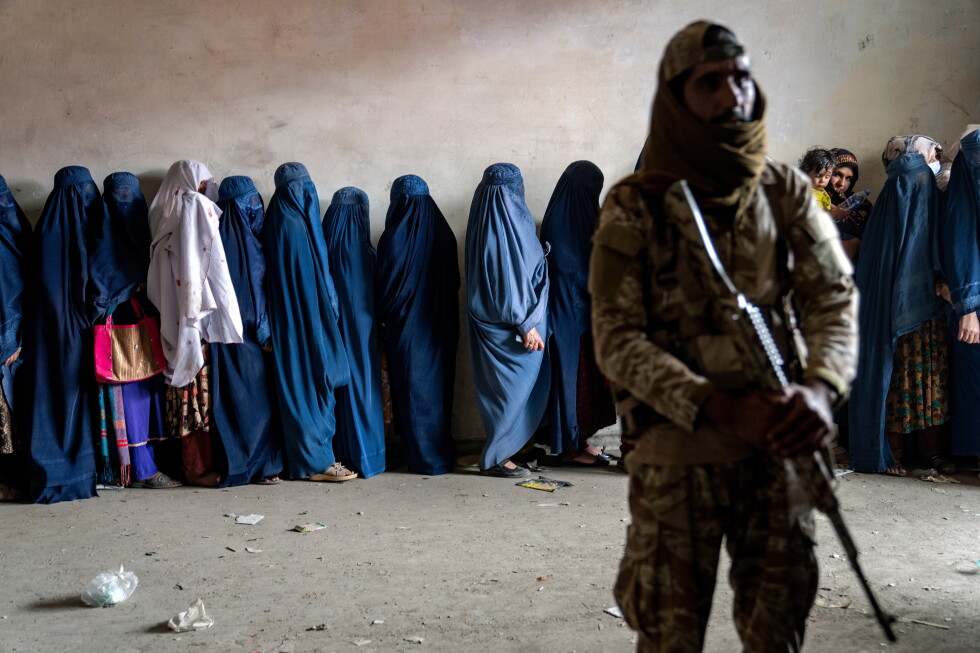
The current restrictions on women and girls are the most sweeping since the Taliban retook full control of Afghanistan in 2021, following the chaotic military withdrawal of U.S.-led international coalition forces. The Islamist government has implemented a strict, hardline interpretation of Shariah law that includes draconian, unprecedented limits on female participation in public life: girls are banned from secondary and higher education, and women are barred from most formal employment sectors, with restrictions also extending to public space access. Ethnic and religious minority communities across the country have also faced growing targeted repression under Taliban rule.
Beyond women’s rights, the resolution addresses escalating regional tensions between Afghanistan and neighboring Pakistan, which has repeatedly accused the Taliban administration of harboring militant groups that carry out deadly terrorist attacks inside Pakistani territory. The Taliban has consistently denied these allegations, but the standoff between the two neighbors has erupted into open cross-border violence in recent months. Since February, when the Taliban launched retaliatory strikes against Pakistani military positions following Pakistani airstrikes on militant targets inside Afghanistan, hundreds of people on both sides have been killed in repeated clashes.
Chinese U.N. Ambassador Fu Cong, who led the resolution drafting, emphasized after the vote that the international community’s core goal is to encourage the Taliban to shift toward more inclusive governance. “We hope that the Afghan government will take more proactive measures to protect human rights, especially the rights of women, and project an image of openness, inclusivity and responsibility,” Fu told reporters following the unanimous vote.
U.S. Deputy Ambassador to the United Nations Jennifer Locetta echoed the call for immediate Taliban action, noting that political progress in Afghanistan depends on the regime meeting its international commitments. “For that political process to succeed, the Taliban must act,” Locetta said. “The Taliban must meet their counterterrorism commitments, respect Afghanistan’s international obligations, end hostage diplomacy, and cease their unconscionable abuses of the human rights of women and girls.”
Pakistan’s U.N. Ambassador Asim Ahmad welcomed the resolution’s explicit recognition of the terrorist threat emanating from Afghan soil, noting that the text “expresses the council’s serious concern over the presence of terrorist groups in Afghanistan, which continue to constitute a threat to international peace and security.”
In addition to its humanitarian and security mandates, the resolution expands UNAMA’s authority to support long-term economic stability in Afghanistan, a country grappling with one of the world’s worst humanitarian crises. The mission is now authorized to facilitate legitimate commercial and financial activity with Afghanistan, and to support international efforts to repatriate frozen Afghan Central Bank assets back to the country “for the benefit of the Afghan people.” The resolution also tasks UNAMA with facilitating dialogue between the Taliban administration, regional neighboring states, and the broader global community to advance a peaceful, inclusive political process for the country.