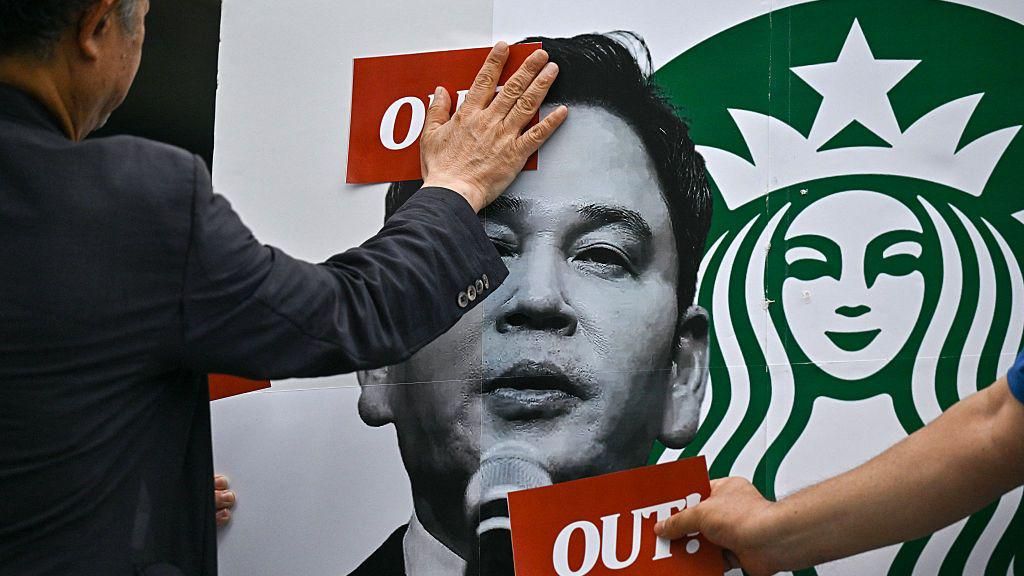
South Korea’s Starbucks franchise has announced an unprecedented nationwide early closure of all its retail locations next week, a direct response to widespread public fury sparked by a tone-deaf promotional campaign that coincided with the anniversary of the 1980 Gwangju Uprising, a defining pro-democracy movement bloodily suppressed by the country’s former military dictatorship.
The ill-fated promotion, labeled “Tank Day,” centered on the launch of new “Tank Series” reusable tumblers marketed for their large volume, and it launched on the very date that South Koreans commemorate the 1980 crackdown, in which military forces deployed by authoritarian ruler Chun Doo-hwan killed at least 165 unarmed civilian protesters — many locals and historians believe the actual death toll is far higher. Subsequent official investigations have also confirmed that troops carried out widespread indiscriminate beatings, torture, and sexual violence against civilians during the crackdown, a trauma the nation has only slowly reckoned with in recent decades.
The Gwangju Uprising stands as a cornerstone of South Korea’s modern democratic journey: it became a unifying rallying point for pro-democracy activists over seven years, ultimately leading to the mass 1988 June Democracy Movement that ended Chun’s 8-year authoritarian rule. Chun was later convicted of treason and corruption in 1996, received a presidential pardon, and died in 2021 at age 90. In recent years, formal acts of accountability have included a 2018 government apology to survivors of sexual violence committed by troops, and a public apology this year from Chun’s own grandson, Chun Woo-won, who called his grandfather a “sinner and slaughterer” and expressed remorse for the delayed apology to victims’ families.
Beyond the insensitive “Tank Day” name, which echoed the military tanks deployed to crush the uprising, critics also flagged a second problematic slogan used in the campaign: the Korean phrase “tak on the table,” which uses the word “tak” that is identical to the term used in a controversial 1987 police statement about the death of a student activist in custody. The franchise later confirmed that marketing teams selected the slogan after relying on an AI tool for creative suggestions.
The backlash erupted rapidly last month, drawing condemnation from all corners of South Korean society. President Lee Jae Myung publicly called out the campaign as “inhumane and disgraceful” on social media, while consumer advocates organized boycotts that led to protests outside Starbucks locations across the country and a reported steep drop in sales for the chain.
In the immediate wake of the scandal, Shinsegae Group, which holds the licensing agreement to operate Starbucks in South Korea, terminated the contract of the franchise’s national chief executive. Now, the company has announced sweeping corrective measures to address the public outrage. Starting this Monday, all Starbucks Korea employees will complete mandatory training focused on historical awareness and social sensitivity through educational video content. Next Wednesday, all locations across the country will close at 3 p.m. local time (6 a.m. GMT) for three hours of in-person historical education, and will not reopen until the following day. The company confirmed that Shinsegae Group Chairman Chung Yong-jin will personally participate in the mandatory training alongside frontline staff. This marks the first time Starbucks Korea has ordered a nationwide early closure of all stores since the brand first entered the South Korean market in 1999.
In an initial statement after the scandal broke, the franchise offered a vague apology for “inconvenience and concern” caused to customers, but the sweeping new measures signal how seriously the company is taking the public backlash over its failure to recognize the sensitive historical context of the promotion.